



Dacast Editorial Team — reviewed by Dacast’s streaming infrastructure specialists. April 2026 Adaptive bitrate streaming (ABR) is a technology that automatically adjusts video quality in real time based on a viewer’s available bandwidth and device capabilities, delivering the best possible picture without buffering or manual quality selection. For most broadcasters, delivering a high-quality, buffer-free viewing experience […]

Video resolution remains one of the most important factors in delivering a professional streaming experience. Whether you are running a live sports broadcast, an enterprise webinar, a hybrid event, or an OTT channel, choosing the right video resolution for streaming directly impacts viewer satisfaction, bandwidth costs, and overall content quality. However, in 2026, streaming workflows are […]

HTTP Live Streaming (HLS) is the backbone of modern video delivery, accounting for over 70% of global streaming traffic and reaching audiences across every device category. Originally developed by Apple, HLS streaming has become the universal standard for live streaming platforms, OTT services, enterprise broadcasts, and video-on-demand delivery because of its native compatibility with browsers, […]

AAC (Advanced Audio Coding) is the best audio codec for live streaming in 2026. It delivers superior compression efficiency and sound quality compared to MP3, and is natively supported on iOS, Android, Windows, macOS, and virtually all streaming platforms. For professional streams at 1080p, use AAC at 192–256 kbps stereo with a 44.1 kHz sample […]
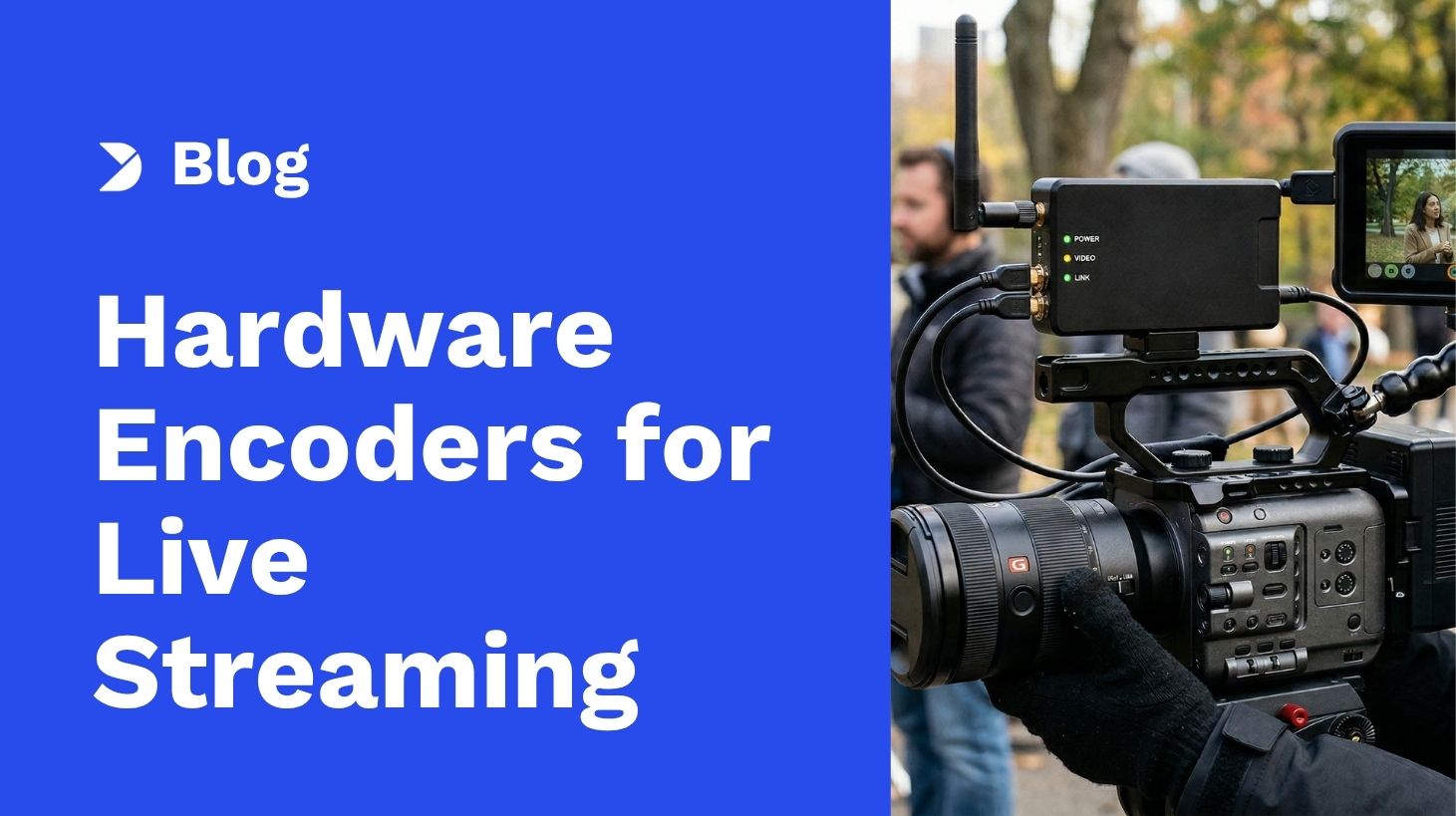
Dacast Editorial Team — reviewed by Dacast’s streaming infrastructure specialists. March 2026 A hardware encoder for live streaming is a dedicated physical device that converts raw camera signals into compressed video streams for real-time transmission over IP networks. Unlike software on a general-purpose computer, hardware encoders use purpose-built components designed for stable, continuous encoding — […]