



OTT Full Form Explained: Over-the-Top Streaming in 2026
OTT (full form: over-the-top) streaming is no longer just an alternative to traditional television – it’s the foundation of how video content is delivered, monetized, and experienced across the globe. From live sports and virtual events to corporate training, online education, and subscription-based entertainment, OTT platforms now power how audiences watch content across web, mobile, and connected TV devices.
But why exactly has OTT become so central to modern streaming?
While the concept started with consumer streaming services, OTT has rapidly evolved into a professional, enterprise-grade ecosystem driven by advanced streaming technology, flexible monetization models, and data-driven personalization.
Today, businesses and broadcasters use professional OTT platforms like Dacast to launch white-label streaming services, monetize live and on-demand video, and deliver high-quality experiences at scale. With innovations such as low-latency streaming, AI-powered analytics, FAST channels, and hybrid monetization models, OTT technology today is more powerful (and more strategic) than ever.
In this guide, we’ll break down the meaning of OTT, explain how OTT streaming platforms work, explore the technology and monetization models behind them, and look ahead to the trends shaping the future of OTT streaming.
TL;DR : OTT (Over-the-Top) delivers video over the internet (not cable/satellite). Modern OTT platforms combine encoding + ABR streaming (HLS/DASH), CDNs, apps/players, security (DRM), analytics, and monetization (SVOD/AVOD/TVOD/FAST). In 2026, key OTT trends include low-latency streaming, multi-CDN delivery, and ad growth on CTV/FAST.
Table of Contents:
- What Does OTT Stand For?
- How OTT Streaming Works (Technology Overview)
- Device Compatibility and the OTT App Ecosystem
- Data Compression and Encoding in Modern OTT Streaming
- Key Features and Benefits of Modern OTT Platforms
- Types of OTT Services and Monetization Models
- OTT vs Traditional Media
- How OTT Shapes the Media and Entertainment Industry
- OTT Platforms and Service Categories
- The Future of OTT
- OTT and Digital Marketing: Advertising in the Streaming Age
- Challenges Facing the OTT Full Form
- FAQs
- Conclusion : Why OTT Matters for the Future of Streaming
What Does OTT Stand For?
OTT stands for Over-the-Top, a term used to describe the delivery of video and media content directly over the internet, without relying on traditional cable, satellite, or broadcast television providers.
In practical terms, OTT allows viewers to access content on demand (or live) using an internet-connected device such as a smartphone, laptop, smart TV, or streaming box. Instead of content being “pushed” through fixed broadcast schedules, OTT puts control in the hands of the viewer, enabling flexible access, personalized experiences, and multi-device consumption.
While OTT originally referred to consumer streaming services, its meaning has expanded significantly. Now, OTT represents a full streaming ecosystem that includes:
- Live and on-demand video delivery
- Cloud-based video hosting and content management
- Advanced content delivery networks (CDNs)
- HTML5 video players and cross-device playback
- Integrated monetization and analytics
This evolution has transformed OTT from a consumer convenience into a core business and broadcasting model, used by media companies, enterprises, educational institutions, sports organizations, and event producers worldwide.
Over-the-Top: Origin and Evolution
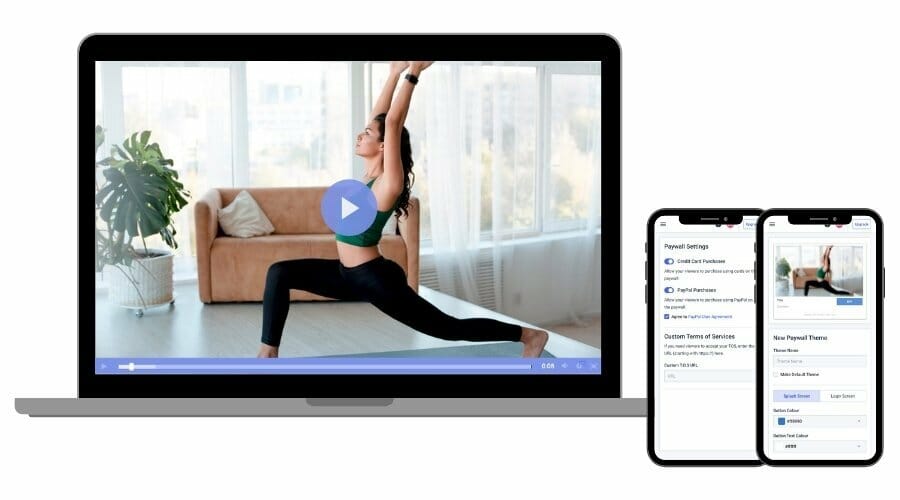
The concept of OTT emerged in the early 2000s as broadband internet became widely available. At the time, OTT primarily referred to simple web-based video delivery: short clips and early on-demand content that sat “over the top” of existing telecom networks rather than being distributed by them. This marked a fundamental shift: content no longer needed a dedicated broadcast channel to reach viewers.
As internet speeds improved and connected devices multiplied, OTT evolved rapidly. The 2010s saw the rise of large-scale video-on-demand platforms, followed by live streaming, mobile viewing, and subscription-based models. Viewers began expecting instant access, flexible viewing schedules, and seamless playback across smartphones, tablets, desktops, and smart TVs.
By 2026, OTT has grown far beyond its original definition. It now represents a mature, professional streaming ecosystem built on cloud infrastructure, global content delivery networks, and advanced video players. Modern OTT platforms support live and on-demand streaming, real-time analytics, adaptive bitrate delivery, and multiple monetization models – all designed to scale reliably to global audiences.
Today, OTT is no longer limited to entertainment. Enterprises, educators, sports organizations, and event producers rely on OTT technology to deliver secure, branded streaming experiences directly to their audiences. Professional platforms such as Dacast enable organizations to build white-label OTT services that combine high-quality delivery, flexible monetization, and detailed viewer insights, illustrating how OTT has evolved from a consumer convenience into a core digital business strategy.
How OTT Streaming Works (Technology Overview)
OTT delivers content through Internet protocols, using Adaptive Bitrate Streaming (ABR) and Content Delivery Networks (CDN) instead of broadcasting methods, allowing smooth playback and scalability.
Building on this foundation, modern OTT streaming operates as a cloud-based OTT platform architecture designed to optimize performance, reliability, and viewer experience across devices.
At a high level, OTT streaming follows this workflow:
1. Ingest and Encoding
Live or pre-recorded video is ingested into a streaming platform and encoded into multiple resolutions and bitrates. This enables adaptive playback based on each viewer’s network conditions and device capabilities.
2. Adaptive Bitrate Streaming (ABR)
ABR dynamically adjusts video quality in real time, reducing buffering and playback interruptions. AI-assisted ABR optimization is increasingly used to predict bandwidth changes and proactively switch quality levels for improved Quality of Experience (QoE).
3. Advanced Streaming Protocols
While HTTP-based delivery remains the standard, modern OTT platforms support newer protocols to reduce latency and improve efficiency, including:
Key protocols used in OTT streaming include:
- HTTP Live Streaming (HLS)
Originally developed by Apple, HLS remains the most widely supported OTT streaming protocol across browsers, mobile devices, and smart TVs. It supports adaptive bitrate streaming and works seamlessly with CDNs.
- Low-Latency HLS (LL-HLS)
An extension of HLS designed to reduce end-to-end latency to just a few seconds. LL-HLS is increasingly used for live sports, auctions, and real-time events where near-instant playback is critical.
- MPEG-DASH (Dynamic Adaptive Streaming over HTTP)
MPEG-DASH is an open-standard adaptive streaming protocol widely used across Android devices, smart TVs, and modern web players. Like HLS, it breaks video into small segments and dynamically adjusts quality based on network conditions. Today, MPEG-DASH is commonly paired with CMAF packaging to enable a single workflow that supports both HLS and DASH, improving efficiency and reducing storage and processing overhead.
- CMAF (Common Media Application Format)
CMAF standardizes media packaging so the same encoded files can be delivered via both HLS and MPEG-DASH. This simplifies OTT workflows, lowers costs, and improves performance consistency across platforms.
- WebRTC
Used for ultra-low-latency streaming and real-time interaction, WebRTC is ideal for use cases such as live interviews, virtual classrooms, and interactive events.
- HTTP/3 (QUIC)
The latest transport protocol improves reliability and performance over congested or mobile networks, helping maintain stream quality under variable conditions.
4. Global Content Delivery Networks (CDNs)
OTT platforms distribute content through geographically dispersed CDN edge servers. Multi-CDN strategies are now common, allowing platforms to route traffic intelligently based on performance, cost, and regional demand, while also supporting more energy-efficient delivery paths.
5. Playback via HTML5 Video Players
Content is delivered to viewers through HTML5-based video players that support cross-device compatibility, DRM, captions, analytics tracking, and monetization features. These players ensure consistent playback across web browsers, mobile devices, and connected TVs.
6. Analytics, Automation, and AI Optimization
Modern OTT platforms collect real-time performance and engagement data, enabling automated stream optimization, viewer segmentation, and predictive analytics. These insights help broadcasters improve stream quality, personalize content, and refine monetization strategies. In addition to platform-level analytics, modern OTT workflows increasingly rely on Common Media Client Data (CMCD). CMCD is a standardized way for video players to share real-time playback data like buffering events, bitrate changes, and startup time, with CDNs and streaming platforms. This data helps optimize content delivery, improve Quality of Experience (QoE), and enable more intelligent traffic routing without relying on proprietary analytics systems.
Professional OTT platforms like Dacast integrate these components into a unified infrastructure, enabling businesses and broadcasters to manage ingestion, delivery, playback, analytics, and monetization from a single, scalable environment.
These capabilities form the foundation of modern OTT video analytics, enabling platforms to monitor Quality of Experience, viewer engagement, and delivery performance in real time.
Device Compatibility and the OTT App Ecosystem
One of the defining advantages of OTT streaming is its ability to deliver content seamlessly across a wide range of internet-connected devices. In 2026, device compatibility is no longer just a technical requirement; it’s a core part of OTT platform strategy.
Modern OTT platforms are built to support a multi-device, multi-environment ecosystem, ensuring consistent playback and user experience across:
- Web browsers (desktop and mobile)
- Smartphones and tablets (iOS and Android)
- Smart TVs and Connected TV (CTV) devices
- Streaming boxes and game consoles
This broad compatibility is made possible through standardized streaming protocols, adaptive bitrate streaming, and HTML5-based video players, which dynamically adjust playback based on screen size, hardware capabilities, and network conditions.
OTT Apps vs Browser-Based Streaming
OTT content can be delivered in two primary ways:
- Browser-based streaming, where users watch content directly through a website using an embedded HTML5 video player. This approach is widely used for live events, enterprise streaming, education, and pay-per-view content.
- Native OTT apps, designed for mobile devices and smart TVs, which provide deeper platform integration, offline viewing options, and customized user interfaces.
In practice, many OTT services use a hybrid distribution model, combining browser-based access with dedicated apps to maximize reach and engagement.
Consistent Experience Across Devices
From a user perspective, device compatibility means seamless transitions: starting a stream on a laptop, continuing on a smartphone, and finishing on a smart TV. From a broadcaster’s perspective, it requires:
- Unified encoding and packaging workflows
- Cross-platform playback support
- Centralized analytics and content management
Professional OTT platforms such as Dacast support this unified approach by delivering streams through standards-based players and global CDNs, enabling consistent performance across devices without requiring separate delivery pipelines for each endpoint.
As OTT audiences continue to diversify across devices and viewing contexts, broad compatibility is no longer optional. It is a fundamental requirement for scalability, accessibility, and long-term growth in the OTT ecosystem.
Data Compression and Encoding in Modern OTT Streaming
Data compression and encoding play a critical role in OTT streaming by reducing file sizes, optimizing bandwidth usage, and ensuring consistent playback across devices and network conditions. As OTT consumption continues to scale globally, efficient encoding is no longer just a technical concern – it directly impacts cost, performance, and sustainability.
At its core, compression enables video content to be delivered at multiple quality levels without overwhelming networks or end-user devices. OTT platforms rely on adaptive bitrate streaming (ABR), which requires content to be encoded into multiple renditions so playback can dynamically adjust based on available bandwidth and device capabilities.
Lossy vs. Lossless Compression
OTT streaming primarily relies on lossy compression, which reduces file size by removing data that is less perceptible to the human eye. While some quality is technically lost, modern codecs are highly optimized to preserve visual clarity even at lower bitrates. Lossless compression, while useful for archiving or production workflows, is rarely used for large-scale OTT delivery due to its bandwidth and storage requirements.
Common Video Codecs Used in OTT
Most OTT platforms support a combination of widely adopted video codecs to ensure compatibility across devices:
H.264 (AVC)
Still the most broadly supported codec, H.264 offers a strong balance between compression efficiency, quality, and device compatibility. It remains a default choice for many OTT workflows.
H.265 (HEVC)
HEVC delivers significantly improved compression efficiency compared to H.264, making it well-suited for high-resolution and 4K streaming. HEVC is commonly used where device support and licensing considerations allow.
VP9
An open-source codec developed by Google, VP9 is widely supported on web browsers and Android devices and is often used to reduce bandwidth costs without sacrificing quality.
Modern OTT platforms increasingly use codec-agnostic workflows, allowing them to select the most efficient codec per device or region while maintaining a single content library.
Encoding Efficiency and Sustainability
Encoding decisions are also tied to sustainability and operational efficiency. More efficient codecs and optimized encoding ladders reduce data transfer volumes, lower CDN usage, and minimize energy consumption across streaming infrastructure. For large-scale OTT services, even small gains in compression efficiency can translate into meaningful reductions in cost and environmental impact.
By combining efficient encoding, adaptive bitrate delivery, and intelligent packaging formats such as CMAF, OTT platforms can deliver high-quality viewing experiences while balancing performance, scalability, and responsible resource usage.
Key Features and Benefits of Modern OTT Platforms

Modern OTT platforms are designed to do more than simply deliver video content. They function as end-to-end streaming ecosystems, combining live streaming, playback, monetization, analytics, and security into a unified workflow. For businesses and broadcasters, these features translate directly into scalability, control, and measurable performance.
Cross-Device Accessibility and Global Reach
OTT platforms enable audiences to access content across web browsers, mobile devices, smart TVs, and connected TV platforms without being tied to a single network or provider. This flexibility allows broadcasters to reach global audiences while maintaining consistent quality and branding across devices.
Adaptive Streaming and Playback Optimization
Adaptive bitrate streaming ensures smooth playback by automatically adjusting video quality based on a viewer’s bandwidth and device capabilities. This minimizes buffering, reduces stream drop-offs, and improves overall Quality of Experience (QoE), especially for live and high-traffic events.
Content Control and White-Label Branding
Unlike free consumer platforms, professional OTT solutions give content owners full control over their streaming environment. This includes white-label video players, custom branding, domain-level control, and the ability to embed streams directly on owned websites and applications, keeping audiences within the broadcaster’s ecosystem.
Flexible Monetization Capabilities
OTT platforms support multiple monetization models that can be used independently or combined, including subscriptions, advertising, and pay-per-view access. This flexibility allows businesses to experiment with pricing strategies, segment audiences, and maximize revenue across live and on-demand content.
Integrated Analytics and Viewer Insights
Built-in analytics tools provide visibility into viewer behavior, engagement levels, playback performance, and geographic distribution. These insights help broadcasters optimize content strategies, improve stream reliability, and make data-driven decisions around monetization and distribution.
Security and Access Management
Content protection is a core feature of professional OTT platforms. Security tools such as tokenized playback, password protection, domain restrictions, and digital rights management (DRM) help prevent unauthorized access and content piracy, especially for premium or private streams.
Automation and Platform Integration
Modern OTT platforms often include APIs and automation tools that allow integration with existing business systems, marketing platforms, and content workflows. This makes it easier to manage large content libraries, automate publishing, and scale streaming operations efficiently.
Dacast combines these features into a single professional OTT solution, enabling organizations to launch, manage, and monetize streaming services without relying on third-party consumer platforms or fragmented toolsets.
Types of OTT Services and Monetization Models
One of the reasons OTT has become the dominant model for video distribution is its flexibility. OTT platforms support multiple service types and monetization models, allowing broadcasters and businesses to tailor their strategy based on audience behavior, content type, and revenue goals.
Rather than relying on a single approach, many organizations now use hybrid OTT models that combine several monetization methods within one platform.
Subscription Video on Demand (SVOD)
SVOD allows viewers to access a library of content in exchange for a recurring subscription fee. This model is commonly used for premium, long-form, or continuously updated content libraries.
Best suited for:
- Entertainment libraries
- Online education and training programs
- Membership-based communities
SVOD provides predictable recurring revenue and encourages long-term viewer engagement.
Advertising-Based Video on Demand (AVOD)
AVOD platforms offer content for free or at a low cost while generating revenue through advertisements. Ads can appear before, during, or after playback.
Best suited for:
- Broad audience content
- Brand awareness campaigns
- Content with high replay value
Modern OTT platforms increasingly rely on server-side ad insertion (SSAI) to deliver ads seamlessly without buffering or ad blockers interfering with playback.
Transactional Video on Demand (TVOD)
TVOD enables viewers to pay for access to individual pieces of content, either through rentals or one-time purchases. This model is often referred to as pay-per-view.
Best suited for:
- Live events and sports
- Virtual conferences
- Exclusive or time-sensitive content
TVOD gives broadcasters precise control over pricing and access while maximizing revenue from high-value content.
FAST Channels (Free Ad-Supported Streaming TV)
FAST channels combine linear-style programming with ad-based monetization. Content is delivered in scheduled streams rather than on-demand libraries, closely resembling traditional television, but distributed entirely over the internet.
Best suited for:
- Content libraries with long lifespans
- Broad, ad-supported audiences
- Repurposed or archived content
FAST has become a popular way to monetize existing video catalogs while maintaining continuous viewer engagement.
Hybrid Monetization Models
Many OTT services now blend multiple monetization approaches within a single platform. For example:
- Subscription access with ad-supported free tiers
- Live pay-per-view events followed by ad-supported replays
- Free channels paired with premium upgrades
Hybrid models allow broadcasters to reach wider audiences while capturing revenue at different engagement levels.
Professional OTT platforms like Dacast support these flexible monetization strategies through built-in paywalls, advertising integrations, and API-driven workflows, allowing organizations to adapt their business model without rebuilding their streaming infrastructure.
OTT vs Traditional Media
OTT streaming was originally positioned as an alternative to traditional television, but today the two models increasingly coexist. The key difference lies not just in how content is delivered, but in control, flexibility, and data ownership.
Key Differences at a Glance
Content Delivery
- OTT: Delivered over the internet using adaptive streaming and global CDNs, accessible on demand or live across devices.
- Traditional Media: Distributed through cable, satellite, or terrestrial broadcast networks on fixed schedules.
Audience Access
- OTT: Viewers can watch content anytime, anywhere, on the device of their choice.
- Traditional Media: Viewership is tied to location, hardware, and predefined programming schedules.
Personalization
- OTT: Supports personalized recommendations, dynamic interfaces, and targeted advertising.
- Traditional Media: Offers the same viewing experience to all audiences, with limited personalization.
Monetization Flexibility
- OTT: Enables subscriptions, advertising, pay-per-view, FAST channels, or hybrid combinations within a single platform.
- Traditional Media: Primarily relies on advertising and bundled subscription fees with limited pricing control.
Data and Analytics
- OTT: Provides detailed viewer analytics, engagement metrics, and performance insights in real time.
- Traditional Media: Relies on aggregated ratings and delayed audience measurement.
Scalability and Reach
- OTT: Scales globally with internet access, without the need for physical infrastructure expansion.
- Traditional Media: Requires regional infrastructure and licensing agreements to expand reach.
The Rise of Hybrid Distribution Models
Rather than replacing traditional media entirely, OTT has enabled hybrid distribution strategies. Broadcasters increasingly combine linear television with OTT streaming, using OTT platforms to extend reach, add on-demand access, and introduce new monetization options without abandoning existing channels.
For businesses and content owners, OTT offers greater autonomy, allowing ownership of their audience relationship, control of their brand experience, and adaptation of distribution strategies as viewing habits evolve.
How OTT Shapes the Media and Entertainment Industry
OTT has fundamentally reshaped the media and entertainment industry by changing not only how content is distributed, but how it is produced, monetized, and measured. What began as a new delivery channel has evolved into a core industry infrastructure that supports both large broadcasters and niche content creators.
From Linear Programming to On-Demand Experiences
Traditional media models rely on fixed schedules and broad audience targeting. OTT, by contrast, enables on-demand access, flexible viewing, and personalized content journeys. This shift has raised audience expectations. Viewers now expect instant availability, cross-device continuity, and tailored recommendations regardless of content type.
As a result, content strategies are increasingly designed for digital-first distribution, with OTT platforms acting as the primary point of access rather than a secondary channel.
Data-Driven Content and Decision-Making
One of OTT’s most significant impacts is the availability of real-time data. Unlike traditional broadcast ratings, OTT platforms provide detailed insights into viewer behavior, engagement patterns, and content performance. This data informs everything from programming decisions to pricing strategies and advertising models.
Media organizations now use analytics to:
- Optimize content libraries based on actual demand
- Identify drop-off points and improve viewer retention
- Test new formats and monetization approaches with minimal risk
AI and Automation in Media Workflows
OTT has accelerated the adoption of AI and automation across the media value chain. AI-assisted tools are increasingly used for content tagging, recommendations, captioning, translation, and workflow optimization. These capabilities reduce operational overhead while enabling more personalized viewer experiences at scale.
Automation also plays a growing role in scheduling, content distribution, and monetization, allowing teams to manage large libraries and multi-channel distribution without manual intervention.
The Expanding Creator and Rights Ecosystem
OTT has lowered barriers to entry, allowing independent creators, rights holders, and niche publishers to reach global audiences without relying on traditional broadcasters. This has fueled the growth of direct-to-consumer models, creator-led platforms, and specialized streaming services focused on specific genres, regions, or communities.
At the same time, established media companies use OTT platforms to extend the lifespan of content, repurpose archives, and experiment with new formats and revenue streams.
Beyond Entertainment: Enterprise and Professional Use
OTT’s influence now extends well beyond entertainment. Enterprises, educational institutions, sports organizations, and event producers rely on OTT platforms for internal communications, training, live events, and premium broadcasts. This broader adoption reinforces OTT’s role as a versatile, industry-agnostic streaming framework rather than a single-market solution. These use cases highlight the growing role of enterprise OTT streaming for organizations that need secure, branded, and scalable video delivery.
OTT Platforms and Service Categories

OTT platforms serve a wide range of audiences and use cases, from global consumer entertainment to private enterprise streaming. Rather than operating as a single market, the OTT ecosystem is best understood through distinct platform categories, each designed around different distribution, monetization, and control requirements.
Global Consumer OTT Platforms
Global consumer-focused OTT platforms deliver large-scale entertainment libraries directly to mass audiences. These services are typically subscription-based and focus on original programming, global distribution, and broad device availability. Examples include Netflix, Disney+, and Amazon Prime Video.
These platforms played a major role in popularizing on-demand viewing and subscription-based streaming, setting audience expectations for content accessibility, playback quality, and personalization.
However, consumer OTT platforms are closed ecosystems. Content owners publishing within them typically have limited control over branding, monetization flexibility, audience data, and distribution rules.
Regional and Niche OTT Services
Beyond global giants, many OTT platforms focus on specific regions, languages, or content verticals. These services often cater to local audiences, cultural preferences, or specialized interests such as sports, news, or genre-specific entertainment.
Regional and niche OTT platforms demonstrate how OTT technology enables targeted distribution without requiring the scale or resources of global consumer services. They also highlight the growing demand for tailored content experiences over one-size-fits-all programming.
FAST Platforms and Ad-Supported OTT Networks

FAST (Free Ad-Supported Streaming TV) platforms deliver scheduled, linear-style channels supported entirely by advertising. These services combine the familiarity of traditional television with the flexibility of OTT distribution.
FAST platforms are commonly used to:
- Monetize large content archives
- Repurpose existing programming
- Reach cost-sensitive or ad-tolerant audiences
This category has become an important bridge between traditional broadcast models and modern OTT monetization strategies.
Enterprise and White-Label OTT Platforms
Enterprise OTT platforms are designed for organizations that want to own and operate their own streaming service, rather than distribute content through third-party consumer platforms.
These platforms prioritize:
- White-label branding and player control
- Flexible monetization models (subscriptions, advertising, pay-per-view)
- Secure access management and DRM
- Detailed analytics and API integrations
Use cases include corporate communications, online education, sports broadcasting, virtual events, and professional media distribution.
Platforms like Dacast operate in this category, providing businesses and broadcasters with the infrastructure to build custom OTT services while maintaining full control over content, data, and monetization, without competing for audience attention inside a consumer marketplace.
Choosing the Right OTT Platform Category
Selecting an OTT platform is not about finding a single “best” solution, but about aligning platform capabilities with business goals. Consumer platforms maximize reach, FAST platforms optimize ad-supported scale, and enterprise OTT platforms empower organizations to create owned, branded streaming experiences.
Understanding these categories helps content owners choose the right OTT strategy, whether the goal is audience growth, revenue diversification, or long-term platform control.
The Future of OTT
OTT streaming continues to evolve beyond on-demand video into a highly adaptive, data-driven ecosystem that supports new forms of content delivery, monetization, and audience engagement. The future of OTT is defined less by individual platforms and more by how streaming technology integrates with business strategy, infrastructure, and viewer expectations.
AI-Driven Personalization and Automation
Artificial intelligence is becoming central to how OTT platforms operate. AI-powered systems increasingly support content discovery, recommendations, automated tagging, captioning, and multilingual translation. These capabilities improve accessibility while helping viewers find relevant content more quickly.
Automation also plays a growing role behind the scenes, streamlining workflows such as content scheduling, quality optimization, and performance monitoring. As OTT libraries scale, automation reduces operational complexity while enabling more personalized experiences at scale.
Edge Delivery and Low-Latency Streaming
As live and interactive content becomes more prominent, low-latency delivery is a key focus. OTT platforms are adopting edge-based delivery strategies that move processing closer to viewers, reducing delays and improving playback consistency.
This shift supports use cases such as live sports, auctions, interactive events, and real-time collaboration, where even small latency differences can impact viewer engagement and outcomes.
Sustainability and Efficient Streaming Infrastructure
The growth of streaming has increased scrutiny around energy consumption and environmental impact. As a result, sustainability is becoming a strategic consideration for OTT providers.
Efficiency-focused approaches like optimized encoding, intelligent CDN routing, and adaptive delivery, help reduce data transfer volumes and infrastructure load. These optimizations not only lower operational costs but also support more responsible streaming practices at scale.
Expansion of Enterprise and Professional OTT
OTT is no longer limited to entertainment. Enterprises, educational institutions, sports organizations, and event producers are increasingly building dedicated OTT services for internal and external audiences.
This expansion reflects a broader shift toward owned streaming ecosystems, where organizations prioritize control over branding, access, data, and monetization rather than relying solely on third-party consumer platforms.
Emerging Monetization and Access Models
Monetization strategies continue to diversify. In addition to subscriptions and advertising, OTT platforms are exploring new models such as hybrid access tiers, dynamic pricing, and event-based monetization.
As audience behavior becomes more fragmented, flexible monetization frameworks allow content owners to adapt quickly, testing new approaches without restructuring their entire platform.
OTT and Digital Marketing: Advertising in the Streaming Age
OTT has become a powerful channel for digital marketing by combining premium video experiences with precise audience targeting. Unlike traditional broadcast advertising, OTT enables marketers to reach viewers across web, mobile, and connected TV environments while measuring performance in real time.
Modern OTT advertising relies on first-party data, allowing content owners to segment audiences based on behavior, location, and engagement rather than broad demographic assumptions. This data-driven approach improves relevance while reducing waste in ad delivery.
Advertising on OTT platforms is commonly delivered through server-side ad insertion (SSAI), which ensures seamless playback, consistent video quality, and resistance to ad blockers. At the same time, privacy-aware frameworks help align targeted advertising with evolving data protection expectations.
For brands and broadcasters, OTT bridges the gap between television-scale reach and digital-level measurement, making it a core component of modern video marketing strategies.
Challenges Facing OTT Full Form
While OTT offers flexibility and control, it also introduces a set of challenges that platforms and content owners must navigate carefully.
Streaming Quality and Network Variability
Delivering consistent playback across regions, devices, and fluctuating network conditions remains a core challenge. High-traffic live events and mobile viewing environments can strain infrastructure, making adaptive delivery and intelligent traffic routing essential.
Data Privacy and Regional Regulatory Compliance
OTT platforms collect detailed viewer data, which increases responsibility around privacy, consent, and compliance. Content owners must balance personalization and analytics with evolving data protection requirements and regional regulations.
Security and Content Protection
As premium and paywalled content grows, so does the risk of piracy and unauthorized access. OTT providers must implement robust security measures such as DRM, tokenized playback, and access controls without compromising user experience.
Monetization Complexity
With multiple monetization models available, choosing and managing the right mix can be complex. Advertising, subscriptions, and transactional access each require different workflows, measurement strategies, and user expectations.
Sustainability and Infrastructure Costs
The scale of video streaming places increasing pressure on infrastructure and energy consumption. Platforms are challenged to improve efficiency, reduce waste, and manage costs while continuing to scale globally.
Addressing these challenges is critical for building resilient, scalable OTT services that can grow sustainably while maintaining trust, performance, and profitability.
FAQs
1. How are audiences redefining their relationship with the media?
Audiences are increasingly searching for on-demand consumption, not depending on TV schedules. This leads to OTT market growth and curb-cutting away from cable and satellite subscriptions. Consumers also need more control over what they are watching, and OTT platforms use enhanced algorithms to provide that.
2. How does consolidation shape the future of OTT services?
Consolidation leads to fewer leaders on the top of the OTT market, merging multiple services to give users fewer subscriptions to pay and more quality content on their hands. Content aggregation and library extension are a logical consequence of this process that also helps the user experience.
3. What is the full form of OTT and what does it mean?
The full form of OTT is Over-the-Top. It refers to delivering video and media content directly over the internet, without relying on traditional cable or satellite television providers. OTT allows viewers to access live and on-demand content across devices such as smartphones, web browsers, smart TVs, and connected TV platforms.
4. What is an OTT platform?
An OTT platform is a streaming solution that hosts, delivers, and manages video content over the internet. It typically includes features such as adaptive streaming, device compatibility, content management, monetization tools, analytics, and security controls. OTT platforms are used by media companies, businesses, educators, sports organizations, and event producers.
5. What’s the difference between OTT and FAST?
OTT is a broad term that includes all internet-delivered video services, whether subscription-based, ad-supported, or pay-per-view. FAST (Free Ad-Supported Streaming TV) is a specific type of OTT service that delivers scheduled, linear-style channels supported entirely by advertising. FAST combines the structure of traditional TV with the flexibility of OTT delivery.
6. How can businesses launch their own OTT platform?
Businesses can launch their own OTT platform by using a professional streaming provider that offers white-label video hosting, monetization tools, and secure delivery. Instead of building infrastructure from scratch, organizations often rely on platforms like Dacast to manage video delivery, audience access, and revenue generation while maintaining full control over branding and data. For organizations exploring how to build an OTT platform, professional streaming providers offer ready-made infrastructure that eliminates the need to develop video delivery systems from scratch.
7. How is AI used in OTT streaming?
AI is used in OTT streaming to improve content discovery, personalize recommendations, automate tagging and captioning, optimize streaming quality, and analyze viewer behavior. These capabilities help platforms scale content libraries, enhance viewer experience, and make data-driven decisions without increasing operational complexity.
8. How do OTT platforms handle security and compliance?
OTT platforms use a combination of security measures such as DRM, tokenized playback, password protection, domain restrictions, and encrypted delivery to protect content. Compliance with data privacy regulations is supported through consent management, access controls, and secure handling of viewer data.
9. How does OTT advertising work?
OTT advertising is commonly delivered using server-side ad insertion (SSAI), which inserts ads directly into the video stream rather than relying on the viewer’s device. This approach improves playback quality, avoids ad blockers, and enables more consistent measurement while supporting targeted, privacy-aware advertising strategies.
Conclusion : Why OTT Matters for the Future of Streaming
OTT has evolved from a simple alternative to traditional television into a foundational model for how video content is distributed, monetized, and experienced. What defines OTT today is not just internet delivery, but the flexibility it offers across devices, business models, and audience relationships.
As streaming continues to expand beyond entertainment into enterprise communications, education, sports, and live events, OTT platforms have become essential tools for organizations that want direct access to their audiences. Control over branding, data, monetization, and user experience is increasingly seen as a competitive advantage rather than a technical preference.
At the same time, the OTT ecosystem is becoming more sophisticated. Advances in delivery protocols, analytics, automation, and advertising have raised expectations for performance, personalization, and reliability. Success with OTT now depends on choosing platforms and strategies that can scale while remaining adaptable to changing viewer behavior and regulatory requirements.
Professional streaming platforms like Dacast support this shift by enabling businesses and broadcasters to build secure, white-label OTT services without relying on closed consumer ecosystems. By combining flexible monetization, global delivery, and detailed analytics, such platforms allow organizations to treat streaming as a long-term digital asset rather than a one-off distribution channel.
Understanding the full meaning of OTT and how it works in practice is the first step. Building a strategy around it is what allows content owners to grow, adapt, and stay relevant in an increasingly video-driven world.
Looking to build a professional, top OTT platform of your own? Look no further than Dacast. Dacast’s professional-grade OTT platform technology has the tools you need to host and deliver incredible OTT content. Using HTML5 video player and partnered with top-tier CDNs, Dacast provides the best possible OTT broadcasting experience.
You can try Dacast completely free for a full 14 days.
