



Live Commerce: How eCommerce Businesses Can Improve Sales with Video Streaming

Over the past several years, the internet has become more accessible and online paywalls more secure. Combined with consumers’ appetite for convenience, this has propelled eCommerce—and now its next growth engine: live commerce. In 2025, analysts project global live-commerce GMV to reach approximately USD 169 billion, with Asia (especially China) leading the charge and the Americas and Europe rapidly catching up. Fashion and beauty dominate adoption, while electronics, health, and wellness are among the fastest-growing sectors.
Why now? Post-pandemic shopping behaviors have stuck: audiences are increasingly comfortable discovering and purchasing inside streams. At the same time, AI-powered tools (for product tagging, assisted hosting, and automated highlights) and integrated payments have lowered production friction and boosted conversions. Platforms like TikTok Shop have normalized live selling in the West, but retailers and brands are increasingly seeking more control over their data, user experience, and margins.
That’s where solutions like Dacast come in. Unlike social-only streaming, Dacast offers a white-label, secure, multi-device live commerce platform that lets you embed shoppable video directly on your own site or app while still simulcasting to social media if desired. This approach gives you first-party data, flexible monetization, and brand consistency—positioning Dacast as a powerful alternative to relying solely on social platforms.
In this post, we’ll break down what AI in live commerce is, why it works, and how to launch a high-converting live-shopping strategy with the right tools.
Table of Contents:
- What is Live Commerce?
- Benefits of Live Commerce
- How to Use Live Streaming for eCommerce
- Tips for Making the Most of Live Streaming eCommerce
- FAQs
- Use Dacast to Live Stream on Your Ecommerce Site
What is Live Commerce?
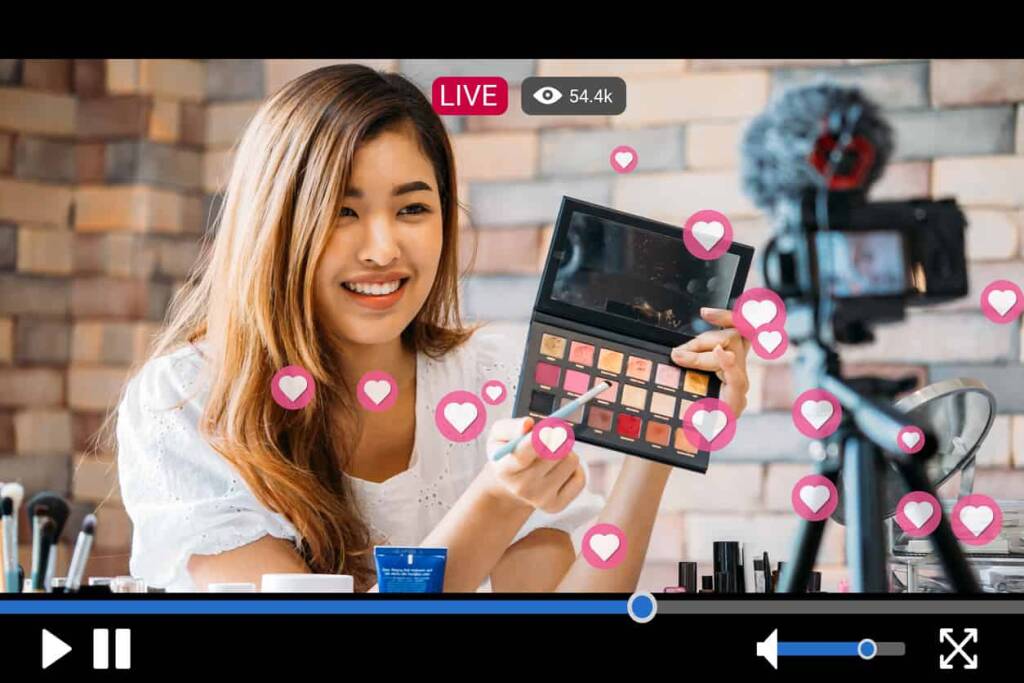
Live commerce is an innovative tactic for online selling with several important benefits.
Live commerce is using live streaming in eCommerce for sales, marketing, branding, and more. This tactic is used in both B2C and B2B eCommerce live selling to connect with their audience to build brand awareness and make sales.
One notable use of live commerce was during the 2020 Amazon Prime Day sale. The Amazon home page featured different live streams throughout the day that
Anyone can use live video commerce trends for their eCommerce business.
Live commerce could be used by any business that uses an eCommerce model and sells products online.
As we mentioned, Amazon used live commerce during their 2020 Prime Day event. However, they didn’t stop there. The platform now features a section of the site called Amazon Live. This feature gives sellers and members of the Amazon Influencer program the ability to highlight top products in a variety of different categories.
The video players on Amazon Live are surrounded by direct links to the featured products and a chat tool for viewers to interact. Viewers can also browse a collection of past live streams with other featured products.
Alibaba.com and eBay have also incorporated similar features for their users.
Sellers who list their products on independent storefronts, or their own websites, can also use live video commerce. They can incorporate live streaming on their website with a white-label streaming solution, or they can live stream on social media.
Although live streaming directly through your website gives you more control over the branding and other elements surrounding the video player, many opt to go live on Instagram or Facebook. The value of live streaming on these social sites is that they are absolutely free to use, and they allow you to tap into your existing online community. These platforms are also very user-friendly, so it is easy to get started in minutes.
Benefits of Live Commerce
Many businesses are still realizing the benefits of live commerce. Using this content medium in sales, marketing, and branding can help you to connect with your audience in ways that text, images, and other static content cannot.
Let’s take a look at a few notable benefits of live video commerce.
It’s Engaging
Did you know that 80% of people would rather watch a live video from a brand than read a post on their blog? Live streaming is much more engaging because it makes viewers feel like they are part of more intimate discussions with brands.
The real-time nature of live streaming can help your viewers feel like they are on a video chat with a friend rather than watching a heavily edited pre-recorded video. Interactive overlays such as polls, clickable product tags, and Q&A sessions also add another layer of participation.
When a video is being streamed live, it creates a bit of “FOMO.” Viewers don’t want to miss out and are likely to immediately direct their attention to a video that may not be available at a later time.
Stat: As of Q1 2025, TikTok boasts the highest advertising engagement rate – 5.3% – outpacing Instagram, YouTube, and Facebook, highlighting the exceptional audience interaction possible with video-based content.
Lifelike Shopping Experience
Although many people enjoy shopping online, there are still some people who would like to buy certain products in person. Sometimes, pictures don’t truly show the quality of a product, which makes some people uneasy.
Clothing is one major product that people like to buy in person because photos can make it difficult to really see the fit and fabric. However, when retailers or influencers try on the items on video and show multiple views of the products, buyers get a better idea of what the products are like.
AI personalization and real-time product recommendations now make this experience even closer to in-store shopping. For example, in 2024, Shein’s “real-time retail” approach—leveraging AI to detect trendy styles and rapidly produce tailored items – helped the company surpass $30 billion in revenue that year.
It’s Affordable
Live streaming is very affordable, which makes it quite accessible. There are free ways to live stream via social media, but even going with a more professional route is pretty attainable.
For live commerce, it’s possible to live stream from your phone or tablet at a decent quality. All you would need to pay for is a smartphone streaming app and a professional streaming solution.
As you scale, additional investments will likely be required, but it’s pretty cheap to get started. Mobile-first tools have made it even easier, with platforms like TikTok Shop expanding across Europe – fueling a revenue spike of 38% in 2024 to reach $6.3 billion.
It’s Easy to Do
It’s very easy to start streaming, especially if you are streaming from your smartphone. You’ll likely have to download an app or two if you don’t have them already, get your products set up, and start streaming.
Thanks to the impressive developments in live streaming technology over the past several years, there’s no need for much technical know-how. Analytics-driven engagement tools now give sellers instant insights into what’s resonating, while platforms like Amazon Live support seamless adaptation of streams in real time to audience behavior.
Stat: In 2025, 82% of Amazon sellers are using FBA for streamlined logistics and fulfillment – many of which rely on analytics and optimization tools to drive growth.
How to Use Live Streaming for eCommerce

As we mentioned, you can use live commerce through an online marketplace or through your independent platforms.
You can use live commerce on either of these types of platforms in a multitude of ways. The only constraints are your imagination and creativity. If you can think of it, you can do it.
That said, let’s look at a few of the most common ways that eCommerce brands are using live streaming.
Influencer Marketing
Influencer marketing is a tactic that brands use to promote their products via influential public figures with a similar target audience.
For example, a baby clothing brand would partner with a mom whose brand is built around motherhood and her children. A video game company would partner with a gamer who is known in the eSports community. Sometimes, influencers are celebrities, like actors and singers, and other times they are content creators that have worked intentionally to become influencers.
Influencer marketing opens a lot of doors for live commerce. In fact, live video campaigns boost video engagement by twice as much for influencer marketing.
A growing trend is the rise of “live commerce creators” — influencers who specialize in live shopping formats. Micro-influencers in particular are delivering high ROI, with studies in 2024 showing that they generate up to 40% higher engagement rates than larger celebrities in live shopping streams.
In many partnerships of this nature, brands require that their influencer partner posts photos, videos, and blog posts of them using selected products. Sometimes, the brands give influencers special promo codes to offer to their followers to go along with these posts.
However, there are a few ways that you can incorporate live video streaming into these contracts. A popular one is to have these influencers unbox your products on live streams. This lets the audience see their real reactions and impressions of your products.
Another approach is to co-host live streams on your branded platforms with relevant influencers. This helps you both build your following and hopefully “influence” the viewers to buy your products.
Live Streamed Auctions
Online auctions have been around since the birth of eBay, but live streaming takes this to the next level.
Estate auctions and fundraiser auctions are two popular types of auctions that are streamed online. The real-time nature of these auctions puts a bit of pressure on bidders, and that urgency can help to increase sales.
Beyond consumer sales, B2B auctions and liquidation events are increasingly turning to live formats. Retailers use live liquidation auctions to move excess inventory quickly, while B2B platforms host live bidding
sessions for equipment, wholesale goods, and surplus stock. This approach combines urgency with transparency, driving faster decision-making and stronger participation.
Live Event Streaming
Many brands use live streaming to allow remote guests to “attend” major events. Fashion shows, product reveals, and other similar events would fall into the live commerce 2025 category.
Today, this goes even further. AR try-ons and 3D product views are being integrated into live event streams, allowing customers to virtually test how a pair of sunglasses looks on their face or spin a product in 360° directly within the broadcast. These immersive experiences bring digital events closer to real-life shopping.
Again, you can stream just about any event you host, so there are very few limitations here.
Product Drop Streams & Flash Sales
Another increasingly popular use case for live commerce is exclusive product drops and flash sales. Brands create anticipation by teasing launches and then hosting live “drop streams” where products are revealed and sold in limited quantities. Adding countdown timers and limited-stock notifications amplifies urgency, boosting conversion rates dramatically.
Streetwear brands, cosmetics companies, and consumer electronics brands are especially leveraging this model to create hype and sell out products within minutes.
Embedded Checkout Flows
One of the most powerful evolutions of live commerce is the integration of embedded checkout flows. Instead of redirecting customers to external pages, modern platforms allow buyers to purchase products without ever leaving the stream.
This frictionless path from discovery to purchase reduces cart abandonment and turns live video into a direct sales engine. In 2025, platforms like TikTok Shop, Amazon Live, and white-label providers such as Dacast are standardizing this feature to help sellers capture impulse buys in real time.
Tips for Making the Most of Live Streaming eCommerce

Since live commerce offers so many potential use-cases, it is important to learn which best practices are most applicable to yours. That’s why we’ve put together a few tips for making the most of live commerce. Let’s check them out.
Live Commerce Best Practices
Creating hype before a live stream is a great way to ensure attendance. Make posts leading up to your live stream to tease the reveal of a new product, product line, or even exciting news. Make the contents of your stream feel like insider knowledge that your audience won’t be able to resist.
If you are streaming on Instagram, a live stream countdown can also help to build the excitement. Professional streaming solutions like Dacast also support live stream countdowns if you are streaming to your website.
As we mentioned, influencers can play a major part in live commerce. Get as strategic as possible with collaborations so that you can leverage the influence and following of public figures and brands.
Make sure that you’re choosing brands and influencers who share both a target audience and brand values with you. You want to make sure that your brands align as much as possible for the best results.
Keep the audience engaged in your streams in order to keep your viewership up and to make more meaningful connections.
Using a live streaming platform that supports a chat feature is a great way to get the audience engaged. This also allows you to do Q&As and other interactive activities that bridge the gap between you and your viewers.
One way to get viewers to tune into your live commerce streaming is to do exclusive giveaways to those who are on the live stream. This will get people involved and excited to participate in your stream.
Even if you spend $50 on products to give away, you can look at it as an investment for the other sales you’ll make as a result of that live stream.
Although immersive video typically is delivered on-demand due to technical requirements with editing and such, it is important to include it in the live commerce discussion.
Immersive video is video content that is filmed in a way that makes viewers feel like they are experiencing a situation from the first-person point of view. It has evolved with technologies like WebAR and virtual try-on, allowing consumers to interact with products in real time during live streams.
These innovations are transforming how shoppers engage with fashion, cosmetics, and even furniture in a live setting, blending entertainment with interactive personalization.
Additionally, the rise of 5G-enabled live commerce ensures smoother, high-quality interactive video experiences, reducing latency and enhancing viewer engagement.
Immersive video is related to emerging interactive technologies that place viewers directly into the digital experience, moving beyond traditional VR to more accessible, browser-based formats. This technology is being used in eCommerce to provide a more lifelike shopping experience. It has been particularly popular in the fashion, automotive, and real estate industries.
Mobile-First Stream Optimisation
More than 70% of ecommerce traffic now comes from mobile devices. To ensure a smooth mobile experience:
- Use vertical video: It fits the natural way users hold their phones and increases engagement.
- Optimize for low-bandwidth environments: Use adaptive bitrate streaming to deliver the best quality for each user’s connection.
- Touch-friendly UI: Ensure interactive elements like “Buy Now” buttons, chat boxes, and polls are easy to tap.
Using Analytics for Smarter Selling
Real-time data provides crucial insights into viewer behavior and stream performance:
- Conversion tracking: See which moments trigger purchases to double down on what works.
- Engagement heatmaps: Identify peak interest points in your stream to refine future content.
- Drop-off analysis: Understand when and why viewers leave, and adapt your pacing or offer timing.
AI-Assisted Moderation for Live Chat
Interactive chat boosts engagement but can quickly get overwhelming—or toxic—without controls:
- AI-powered moderation: Filter spam, offensive content, and irrelevant chatter automatically.
- Smart keyword detection: Flag high-intent messages like “How do I buy?” or “Is this in stock?” for prioritized response.
- Pre-programmed replies: Use AI to suggest instant answers or direct users to purchase links.
Localization & Multilingual Live Selling
Expanding your reach globally means speaking your audience’s language—literally and culturally:
- Multilingual streams: Offer multiple audio or subtitle options for different regions.
- Localized offers: Adapt pricing, promotions, and payment methods to local norms.
- Cultural relevance: Use hosts or influencers familiar to each audience for deeper connection.
Unified Streaming & Commerce Analytics With Dacast
Dacast empowers brands to integrate live commerce seamlessly with advanced tools:
With Dacast, you can:
- Stream to your website in multiple languages.
- Track viewer engagement with detailed analytics.
- Integrate eCommerce tools for real-time conversion tracking.
Tip: Use Dacast’s API to connect live data directly into your CRM or eCommerce platform for smarter follow-ups and remarketing.
Live Commerce Streaming Platform Comparison
| Platform | Full Brand Control | Integrated Shopping | Multi‑Platform Delivery | Note |
| Dacast | Yes – white‑label player (custom logos, colors), private embeds | Not specifically built-in to shopping — supports monetization via paywalls (PPV, subscriptions, ads) | Yes – supports embedding on websites, social platforms like Facebook, YouTube, Twitch also powers OTT apps across devices | Dacast stands out for its full brand control, integrated monetization, and multi-platform delivery, making it a superior choice for businesses seeking a professional, white-label live commerce solution with high reliability and customization. |
| Maestro (by Vivastream) | Yes – fully branded experiences and customizable video website builder | Yes – includes live commerce: clickable overlays, chat, polls, tipping, ticket bundles | Yes – OTT live streaming, supports multiple platforms and embedding | Strong interactivity and flexible monetization |
| Vimeo Live | Limited white‑label control (branding available, but Vimeo overlays may remain unless enterprise) – not as fully customizable as Dacast or Maestro | Yes – supports integrated PPV and subscription via Vimeo’s shopping tools in higher-tier plans | Yes – embeddable, supports multiple devices and social streams | Commonly used for live commerce and event-based streams |
| Uscreen (Live + VOD platform) | Yes – branded experience with video storefronts and apps (white-label storefronts) | Yes – integrates shopping: subscriptions, PPV, bundles, and live commerce capability | Yes – supports web, mobile, OTT apps | a solid all-in-one platform with built-in monetization and community tools |
FAQs
1. What is live commerce and how does it work in 2026?
Live commerce in 2025 merges entertainment with retail, letting hosts demonstrate products via a live video shopping platform. Customers interact, ask questions, and purchase in real-time, making the experience personal and immediate. Retailers leverage influencers or staff to humanize the brand and convert viewers directly during the stream.
2. Which platforms are best for live selling (social media, marketplace, white-label)?
Top platforms include social media, major marketplaces, and white-label live shopping solution providers. Social media offers audience reach, while marketplaces provide built-in trust. White-label solutions allow full control, branding, and customization for businesses seeking scalable, direct-to-consumer live selling for eCommerce brands experiences.
3. How do you measure the ROI of live commerce?
Track metrics like viewer count, engagement, click-through rates, and conversion rates to determine ROI. For video ecommerce platform success, integrate analytics dashboards to monitor sales driven during streams, average order value, and repeat purchases. Post-event performance and customer feedback further clarify profitability and campaign efficiency.
4. Can live commerce be integrated directly into my website?
Yes, businesses can embed a shoppable live streaming experience directly into their websites using tools like an embedded shoppable video player. This retains traffic on-site and offers seamless shopping with fewer clicks. Integrating with CRM and analytics enables full ownership of user data and customer journeys.
5. What equipment and software are needed for high-quality live selling?
A quality live setup includes HD cameras, microphones, lighting, stable internet, and streaming software. Platforms offering the best live streaming platform for online stores features also include overlays, product displays, and chat tools. Consistency in presentation and technical quality builds trust and increases buyer confidence.
6. How can AI improve live shopping experiences?
AI enhances live commerce by offering AI-powered live shopping recommendations, personalizing product suggestions in real-time. It analyzes user behavior, optimizes inventory display, and automates responses, creating a smarter, faster shopping journey. AI also improves targeting, boosting relevance and engagement with each viewer.
7. Is live commerce effective for small businesses?
Yes, live commerce levels the playing field. Small businesses can use mobile live commerce strategies to connect authentically with niche audiences, build brand loyalty, and drive sales affordably. Lower production costs and direct engagement make it a powerful marketing and conversion tool even on a tight budget.
8. How do I reach global customers with live commerce?
To go global, use cross-border live commerce tips like local payment integrations, time zone planning, and global shipping logistics. Leverage live shopping with multilingual subtitles to break language barriers and build trust with international viewers. Partner with regional influencers to localize content and expand cultural reach.
9. What are the top engagement tactics for live selling in 2025?
Effective tactics include limited-time deals, giveaways, real-time polls, and interactive video for eCommerce conversions. Hosting Q&A sessions, highlighting user comments, and showcasing authentic product use builds trust and drives impulse buys. Interactivity keeps viewers engaged and encourages participation that boosts conversion rates.
10. How does Dacast support secure, branded live commerce?
Dacast enables secure, branded streaming through a live streaming e-commerce infrastructure with password protection, tokenized access, and full white-label features. It allows integration of AR live shopping demo elements and customized players, giving brands control while maintaining high production and security standards.
11. What’s the best way to get started with live commerce as a beginner?
Start by learning how to sell products with live streaming through small, authentic broadcasts. Use simple setups, focus on one or two products, and engage your audience in real-time. Practice storytelling, highlight product benefits, and always include a clear call-to-action. Start on platforms your audience already uses before expanding.
Use Dacast to Live Stream on Your Ecommerce Site
Just like eCommerce revolutionized retail, live commerce is reshaping how brands connect with their customers in real time. Whether you’re in fashion, electronics, beauty, or home goods, there’s untapped potential waiting for you.
Here’s how eCommerce brands are already using Dacast:
- Fashion retailers are hosting weekly “Try-On Live Shows” where influencers model new arrivals and shoppers buy instantly via integrated “Buy Now” buttons.
- Beauty brands run interactive tutorials with real-time Q&As, exclusive product drops, and giveaways to drive conversions and engagement.
- Home decor stores use immersive 360° product demos and AR try-ons so shoppers can “place” items in their space during the stream.
- Electronics sellers hold product launch events and live unboxings, collecting leads and tracking engagement through integrated analytics.
Ready to See It in Action for Your Business?
Try Dacast risk-free for 14 days and explore how live and on-demand video content can elevate your brand’s selling strategy.
No credit card. No long-term commitment. Just powerful tools to help you sell smarter.
Want more live selling tips and insights from other brands? Join our LinkedIn group for exclusive strategies and industry updates.
