



The Ultimate Guide to Sports OTT Streaming in 2026: Platforms, Trends & Strategies

By Dacast Editorial Team | Reviewed by Jon Whitehead, COO at Dacast | Updated May 2026
What Is Sports OTT Streaming?
Sports OTT (over-the-top) streaming is the delivery of live and on-demand sports content directly to viewers over the internet, bypassing traditional cable or satellite TV. Fans access games, highlights, and exclusive content on any device through dedicated apps or web browsers, typically via subscription, pay-per-view, or ad-supported models.
Over 114 million people in the U.S. are now watching live sports digitally in 2026, surpassing traditional pay TV sports viewership for the first time, according to EMARKETER. This shift is driven by consumer preferences for flexibility, personalization, and convenience. Fans no longer want to be tied to cable subscriptions or fixed schedules; they want to stream their favorite teams and events whenever and wherever they choose. For those in the sports industry, this isn’t just a trend; it’s the future of engagement, fan retention, and revenue generation.
OTT sports platforms open up new opportunities for sports organizations to connect with global audiences, deliver immersive experiences, and explore innovative ways to monetize content. Whether through subscription models, ad-supported viewing, or pay-per-view events, OTT allows for a tailored approach to meet modern consumer demands.
OTT platforms like Dacast are playing a pivotal role by helping professional teams, leagues, and broadcasters reach fans worldwide, offering reliable, low-latency live sports streaming with advanced content protections such as DRM and geo-blocking. Dacast empowers sports organizations to monetize content effectively through various models, including subscription, ad-supported viewing, and pay-per-view (PPV) events. For example, a semi-pro football league using Dacast tripled its revenue with pay-per-view streaming.
Table of Contents
- Why Sports Broadcasters Are Moving to OTT in 2026?
- Sports OTT Market Stats and Forecasts (2026–2030)
- How to Choose the Best Sports OTT System
- The 10 Best OTT Platforms for Sports Streaming in 2026
- Emerging Technologies in Sports OTT
- Fan Engagement and Technical Solutions
- Host & Stream Your Sports Broadcast with Dacast’s OTT Platform
- Future of OTT Sports Streaming
- FAQs
- Conclusion
Why Sports Broadcasters Are Moving to OTT in 2026?
This shift is reshaping sports broadcasting, driven by declining traditional TV viewership and growing demand for flexible, on-demand access to sports content. Fans can watch live games, highlights, and behind-the-scenes footage anytime, anywhere, on any device, from smartphones to smart TVs.
For sports organizations, the move to OTT opens direct access to global audiences, new monetization models, and richer fan data than traditional broadcast ever allowed. Broadcasters now face a clear choice: partner with consumer giants like DAZN, ESPN+, and Amazon for broad exposure, or adopt a white-label platform like Dacast to retain brand control, own the audience relationship, and keep 100% of subscription and pay-per-view revenue.
Dacast enables sports organizations of all sizes to launch branded streaming channels with low-latency live streaming, multi-CDN delivery, DRM-based content protection, and flexible monetization options including subscriptions, ad support, and pay-per-view.
Sports OTT Market Stats and Forecasts (2026–2030)
The global sports OTT market is experiencing rapid growth, driven by increasing demand for flexible, on-demand sports content and advanced streaming technologies. The trends below highlight a vibrant, expanding market where sports organizations can capitalize on both growing viewership and diverse sports streaming monetization opportunities through SVOD, AVOD, PPV, and FAST channels.
- North America holds the largest share of the sports streaming market, accounting for over 35% in 2024, followed by Europe and the Asia-Pacific region as key growing markets.
- Football (soccer) dominates as the top sport segment, contributing to over 40% of revenue globally.
- Smartphones and tablets lead as the primary devices for sports OTT consumption, representing around 50% of revenue by device type in 2024.
- Proliferation of 5G networks and improvements in low-latency streaming enable high-quality, real-time sports streaming, enhancing the fan experience globally.
- AI technologies are increasingly used to personalize content and improve discovery, while immersive tools like AR/VR and multi-angle viewing are becoming prominent in sports OTT platforms.
- Regional content customization and localized subscriptions help platforms engage a diverse, global fan base, broadening viewership beyond traditional markets.
How to Choose the Best Sports OTT System

OTT streaming is driving the future of sports broadcasting, with the global OTT video market projected to reach $403.70 billion by 2029, growing at 6.54% annually. Innovations like 5G, low-latency streaming, and AI-powered personalization offer sports broadcasters new ways to engage fans and boost revenue. Choosing the right sports OTT platform is key to maximizing these benefits while keeping pace with evolving technology and market demands. Here’s what to consider in 2025.
White-Label Solutions for Brand Control
Brand identity matters more than ever. White-label sports OTT platforms, such as Dacast, let you deliver content under your own branding with customized logos, colors, and UX. Dacast offers a white-label sports OTT platform with built-in SVOD, AVOD, and PPV monetization models, enabling flexibility to match your audience and revenue goals.
FAST Channels for Sports
Free Ad-Supported TV (FAST) is booming, especially for sports leagues seeking to expand reach while monetizing through advertising. Platforms supporting FAST channels for sports enable leagues to offer free, ad-supported streams on popular smart TV apps, capitalizing on growing viewer appetite for no-cost content.
Fan Data Ownership
OTT platforms offer a crucial advantage over social platforms by enabling first-party data capture. You gain direct access to fan behavior and preferences, empowering personalized marketing, churn prediction, and deeper audience analytics. This data ownership fuels smarter decisions and higher engagement.
Monetization Models and When to Use Them
Monetization remains a core driver of OTT streaming success. Choosing the right mix depends on league size and audience preferences—a matrix approach helps align revenues and fan expectations.
The best OTT sports streaming solutions offer a variety of monetization models, including:
- Subscription Video on Demand (SVOD) (subscription-based for loyal fans)
- TVOD/PPV (pay-per-view for exclusive events)
- AVOD (ad-supported free tiers)
- FAST (free linear streaming with ads)
- Sponsorships integrated across models
Latency and Quality Playbook
Protocol | Typical Latency | Best Use Case | Scalability | Dacast Support |
|---|---|---|---|---|
RTMP (ingest) | 1-3 sec | Standard encoder-to-platform ingest | Very High | Yes |
SRT (ingest) | 0.1-1 sec | Contribution over unreliable networks | Medium | Yes |
HLS (playback) | 6-30 sec | Broad device compatibility, VOD | Very High | Yes |
CMAF (playback) | 2-4 sec | Unified HLS+DASH, low latency | High | Yes |
WebRTC (playback) | <1 sec | Interactive real-time co-streaming | Lower at scale | Yes |
Scaling and Reliability
Address spikes in viewership (finals, derbies) with multi-CDN for sports streaming architectures, origin shielding, and instant failover. Ensuring zero downtime during peak times is a must-have.
AI in Sports OTT
Use AI for video streaming, automated highlights, real-time captions and translations, viewer personalization, churn risk scoring, and content safety monitoring.
Apps and Distribution
Support streaming across web, iOS/Android, Roku, Fire TV, Apple TV, and smart TVs. App investment pays off for larger audiences and brand loyalty.
Accessibility and Inclusivity
Ensure WCAG compliance with captions, multilingual audio, and audio description tailored for sports fans to reach everyone.
Advanced Security Features
It goes without saying that protecting your content and viewer data is paramount. Choosing the top OTT sports platforms means getting advanced security features such as:
- Digital Rights Management (DRM): Prevents unauthorized copying or recording of your streams.
- Dynamic Watermarking: Embeds unique identifiers to track and deter piracy.
- Two-Factor Authentication: Enhances platform security by preventing unauthorized logins.
- Geo-blocking: Restricts access to specific regions, ensuring compliance with broadcasting rights.
Legal and Licensing Considerations
Do you have or require the rights to stream your sporting event? Before you dive into OTT sports streaming, ensure you have secured the necessary rights to broadcast your events. Licensing agreements and broadcasting rights vary by region and sport, so it’s essential to confirm you’re operating within legal boundaries. Failing to address these considerations can lead to costly disputes and reputational damage.
The 10 Best OTT Platforms for Sports Streaming in 2026
With the rapidly expanding market, the number of OTT platforms available has grown significantly, offering a wide array of options tailored to different needs. Each platform comes with its unique strengths and potential limitations. However, in the competitive world of sports streaming, a few standout OTT platforms have emerged as industry leaders, setting benchmarks for performance, innovation, and user experience.
Platform | Pricing | Latency | Monetization Models | Global Reach | White-label | Device / Apps | Security / DRM | Best For |
Dacast | Budget-friendly plans; scalable fees | Low latency; WebRTC, CMAF, SRT supported | SVOD, AVOD, PPV, FAST, Ads | Global delivery, including China | Fully customizable | Web, iOS/Android, Roku, Fire, Apple TV | AES encryption, DRM, watermarking | Small to large leagues; global pay-per-view |
Hudl | Mid-range; league-focused | Moderate latency | Subscriptions, freemium | Strong in North America | Partial branding | Web, Mobile | Basic DRM, content control | Youth and amateur sports |
Sportsradar | Custom pricing; enterprise | Low latency | Best data integration, advertising | Worldwide, strong sports data | No white-label | API-based integration, web/mobile | Industry-grade DRM and data security | Data-driven sports analytics and betting |
FloHockey TV | Niche pricing | Moderate to low latency | Subscriptions, PPV | Primarily North America | Limited | Web, Mobile | Standard video protections | Hockey communities |
USATF.TV | Low to mid | Moderate latency | Subscriptions | U.S.-centric | No | Web | Basic protection | Athletics and track fans |
StrivTV | Affordable; flexible | Moderate | Subscriptions, ads | U.S. regional | White-label | Web, Mobile, Smart TVs | DRM, geo-blocking | Local and school sports |
Viewlift | Quote-based; enterprise | Low latency | SVOD, AVOD, PPV, sponsorship | Global | Full white-label | All major platforms | Multi-DRM (Widevine, PlayReady, FairPlay) | Media companies and pro leagues |
Enveu | Custom pricing | Low latency | SVOD, AVOD | Global | White-label | Web, Mobile, OTT devices | Multi-DRM, watermarking | AI-powered OTT services |
Muvi | Subscription-based | Moderate to low latency | SVOD, AVOD, PPV | Global | White-label | Web, Mobile, Smart TVs | Advanced content protection | End-to-end OTT platform |
Vimeo OTT | Small business-friendly | Moderate latency | SVOD, PPV | Global | White-label basic | Web, Mobile, Smart TVs | Basic DRM, secure streaming | Creators, small sports |
1. Dacast

Dacast is a unified, professional OTT sports streaming platform designed for broadcasters who demand high-quality, secure, and scalable live streaming and VOD hosting. It stands out not only for its comprehensive feature set but also for its superior global content delivery capabilities, including dedicated China video hosting and multi-CDN scaling. This enables seamless and reliable streaming experiences for sports audiences worldwide, even in regions with traditionally challenging connectivity.
Dacast’s platform supports full monetization flexibility with built-in SVOD, AVOD, and pay-per-view (PPV) options, making it an ideal choice for sports leagues ranging from semi-pro to professional. Its advanced video security features include AES encryption, DRM, geo-blocking, and watermarking to protect valuable content and comply with broadcasting rights. Low-latency HTML5 streaming ensures fans get the live action with minimal delay, crucial for real-time sports engagement.
Here is a testimonial from a League Broadcasting Manager who says, “Dacast has been instrumental in helping our semi-pro football league deliver pay-per-view matches seamlessly to fans worldwide. Their multi-CDN delivery and robust monetization tools have tripled our digital revenue within a year.”
Based on this, it’s no wonder that Dacast remains the best sports OTT platform in 2026. It’s the best choice for organizations seeking a reliable, scalable live sports streaming solution that combines cutting-edge technology with global reach and monetization flexibility.
Key Features:
- Zoom live streaming integration
- M3U8 file creation capability to enable adaptive streaming delivery of OTT video content across various devices
- Fully integrated RTMP streaming platform features
- Advanced API to build your own video CMS
- AES video encryption for advanced streaming security
- Multi-user access (MUA) on Scale and Custom plans
- Expo galleries video portal
- Unlimited viewers and live channels
- Video security tools for secure streaming
- Monetization tools (SVOD, AVOD), and pay-per-view (TVOD)
- Player API and Video API access
- 24/7 tech support
- RTMP Encoder for ingesting HLS streaming
- Low latency HTML5 channels for video streaming
- Live encoding support for the top video encoders
- White label and branding control
- Adaptive bitrate streaming to allow multiple streams with varying bitrates
- Global content delivery with strategic CDN partnerships
- Multi-bitrate streaming
Pros:
- Comprehensive VOD and live streaming solutions
- Real-time analytics and reporting
- Ad-free streaming for a professional viewer experience
- Advanced privacy and security tools
- Mobile-friendly and supports live stream recording.
- China Video Hosting for international reach
- Budget-friendly plans for different user needs.
- Live stream recording
Cons:
- The extensive feature set may require an initial learning curve
2. Hudl

Hudl was designed to meet the evolving needs of sports organizations by combining video analytics, coaching tools, and OTT streaming. It offers tailored solutions to help teams perform better on and off the field, regardless of whether you’re a high school coach, a college team, or a professional sports organization. The platform also supports broadcasting games to fans, allowing organizations to monetize their content through OTT sports streaming solutions.
Key Features
- Video Analysis Tools: Advanced tools for breaking down plays, studying opponents, and improving team performance.
- Highlight Reel Creation: Simple tools to create engaging highlights for recruitment or fan engagement.
- Mobile Accessibility: Record, upload, and analyze videos directly from mobile devices.
- OTT Sports Streaming: Enables teams to stream live games and highlight reels directly to fans, creating new revenue streams.
- Athlete Performance Insights: Provides data-driven insights into individual and team performance.
- Team Communication: Integrated messaging and file sharing to streamline collaboration.
- Custom Branding Options: Personalize video platforms with team logos and colors.
- Integration with Wearable Devices: Combine video data with stats from wearables for deeper insights.
Pros:
- Easy-to-use platform tailored to a variety of sports
- Scalable solutions for teams of all sizes, from youth leagues to professionals
- Powerful tools for both coaching and fan engagement
- Robust video streaming and OTT sports platform features
- Mobile-friendly with a seamless upload and analysis process
Cons:
- Advanced features may require additional training for new users
- Costs can add up for larger teams or organizations requiring premium services
- Some users report occasional technical issues with video uploads or playback
3. Sportsradar
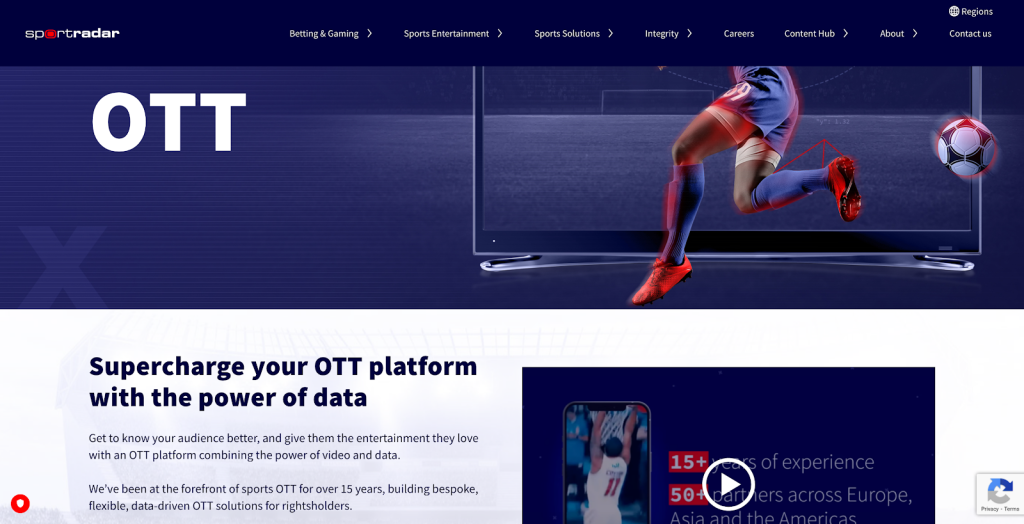
Sportsradar is a global leader in providing sports data and technology solutions. Known for its comprehensive sports content, data services, and analytics, Sportsradar supports both traditional broadcasters and OTT (Over-the-Top) platforms by delivering high-quality, real-time sports data. The platform offers a wide range of services, including live sports feeds, betting data, and content delivery, all of which can be integrated into websites, apps, and digital platforms. As of 2025, Sportsradar has solidified its position as a trusted partner for sports organizations, media companies, and betting operators worldwide, offering cutting-edge tools and insights to elevate fan engagement, media consumption, and business growth.
Key Features:
- Real-Time Sports Data: Offers live data feeds for thousands of sporting events, ranging from mainstream sports like football, basketball, and soccer to niche sports such as eSports and motorsports.
- Betting Solutions: Provides data feeds tailored for sportsbooks, including odds, results, and other relevant betting statistics to power in-play betting and odds compilation.
- OTT & Streaming Services: Supports OTT platforms with live streaming and VOD services, offering access to comprehensive sports content in real time.
- Customizable Solutions: Allows clients to personalize and integrate various sports data and media solutions, ensuring seamless integration into digital platforms.
- Content Syndication: Its sports content can be syndicated across multiple platforms, increasing the reach and visibility of live sports broadcasts.
- Data Integration: Clients can integrate Sportsradar’s sports data into their websites, mobile apps, or OTT platforms using APIs, ensuring smooth data delivery and consumption.
- Partnerships with Leading Sports Leagues: Collaborates with top-tier sports leagues and federations, including partnerships with the NFL, NBA, and MLB, to provide exclusive data and content.
Pros:
- Performance analysis, player stats, and predictive modeling to enhance viewer engagement
- Extensive sports coverage
- Live sports data feed with minimal latency
- Global reach
- Strong industry partnerships with leading sports leagues and major media organizations
Cons:
- Complex learning curve for new users
- May not offer a comprehensive VOD solution
4. FloHockey TV

FloHockey TV is a niche OTT streaming platform dedicated entirely to hockey, operated under the FloSports umbrella. It serves fans of college hockey, minor leagues, and international competitions who want coverage that mainstream sports platforms routinely skip. For hockey-focused organizations looking to stream events to a pre-qualified, engaged audience, FloHockey TV offers a direct path to distribution without requiring a full platform build.
Key Features
- Access live coverage of a wide variety of hockey leagues, tournaments, and events
- View replays of past games, full game archives, and exclusive behind-the-scenes content
- Watch in high-definition quality for a more immersive experience
- Access exclusive broadcasts of college and minor league hockey, as well as international events
- Watch games on the go with the FloSports mobile app available for iOS and Android
- Watch game highlights and key moments from all games
- Easily search and filter games based on teams, events, and dates
- Stream on a variety of devices, including mobile, desktop, and TV-connected devices like Roku or Apple TV
Pros:
- Coverage of major leagues, college hockey, and even youth-level games
- Access to exclusive events and games
- HD Streaming
- Mobile and multi-device access
- Affordable pricing
Cons:
- Limiting access in certain regions
- Requires subscription to access full content
- Users report occasional buffering and issues with streaming quality
5. USATF.TV
 USATF.TV is the official streaming platform of USA Track & Field (USATF), the national governing body for the sport of track and field in the United States. It provides fans with access to live and on-demand coverage of track and field events, including national championships, elite competitions, and athlete interviews. USATF.TV is designed to offer an immersive experience for track and field enthusiasts, athletes, and coaches, ensuring they stay connected to the latest sports developments.
Key Features:
- Watch live coverage of major track and field events, including the USATF Outdoor Championships, USATF Indoor Championships, and other key competitions
- Follow specific athletes’ performances across events with personalized notifications for updates on their results
- Access full event replays, individual race highlights, and athlete performances at any time
- Behind-the-scenes footage, interviews with athletes, and other unique content related to USATF events
- Interactive features like race results, live updates, and social media integration to keep fans engaged in real-time
Pros:
- High-quality streaming ensures an optimal viewing experience for live events and replays
- Extensive coverage of both national and elite track and field competitions
- Provides in-depth features on athletes, making it an invaluable resource for track and field fans interested in individual performances
- Stream events on the go via the USATF.TV app for iOS and Android devices
Cons:
- Some content may be region-locked or restricted in certain countries
- While there is some free content, many events and features are behind a paywall
6. Striv TV
 Striv TV is an innovative live streaming platform designed specifically for schools, sports teams, and other organizations to broadcast their events to a wider audience. It provides a user-friendly and cost-effective solution for streaming live sports, academic events, and other activities. Striv TV aims to simplify the process of video production and broadcasting, enabling schools and teams to offer professional-quality streams. The platform is designed to be intuitive, even for users without prior technical experience, and provides both live streaming and video archiving features.
Key Features:
- Stream live sports events, school activities, and more to an online audience
- Archive your streams for later viewing, making it easy for fans to catch up on past events
- Personalize your stream with school logos, colors, and other branding elements
- Connect multiple cameras to your streaming setup for more dynamic broadcasts
- An embeddable video player that can be easily placed on school websites or social media pages for easy access
- Share your streams directly to social media platforms like Facebook, YouTube, and Twitter
Pros:
- User-friendly and easy to set up and manage
- Personalization options for logos and team colors to create a professional look
- Storing streams securely and easily access archived content
- Mobile streaming allows users to broadcast from anywhere
- Automatic generation of highlights from live events
Cons:
- It may lack more advanced features available on larger platforms, such as monetization options or extensive analytics
- Requires external equipment for multi-camera setups, which could be a challenge for teams without the necessary gear
7. Viewlift
 This is a comprehensive OTT platform that empowers sports organizations, leagues, and broadcasters to deliver and monetize live and on-demand sports content. Designed for scalability and customization, Viewlift offers end-to-end solutions for creating branded streaming platforms and apps across multiple devices. With a strong focus on sports, this platform integrates advanced analytics, monetization tools, and low-latency streaming capabilities. It enables seamless viewing experiences for fans worldwide.
Key Features:
- Use of AI-powered personalization to deliver tailored recommendations to viewers for improved retention
- Game scheduling, stats integration, and live score overlays designed specifically for sports organizations
- Reach global audiences with localized content and multi-language subtitles
- Features like DRM, geo-blocking, and AES encryption ensure secure streaming
- Reliable low-latency streaming ensures real-time engagement during live sports events
- Supports SVOD, AVOD, TVOD, pay-per-view, and hybrid monetization options
Pros:
- Scalable for growth
- Comprehensive sports features
- Advance security agains piracy and unauthorized access
- Seamless streaming on multiple devices
Cons:
- May require technical expertise for large-scale customization
- No pricing transparency
- The vast feature set may require a learning curve
8. Enveu
 This all-in-one OTT platform is tailored to sports broadcasters, leagues, and content creators seeking to deliver dynamic streaming experiences. Known for its user-friendly interface and advanced feature set, Enveu specializes in enabling sports organizations to showcase live and on-demand content across devices. With a focus on custom branding, analytics, and monetization, Enveu empowers businesses to create immersive sports OTT experiences that engage audiences and generate revenue.
Key Features:
- High-quality live streaming combined with on-demand video hosting for comprehensive coverage.
- Integrates with live scoring, statistics, and schedule management tools
- Insights into viewer engagement, content performance, and revenue trends
- Ensures fast and reliable content delivery to audiences worldwide
- Offers localization options to cater to diverse audiences
- Create personalized web, mobile, and smart TV apps for your sports content
Pros:
- Highly customizable OTT platform for sports organizations
- AI-powered personalization for better viewer retention
- Flexible monetization models to suit diverse business needs
- Advanced security features to protect streaming content
- Supports both live streaming and VOD hosting
Cons:
- Requires technical expertise for advanced setup and customization
- Pricing details are not publicly available, which may create uncertainty
- Some advanced features may require additional configuration or cost
9. Muvi
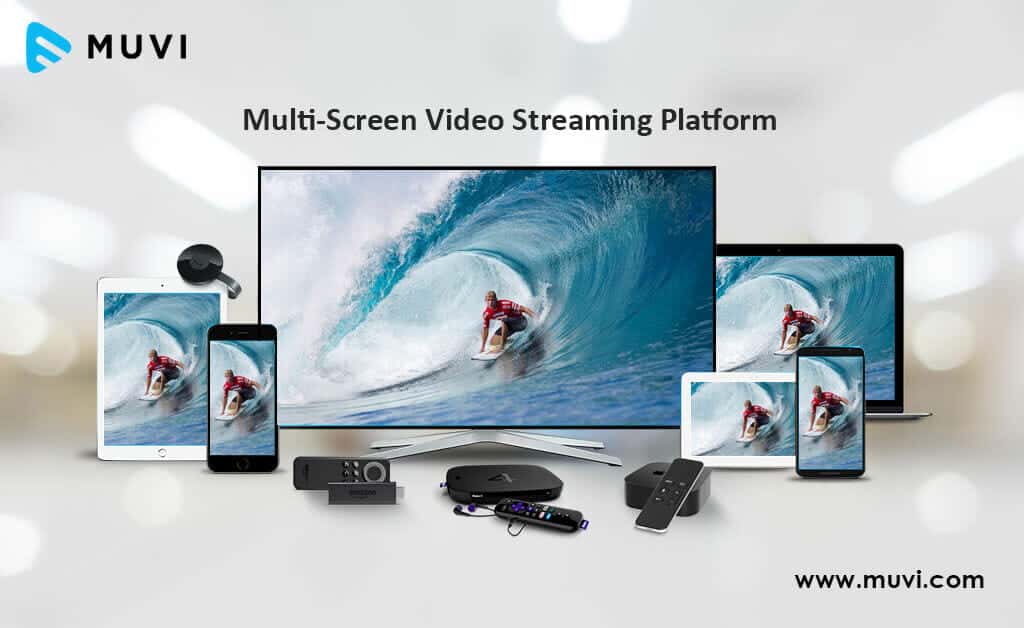
Muvi is a powerful end-to-end OTT platform designed to simplify the process of launching sports streaming services. With features tailored specifically for live sports broadcasting, VOD hosting, and audience engagement, it empowers sports organizations, leagues, and broadcasters to create branded streaming experiences across web, mobile, and TV platforms. Its no-coding approach ensures ease of use, while robust customization options cater to diverse streaming needs.
Key Features:
- Plan and promote upcoming sports events with an integrated calendar and notifications
- Includes DRM, watermarking, and geo-blocking to safeguard intellectual property
- Offers in-depth analytics to track audience behavior and content performance
- Compatible with web browsers, mobile apps, smart TVs, and gaming consoles
- AI-powered personalized content recommendations
Pros:
- Fully customizable and white-label solution for branded sports streaming
- Comprehensive monetization options to suit different business models
- Scalable infrastructure for growing sports organizations and leagues
- Strong content protection and global delivery network
- No coding or technical expertise is required to set up
Cons:
- Pricing for enterprise-level features is not transparent
- Advanced customization may require additional costs or support
- Smaller organizations may find certain features overly complex
10. Vimeo OTT
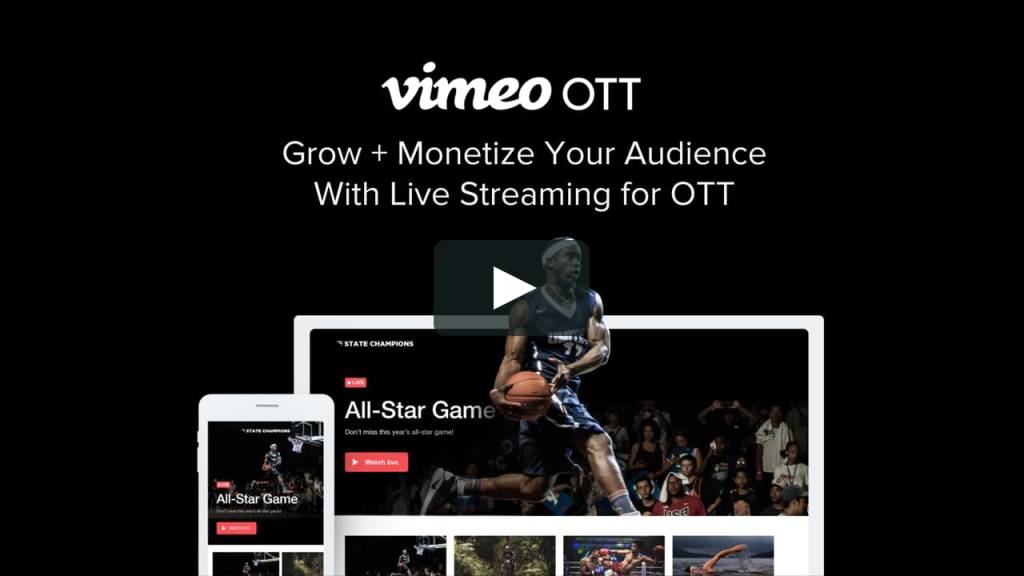
Vimeo OTT is a robust platform for creating and managing subscription-based video streaming services. Known for its user-friendly interface and extensive customization options, Vimeo OTT allows creators, organizations, and businesses to launch branded OTT platforms across various devices, including web, mobile, and smart TVs. Focusing on high-quality video delivery and monetization, Vimeo OTT is an excellent choice for sports broadcasters looking to engage audiences and generate revenue through subscription models.
Key Features:
- Connect with marketing and CRM tools like Mailchimp and Zapier
- Ensures reliable, high-quality video delivery worldwide
- Access in-depth data on viewer engagement, subscription performance, and revenue generation
- Features DRM protection, password-protected content, and geo-restrictions
- Stream content to viewers on web browsers, mobile devices, Roku, Apple TV, Fire TV, and other platforms
- Includes tools to manage subscription tiers, pricing, and billing
- Stream live events or provide on-demand content with adaptive bitrate streaming
Pros:
- Easy to set up and launch a professional-grade OTT platform
- Customizable branding for a unique user experience
- Seamless integration with other tools and services
- Reliable and secure global content delivery
- Flexible monetization options to suit different business needs
Cons:
- Limited features for advanced sports-specific use cases, such as real-time stats overlays
- Premium features, such as extensive app customization, require higher-tier pricing
- No pay-per-view option; primarily supports subscription and transactional models
Emerging Technologies in Sports OTT
The sports OTT landscape in 2026 is rapidly evolving, driven by cutting-edge technologies that revolutionize how fans engage with live sports content. One key innovation is the rise of AI-driven real-time highlights, which automatically identify and deliver the most exciting moments to viewers as they happen. Combined with automated translations and audience segmentation, these AI tools personalize the experience, making content accessible to a global audience and improving fan engagement through targeted content offers.
With 5G networks and edge computing, low-latency live sports streaming is possible on a global scale, ensuring fans watch fast-paced action with minimal delay regardless of location. These advancements enable ultra-smooth live streams that enhance real-time interaction between the event and viewers.
Immersive technologies such as augmented reality (AR), virtual reality (VR), and metaverse sports viewing let fans experience games like never before. AR layers interactive stats and player info directly onto streams, while VR and metaverse platforms offer 360-degree, immersive environments where fans can feel like they are courtside or even part of the team huddle. Together, these tools deepen fan connection and create entirely new viewing experiences.
Blockchain technology is reshaping sports OTT in powerful ways. NFTs (non-fungible tokens) and blockchain enable secure digital ticketing, authentic digital collectibles, and fan tokens that offer exclusive perks or governance rights. These digital assets expand monetization opportunities and build stronger fan communities through verifiable ownership and tradability.
Dacast integrates these emerging technologies to bring advanced solutions to sports OTT providers. Its AI-powered captioning enhances accessibility with real-time transcription and translations. Dacast also offers comprehensive AI-driven monetization tools along with real-time audience analytics for deep insights and churn prediction—empowering broadcasters to optimize revenue and fan engagement effectively.
Altogether, these emerging technologies enable sports streaming platforms to deliver multi-CDN, low-latency, and personalized OTT sports content. These meet the expectations of modern global fans, while also opening innovative new revenue streams and immersive fan experiences.
Fan Engagement and Technical Solutions
Sports OTT platforms can significantly boost viewer engagement by integrating interactive features like real-time polls, live chats, and gamification. These tools transform passive viewers into active participants, fostering a strong sense of community around live events. For example, real-time polls invite fans to vote on game-changing moments, while live chats promote instant fan discussions and camaraderie.
Gamification adds a layer of excitement through fantasy leagues, prediction contests, and leaderboards that keep viewers invested and returning. This creates a competitive and social experience, deepening fan loyalty. Platforms also use live quizzes and reward systems to motivate regular interaction, enhancing retention and monetization opportunities.
To support global audiences, multi-language captions and AI-powered live translations provide accessibility and inclusivity. This enables fans worldwide to follow the action seamlessly in their preferred languages. It’s a crucial feature for expanding the reach in diverse markets.
Among leading platforms, Dacast offers a cutting-edge interactive player that supports all these engagement tools. Its integrated paywall and monetization features make it easy for broadcasters to convert interaction into revenue. Dacast’s platform not only allows live polls and chat but also couples these with real-time analytics to tailor content and promotional strategies based on fan behavior.
Live sports streaming presents unique challenges that require precise technical and legal solutions for a seamless viewer experience. One of the most critical issues is latency, where delays between the live action and the stream disrupt the real-time experience sports fans expect. Low-latency streaming protocols such as WebRTC and CMAF (Common Media Application Format) minimize lag, enabling near-instant delivery of content. These offer significant improvements over traditional RTMP ingest with HLS playback, which typically incur higher delays. WebRTC and protocols like SRT are now standards for low-latency live sports streaming, aiming for glass-to-glass latency under 5 seconds.
A persistent challenge for sports OTT platforms is blackout restrictions due to complex broadcasting rights typically enforced regionally. For example, in MLB and NBA, blackout rules prevent streaming in certain local markets to protect traditional broadcasters. This requires advanced geo-blocking and rights management systems that enforce regional restrictions dynamically.
Scaling during mega-events such as the Olympics and the FIFA World Cup introduces additional complexity. These events generate unprecedented streaming demand with spiky, unpredictable audience surges. Successful sports OTT providers deploy multi-CDN architectures to distribute traffic globally, reducing bottlenecks and avoiding downtime during peak loads. They use cloud scaling, origin shielding, and instant failover systems to maintain streaming quality and continuous service. Adaptive Bitrate Streaming (ABR) ladders optimized for 60 fps ensure the highest quality is available without saturating viewer bandwidth.
Effective content protection mechanisms (DRM, watermarking, and tokenized URLs) help OTT platforms handle blackouts and regional rights in sports OTT while, at the same time, preventing piracy.
Host & Stream Your Sports Broadcast with Dacast’s OTT Platform
Monetizing your sports content is simple with Dacast. The platform supports subscription-based SVOD, transactional TVOD, and ad-based AVOD models. Pay-per-view (PPV) options seamlessly integrate with live broadcasts, enabling flexible revenue streams. Fully customizable, Dacast allows you to embed your brand’s identity using a white-label HTML5 video player with logos and themes for a seamless viewer experience.
Dacast supports a wide range of sports use cases, from youth and semi-pro leagues to niche sports and major international tournaments. For example, a semi-pro football league uses Dacast to deliver global pay-per-view matches, tripling their revenue by reaching fans worldwide with secure, high-quality streams.
With fast setup, comprehensive support, and a free trial (no credit card required), Dacast makes launching your sports OTT streaming straightforward and successful.
Future of OTT Sports Streaming
The future of OTT sports streaming is set to be shaped by rapid advancements in technology, creating more immersive, personalized, and interactive viewing experiences. Over the next 3-5 years, we can expect OTT sports platforms to integrate deeper with metaverse environments, allowing fans to experience live events in virtual or augmented reality spaces. This will not only offer new ways to engage with sports but also create opportunities for virtual attendance, interactive fan experiences, and social viewing.
In addition, dynamic ad insertion will become more refined, allowing advertisers to serve tailored ads based on individual viewer preferences and real-time viewing data. This shift will enable OTT sports streaming solutions to deliver highly relevant and targeted advertising, enhancing revenue potential for sports organizations and content providers.
The increased use of AI and machine learning will allow for more adaptive and personalized content delivery, ensuring viewers receive the best experience possible based on their behavior and preferences. These innovations will transform the sports streaming landscape, making OTT platforms not just a medium for watching games, but an interactive hub for fans to connect, consume content, and engage with brands in real-time.
FAQs
1. How much does OTT sports streaming cost?
Costs vary by platform and scale but typically start around $50-$500/month for small leagues, scaling up based on viewers, features, and bandwidth. Custom enterprise solutions can cost thousands monthly.
2. What equipment do you need to start an OTT sports platform?
Essential gear includes quality cameras, microphones, encoders (hardware/software), lighting, capture cards, and a reliable streaming platform like Dacast. Mobile setups may need gimbals and portable lights.
3. What are the top OTT platforms for niche sports in 2026?
Dacast, Hudl, FloHockey TV, and StrivTV lead niche sports streaming with tailored features for small leagues and diverse sports audiences.
4. What Does OTT Mean in Sports?
OTT means delivering sports video content directly to viewers via the internet, bypassing traditional TV, allowing live and on-demand access on multiple devices.
5. How to Broadcast Sports Over Live Stream?
Use quality capture equipment, connect to an OTT platform supporting RTMP ingest, configure adaptive bitrate streaming, and ensure low latency with protocols like WebRTC or CMAF.
6. What is OTT Sports Streaming?
Streaming sports live or on-demand over the internet through OTT platforms, providing flexible, multi-device access with personalized content and monetization.
7. What are the best monetization strategies for sports OTT in 2026 (small leagues, federations, and teams)?
Combine SVOD for loyal fans, PPV/TVOD for key events, AVOD for free tiers, and FAST channels for broad reach. Small leagues benefit from flexible pay-per-view and sponsorships.
8. How do blackouts and geo-blocking work for regional rights?
Handle blackouts and regional rights in sports OTT by restricting streams in specific regions to protect broadcast deals. Geo-blocking technology ensures content access complies with these rights by blocking IPs outside authorized zones.
9. What are 2026-ready ABR ladders for 60 fps sports?
Use multi-bitrate profiles with top rungs at 1080p60 and 720p60, scaling down to lower resolutions (360p) for mobile, ensuring smooth adaptive streaming across devices.
10. Do I need native apps (Roku/Fire/Apple TV) at launch?
Not always. Web and mobile access suffice initially. Apps add value as the audience grows, especially for brand control and additional monetization features.
11. How can AI improve sports OTT today?
AI enables real-time highlights, auto captions and translations, personalized content recommendations, churn prediction, and interactive fan engagement.
12. What’s the difference between RTMP ingest and HLS playback?
RTMP is the protocol used to send (ingest) live video from cameras/encoders to platforms; HLS is used by viewers to play back the stream on their devices with adaptive bitrate.
13. How do I scale for finals without buffering?
Use multi-CDN architectures, cloud scaling, origin shielding, and pre-event traffic testing. Employ instant failover to maintain uptime during peaks.
14. How do captions, translations, and accessibility impact engagement?
They broaden audience reach, improve comprehension, and ensure inclusivity, leading to higher retention and satisfaction.
15. What KPIs matter for sports OTT?
ARPU, LTV, churn, latency P95, rebuffer ratio, and start-time are key to measuring financial and technical performance.
16. How do I achieve the optimal low-latency streaming setup for sports OTT?
Use WebRTC or CMAF for playback, RTMP or SRT for ingest, multi-CDN delivery, and optimize ABR ladders for high frame rates and resolutions.
17. What are the legal/licensing considerations for sports OTT?
Secure broadcasting rights, comply with blackout rules, implement geo-blocking and DRM, and validate licenses in all regions streamed.
18. How does AI improve sports OTT streaming?
AI automates highlight reels, real-time translations, user engagement personalization, content safety, and audience analytics for better retention and monetization.
Conclusion
The future of sports OTT streaming lies in hybrid monetization models that combine subscriptions (SVOD), ad-supported tiers (AVOD), pay-per-view (PPV), and FAST channels. This flexibility lets you reach diverse audiences with tailored pricing and maximize revenue across fan segments.
AI-driven personalization plays a central role by delivering personalized content recommendations, real-time highlights, and dynamic ads to keep fans engaged. Combined with immersive fan experiences like multi-camera angles, interactive polls, and AR/VR viewing, this approach raises the bar for sports entertainment.
Dacast stands out as a truly future-ready sports OTT partner. With its robust hybrid monetization tools, AI-powered captioning and analytics, and seamless global streaming supported by multi-CDN delivery, Dacast equips you to build a powerful, white-label OTT platform for sports designed for 2026 and beyond.
Its easy customization lets you embed your branding and connect deeply with fans across all popular platforms: web, mobile, Roku, Fire TV, and Apple TV. With Dacast’s industry-leading technology, you get the perfect balance of high-quality, low-latency live sports streaming and monetization flexibility.
Start your journey today with Dacast’s 14-day free trial, and create a fully personalized, immersive sports streaming experience. It will help you grow your audience, increase revenue, and keep you ahead in the sports streaming platform 2026 landscape.
