



Church Live Streaming Statistics and Trends for 2026 (Virtual Worship Data + Tech)

In the past decade, the internet has become more and more accessible. This has contributed to the popularization of online video content, specifically, live streams.
Many businesses, schools, and other organizations have jumped on the trend to reach their audiences in this new way. Churches are one of these types of organizations that are taking advantage of live-streaming.
In this post, we’re going to cover 2026’s top church live-streaming statistics that you need to know to livestream virtual church services. We will discuss how these trends look in terms of church attendance, OTT streaming, mobile broadcasting, online tithing, and more.
TL;DR:
- About 27% of U.S. adults regularly watch religious services online or on TV (Pew survey, Nov 2022; published 2023).
- Most virtual worshippers are satisfied with the experience, but many still prefer in-person worship.
- 91% of churches livestream to support hybrid ministry, and 62% say streaming will play a key role going forward (Pushpay 2024 report).
- AI adoption is rising in church operations (e.g., comms, content workflows), with leaders reporting significant year-over-year growth (Pushpay 2025 findings via release).
- Online giving is maturing; broader U.S. charitable giving rose to $592.5B in 2024 (Giving USA 2025 release).
- For 2026 success: prioritize audio quality, captions, mobile-first playback, privacy controls, and reliable analytics.
Table of Contents
- Why Are Churches Live Streaming?
- Church Attendance: In-Person vs. Virtual
- OTT Church Streaming: Building Your “Church Channel
- Mobile Broadcasting: Praise and Worship from Anywhere
- Monetization: How Online Tithing Works
- New Technologies and Trends
- Platform Features and Pros and Cons
- Practical Adoption Tips
- AI Advancements for 2026
- Focusing on Inclusivity
- Sustainability and Cost-Effectiveness
- Streaming Church Services with Dacast
- Future Outlook
- Church Live Streaming Stats to Remember
- FAQs
- Conclusion
Why Are Churches Live Streaming?
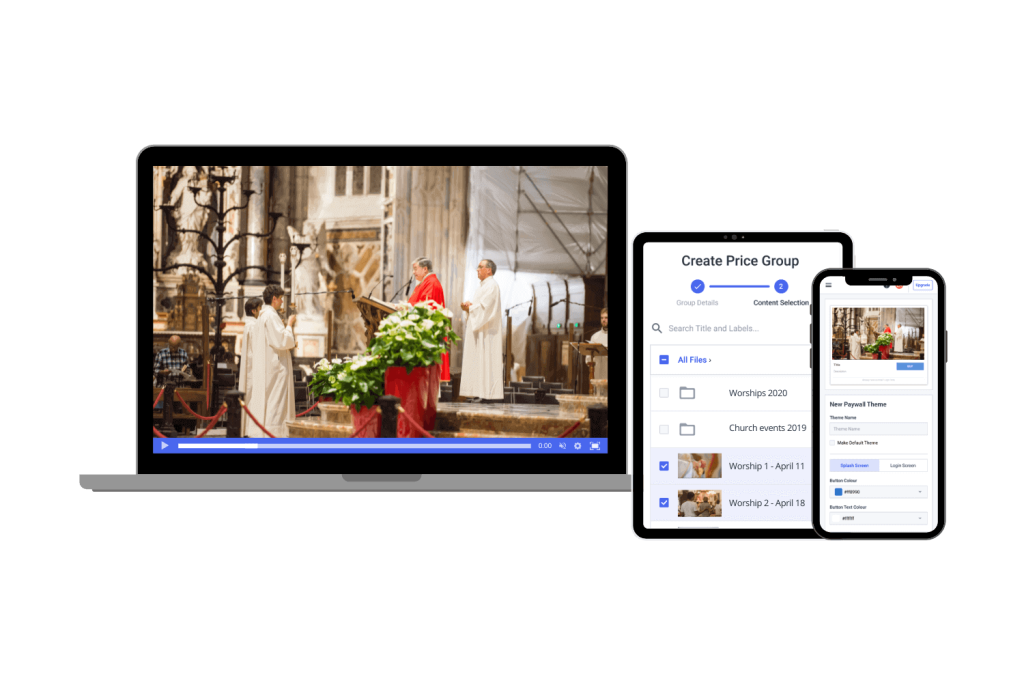
Churches have been present on television for years. However church services are rarely available on mainstream channels, so it hasn’t always been easy to tune in.
In the past few years, churches and other places of worship have been turning to over-the-top (OTT) live-streaming technology to make services and events available over the internet.
There are several motivations for churches to broadcast services in real-time. Here are a few of the main reasons behind it:
- Increase the churches outreach
- Make services available to the sick and homebound
- Provide easy access to services
- Collect online donations
- Connect with members of the community that have moved away
- Live stream your church’s Christmas programs virtually, giving your congregation the opportunity to attend from home
- Reach deployed soldiers
Live streaming allows churches to extend their services beyond traditional venues, reaching people in various locations.
Churches can livestream more than just the standard service or mass. They could use live streaming tools to host webinars, weekday praise and worship sessions, bible studies, and more. Live streaming also enables congregants to interact in real time with church leaders and each other, fostering engagement and a sense of community.
Looking to choose the best church livestreaming platform? Explore our full comparison here: Dacast vs Subsplash vs BoxCast vs ChurchStreaming.tv.
Church Attendance: In-Person vs. Virtual
As you can tell, many of the reasons that churches live stream services revolve around reaching people who cannot be there in person. Even though many people still prefer to attend sermons in person, the current state of the world has made it difficult to do so.
Many churches are building online communities that could very well transition into in-person attendance when it is safe to gather again. It’s reported that 33% of churchgoers have found their current churches online. During live streams, viewers can comment in real time, sharing their thoughts and questions publicly, which helps foster engagement and a sense of community.
By expanding your online reach with live streams and other media, you have the opportunity to connect with new parishioners.
However, there is little information to support concerns that making services available online dissuades parishioners from attending in-person services.
Nearly half of the members of a Protestant sample group report that they have not opted to watch a service online as an alternative to attending in person within the past year.
About 20% report that they have opted to view the service online rather than in-person, but they’ve only done this one or two times. Furthermore, 16% of these people say that they’ve opted for the online service three to five times, and about 14% have done it six or more times.
One interesting thing to note is that one larger church has reported unexpected trends among its viewers. While they believed that most people would tune in around the scheduled time of their Sunday morning service, they found that a decent amount of viewers watched replays of the services throughout the week.
For more tips and tools for increasing viewership on your church live streams, we recommend checking out our blog post on the subject.
OTT Church Streaming: Building Your “Church Channel”

OTT technology has provided a way to make live church broadcasts more accessible than traditional television broadcasts. OTT streaming technology makes it possible to stream live video directly from your website, as well as hold online bible study via the internet. Churches can also create a dedicated channel for their services, making it easy for viewers to find and access all live and recorded content in one place.
Since it’s so easy to tune into a virtual service, many people feel that live streaming helps maintain a sense of community even when you cannot physically be together.
Videos on the internet can be shared with just a few clicks, so OTT live streaming can spread your sermons far beyond the community that would typically gather within the four walls of your church.
All numbers aside, you could reach more people with the Word and have a greater impact on the human race. You have the potential to extend your reach around the globe.
Mobile Broadcasting: Praise and Worship from Anywhere
Of course, the internet expands your reach exponentially, but broadcasts that are suitable for mobile streaming are so incredibly valuable for reaching a wider range of people.
What sets mobile broadcasting apart from OTT streaming, in general, is that it uses a video player that can be accessed from a mobile device equipped with a live-streaming app.
HTML5 video players are considered ultra-compatible, all-device video players, so it is wise for churches to choose church live streaming software with this sort of capability.
Since 44% of people prefer to be alone while they pray and worship, as opposed to in the traditional church setting, the ability to turn on service on their phones is extremely valuable. It allows them to experience the structure of religious service from wherever they’re most comfortable.
Monetization: How Online Tithing Works
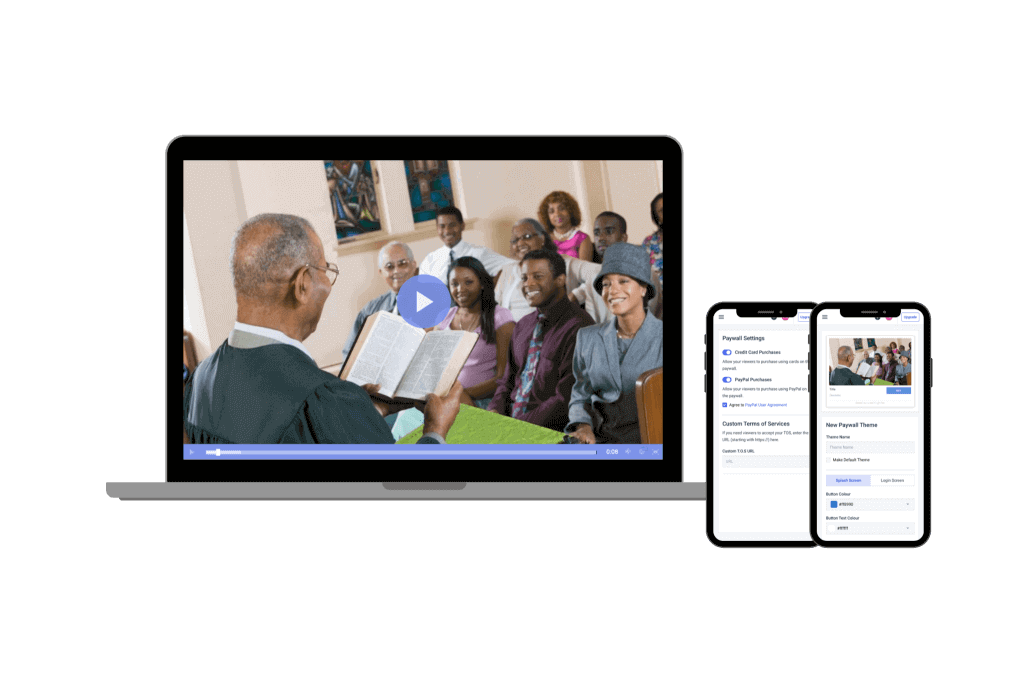
During normal church services, attendees are prompted to offer a donation in a box at the back of the church or when a basket is passed around for the collection.
Obviously, online viewers don’t have the option to drop their donations during this collection, but many still want to tithe.
Reports from recent years show that over $2.2 billion worth of donations have been made in a single year’s time. Now that more online paywalls are trustworthy and secure, people feel more comfortable making payments online.
One online tithing statistics church reports that their online donation increased by 70% when they started streaming with a professional streaming solution
Some churches are opting to use video monetization tools to generate donations at their virtual services. The two most popular monetization options are pay-per-view and subscriptions.
With pay-per-view, viewers would pay for access to individual videos. This is best suited if you are hosting a special event outside of your regular Sunday service.
Subscriptions would give your viewers unlimited access to sermons for a specified amount of time.
Viewers can subscribe to your church’s streaming service to access exclusive content and support the church financially. Subscribers often receive updates about upcoming services and special events, helping to build a loyal online community.
You also have the option to monetize with sponsored ads, but many churches prefer to keep their streams ad-free in order to avoid distractions. However, the advantage of this monetization method is that your viewers don’t have to pay out of pocket for you to generate revenue.
New Technologies and Trends
AI-Driven Enhancements
Artificial intelligence is transforming how churches connect with their online congregations. AI-driven tools like automated captioning help make services more accessible to those who are hearing impaired. Real-time translation allows churches to reach a global audience by offering sermons in multiple languages instantly. AI-powered video editing tools can enhance the quality of church live streaming by improving lighting, audio, and transitions, ensuring a more engaging viewing experience. Additionally, AI can provide advanced metrics to help churches analyze viewer engagement and viewership numbers, enabling them to evaluate the success of their live broadcasts and improve future streams.
These technologies contribute to the overall impact of live streaming on church growth by expanding reach and improving accessibility.
Interactive Streaming Tools
Engagement is key for virtual church services, and new interactive tools are making online worship more dynamic. Features like live Q&A sessions allow viewers to ask questions during the sermon, fostering real-time interaction. Virtual prayer requests create a sense of community by enabling participants to share their needs and receive support from church leaders and fellow worshippers. Viewers can also use reactions, such as emojis or other interactive tools, to express their feelings and engage with the service in real time. Live polls during sermons help congregations stay involved, making services more participatory. These advancements highlight the church live streaming benefits that go beyond just watching a service—they create meaningful connections.
Hybrid Worship Models
Many churches are embracing a hybrid approach that blends in-person and virtual services. This model allows churches to accommodate members who prefer to attend in person while also engaging those who watch from home. Live streaming technology for churches enables real-time participation, ensuring that remote attendees feel just as involved as those in the building. Features like on-screen scripture displays and integrated chat functions make it easier for virtual congregants to follow along. During hybrid services, churches can easily switch between different scenes or camera angles—such as the pulpit, choir, or congregation—using live production software, creating a seamless experience for both in-person and online attendees. As online worship service trends continue to evolve, hybrid models provide flexibility for worshippers and help churches expand their reach.
Augmented Reality (AR)
Augmented reality is opening new possibilities for virtual worship experiences. Churches can use AR to create immersive elements such as virtual tours of biblical sites, interactive scripture readings, or visual sermon enhancements. These innovations make services more engaging and provide a deeper connection to the message being shared. With advancements in church live streaming equipment, AR integration is becoming more accessible, allowing churches to offer unique experiences that blend technology with faith. By utilizing preview features within their broadcasting software, churches can view and adjust AR elements before they go live, ensuring a polished and engaging worship experience. As virtual church attendance statistics continue to grow, AR could play a key role in shaping the future of worship.
Platform Features and Pros and Cons
Live streaming has become an essential part of church services, and the technology behind it continues to evolve. Churches are now using advanced tools to improve their online worship experience. Many platforms offer a wide array of configuration options, allowing churches to customize their streaming setup to fit their unique needs. Some popular platforms are open source software, providing flexibility, accessibility across multiple platforms, and community-driven support. There are also abundant resources such as plugins, scripts, and tutorials available to help churches optimize their streaming experience. Here’s a look at some key features and the pros and cons of live streaming in 2026.
Advanced Analytics: One of the biggest improvements in church live streaming is the availability of advanced analytics. Streaming platforms now offer detailed insights into viewer engagement, demographics, and even donation trends. Churches can see how many people watch a service, how long they stay, and which parts of the service get the most interaction. Understanding audience behavior helps churches tailor their messages and enhance engagement. Additionally, tracking donation trends allows churches to see how online giving compares to in-person contributions, helping them plan financial strategies more effectively. Many platforms also provide the ability to record and capture live streams for later viewing or archiving, ensuring that services are accessible to those who cannot attend live.
Pros and Cons: There are several benefits to live streaming church services. One major advantage is increased reach. Congregations are no longer limited by physical location, allowing people from anywhere to join. This is especially helpful for those who are homebound or traveling. Live streaming also adds convenience, making it easier for members to stay connected even if they can’t attend in person. Another benefit is improved community engagement. Many platforms allow for live chats, comments, and real-time prayer requests, creating a more interactive experience. Platforms also support the integration of images, video captures, and other multimedia elements, enabling churches to create dynamic and engaging broadcasts.
However, there are also challenges. The initial setup costs can be high, especially for churches that want high-quality production. Equipment, software, and a strong internet connection require investment. Another concern is the potential decrease in physical attendance. Some members may choose to watch from home rather than attend in person, which can affect church community dynamics. Additionally, not everyone has equal access to technology. The digital divide means that some people, particularly older members or those in rural areas, may struggle to participate in online worship service trends.
Security Features: As more churches embrace live streaming, security has become a priority. The best live streaming platforms for churches now include strong cybersecurity measures to protect parishioner data. Features like encrypted streams, secure payment options for donations, and multi-factor authentication help ensure a safe experience. AI in church live streaming is also helping detect and prevent unauthorized access, keeping virtual worship spaces secure. It is important to regularly download the latest software updates to maintain security and optimal performance.
The future of church live streaming is bright, offering more ways for congregations to connect and grow. By balancing technology with community needs, churches can continue to reach and inspire people around the world.
Practical Adoption Tips
As online worship service trends continue to grow, churches of all sizes are embracing live streaming to connect with their communities.
Churches can set up live streaming from various locations, including offices, homes, or dedicated worship spaces, to ensure flexibility and continuity. Here’s how to get started:
Step-by-Step Implementation Guide
Begin by choosing a reliable streaming platform that fits your church’s needs, such as YouTube, Facebook, or a dedicated church streaming service. Set up a dedicated live stream page on your website or streaming platform to host your live and recorded services, making it easy for your congregation to find and access content. Invest in essential equipment, including a good camera, microphone, and stable internet connection. Before going live, test your setup to ensure clear video and sound quality. Start with a simple setup and upgrade as needed.
Case Studies and Success Stories
Many churches have successfully transitioned to live streaming. One small church overcame technical challenges by starting with a smartphone setup before gradually upgrading to professional equipment. Another large congregation improved engagement by adding interactive features like live chat and prayer requests. They also incorporated live commentary during services, which provided real-time insights and fostered a deeper connection with the online audience. Learning from others can help you find solutions that work best for your community.
Training for Staff and Volunteers
A smooth live-streaming experience depends on well-trained staff and volunteers. Provide basic training on camera operation, sound checks, and troubleshooting. Assign roles so each person knows their responsibilities. Ongoing practice helps build confidence and ensures a seamless worship experience for both in-person and online attendees.
AI Advancements for 2026
Content Personalization
AI algorithms in 2026 are improving the way churches connect with their viewers. These algorithms can suggest relevant sermons or spiritual content based on the preferences of viewers, helping them engage more deeply with the message. As online worship service trends continue to grow, this personalized approach will make it easier for individuals to find the content that speaks to their specific needs and interests.
Chatbots for Engagement
Virtual assistants are becoming more common in online worship services. AI-powered chatbots can answer viewer questions or provide spiritual guidance during live streams, creating a more interactive and supportive experience. This trend is making online worship more accessible and engaging for people from all walks of life.
Enhanced Accessibility
AI tools are also helping make worship services more accessible for everyone. Features like sign language translation and visual aids for hearing-impaired members are becoming more widespread. These advancements ensure that online worship services are inclusive and welcoming for all, no matter their needs.
Focusing on Inclusivity
One of the key benefits of church live streaming is its ability to reach underserved communities. For elderly parishioners or those living in remote areas, streaming provides a vital connection to worship services that they might otherwise miss. This inclusivity is becoming a significant part of online worship service trends in 2026. By offering virtual services, churches can ensure that everyone, regardless of physical limitations or location, has the opportunity to participate in worship. As churches continue to embrace this technology, they are making sure that no one is left behind, fostering a stronger sense of community and spiritual connection for all.
To make online services more accessible, focus on a few high-impact improvements:
- Closed captions (live or post-produced) so viewers can follow along in any environment
- Clear, speech-first audio mixing (clean pastor mic + controlled music levels)
- Multi-language support when relevant (captions, translated overlays, or interpretation channels)
- Simple, mobile-friendly stream pages with large buttons, minimal steps, and an obvious “Watch Live” option
These upgrades don’t just support accessibility—they often improve retention and watch time for the entire congregation, strengthening connection and participation for all.
Sustainability and Cost-Effectiveness
As online worship service trends continue to grow in 2026, sustainability and cost-effectiveness are becoming more important for churches. To keep expenses low while minimizing environmental impact, here are a few practical tips for sustainable streaming:
- Choose energy-efficient equipment to reduce power consumption during streams.
- Opt for cloud storage or local servers that use renewable energy.
- Stream in lower resolutions when possible to reduce data usage and server load.
- Reuse existing technology or update equipment instead of purchasing new items regularly.
- Encourage virtual attendance to reduce the need for in-person infrastructure and energy usage.
- Partner with eco-conscious streaming platforms that prioritize sustainability.
By adopting these simple strategies, churches can create meaningful online worship experiences while supporting the planet and saving money.
Streaming Church Services with Dacast
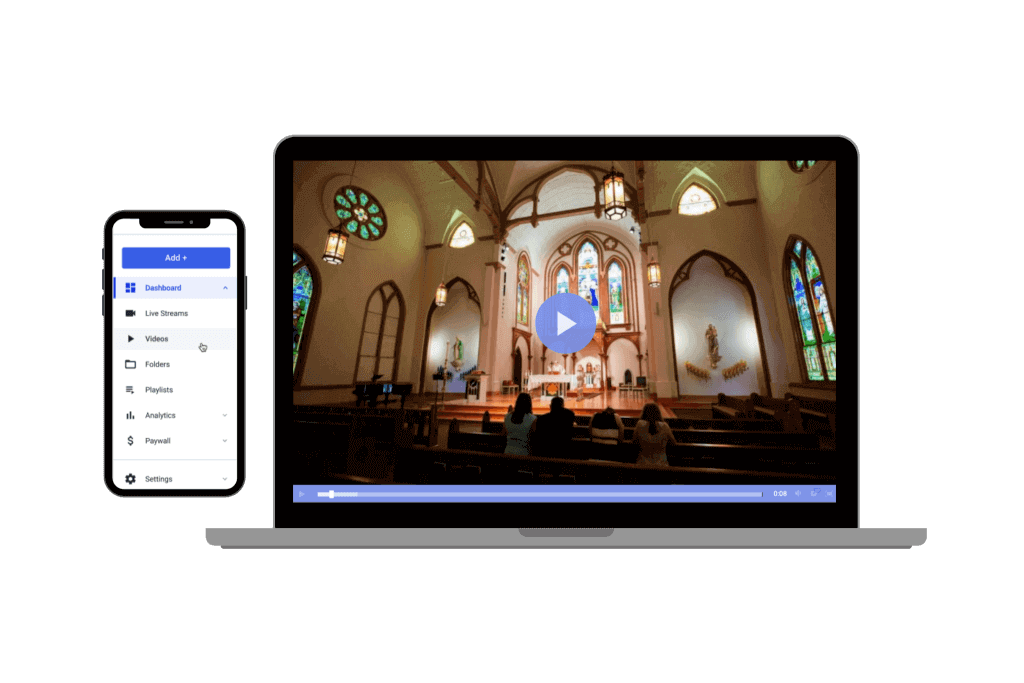
Dacast makes it possible for many churches to bring their services to members of their congregation both near and far.
Today, we’re going to run through a case study that pulls some of the highlights shared by St. Mary and St. Antonios (SMSA) Coptic Orthodox Church about their experience of streaming with Dacast.
In their case study, SMSA stated that two of their goals were to make mobile streaming available to the members of their community and set up multiple channels for live streaming. They had a hard time finding a platform that offered those two things yet allowed ad-free streaming, quality streaming, and stability.
Dacast offered solutions to reaching these goals while overcoming their roadblocks. Dacast’s platform is both reliable and consistent, which is very important when you’re live streaming.
Additionally, Dacast allows broadcasters to use ads for monetization purposes if they choose, but it also gives the option to stream completely ad-free. This flexibility is valuable to a broadcaster.
One of the main remarks that SMSA had about Dacast was that the platform saved them a significant amount of money. Dacast is not necessarily a budget streaming solution, but its plans are very reasonably priced. It has the tools churches need at a price that makes sense.
Future Outlook
As we look toward the next decade, technology will continue to shape online worship service trends, making church live streaming even more immersive and accessible. We can expect significant improvements in video quality, with advancements like 8K resolution and more dynamic camera angles that bring a sense of presence to virtual attendees.
Augmented and virtual reality could also play a larger role, allowing viewers to experience worship in new, interactive ways. Additionally, artificial intelligence may help personalize online worship experiences, tailoring content to individual preferences. As more churches invest in these technologies, we’ll likely see a more seamless integration of virtual and in-person services, expanding the reach of worship to people anywhere in the world. The future of church live streaming looks promising, offering new ways to connect and engage with communities.
Church Live Streaming Stats to Remember
Now that you’ve gotten a glimpse at the bigger picture of trends in church live streaming, we’re going to leave you with a quick snapshot of major church live streaming statistics.
- In 2024, approximately 27% of Americans participated in religious services online, with 10% exclusively online and 17% combining online and in-person attendance.
- 53% of practing Christians streamed church services online in 2023.
- Younger individuals are more inclined to use digital to, such as church apps and online discussions, to connect with their faith communities.
- 44% of people report that they’d rather worship and pray in private
- Champions Centre Church’s online donations increased by 70% when they began to livestream services
- Live streaming and online donations generate billions in revenue worldwide, highlighting the significant economic impact of this technology.
- 47% of people do not abandon in-person services for virtual alternatives
As you can see, live-streaming church services fill a void for people who cannot or do not wish to attend in-person services, but it doesn’t necessarily lower in-person attendance.
FAQs
What percentage of people watch church online in 2026?
Online worship remains a major behavior trend. Recent reporting shows about 27% of Americans participated in religious services online in 2024, including people who attend exclusively online and those who combine online + in-person. (You can update this FAQ annually as new survey data is published.)
Does live streaming reduce in-person church attendance?
Not necessarily. Many viewers use live streams because they’re homebound, traveling, or unable to attend in person. In many churches, online services complement in-person worship and can even help new people discover a church before visiting.
What are the most important church live streaming stats to track?
Focus on metrics that map to ministry and engagement goals:
- Live viewers + peak concurrent viewers
- Average watch time (retention)
- Replay views (on-demand engagement)
- Chat/comments participation
- Geography (where viewers join from)
- Click-throughs (prayer requests, next steps, events)
- Online giving (donation conversion + average gift)
What’s the best platform for live streaming church services?
It depends on your priorities:
- Free/social platforms (YouTube/Facebook): easiest reach, limited control/branding.
- Professional platforms (like Dacast): better control, white-label, embed on your site, stronger monetization/security options, and more consistent viewing experience.
What equipment do you need to live stream a church service?
A reliable starter setup usually includes:
- Camera (or a modern smartphone to begin)
- Microphone/audio feed (audio quality matters most)
- Encoder or streaming software
- Stable internet (preferably wired)
- Lighting (if your sanctuary is dim)
Many churches start simple and upgrade to multi-camera over time.
What internet speed is required for church live streaming?
Plan for upload speed, not download. A safe baseline is:
- 5–10 Mbps upload for a single HD stream
- More if you’re streaming higher quality or running multiple streams
A wired connection and backup network option (secondary ISP or hotspot) help avoid disruptions.
How can churches improve live stream engagement?
Proven engagement boosters include:
- Assign a chat host/moderator
- Use live prayer requests and Q&A moments
- Add on-screen scripture/lyrics
- Encourage viewers to share where they’re watching from
- Post a clear next step (new visitor form, small groups, counseling, serving)
Should we offer live streaming only, or a hybrid model?
For most churches, hybrid wins in 2026: serve in-person attendees while staying accessible to remote members. Hybrid also helps during bad weather, travel seasons, illness, or special events.
What are the best ways to collect tithes and donations online?
Common options include:
- Embedded giving links on the live stream page
- Recurring giving (subscriptions/memberships)
- Text-to-give integration
- Paywalls for special events (PPV) when appropriate
Make giving frictionless: visible button, mobile-friendly checkout, and a short reminder during service.
Is it legal to stream worship music online?
You may need proper licensing, especially for copyrighted worship songs. Requirements vary based on where/how you stream (social platforms vs your site). Many churches use music licensing services designed for worship settings—confirm coverage for live streaming and replays.
What security features should churches look for in a streaming platform?
If privacy and control matter, prioritize:
- Password protection
- Domain restrictions / referrer blocking
- Tokenized access
- Geo-restrictions (if needed)
- Secure payments for donations/PPV
This is especially important for private groups, youth-related content, or member-only events.
Can churches live stream to YouTube and their website at the same time?
Yes—this is usually done with simulcasting. It helps you keep reach on social platforms while still driving viewers to your owned website experience (where giving, sign-ups, and branding are stronger).
How can a church start live streaming with a small budget?
Start with what you have:
- Use a smartphone camera
- Get a basic external microphone
- Stream to one platform first
- Improve lighting and audio before upgrading cameras
Once you see consistent attendance, invest in multi-camera and professional tooling.
How can we prevent buffering/lag during services?
Use a wired Ethernet connection, stream at a conservative bitrate (with enough upload headroom), enable adaptive bitrate (ABR) playback, and keep a backup internet option (secondary ISP or 5G hotspot) for failover.
Conclusion

Live streaming your church services will bring an abundance of benefits. The option to tune in online allows the sick and homebound to take part in services that they’d normally miss. Virtual services also give people the ability to praise together when social distancing is a must.
We are by no means indicating that virtual services should totally replace in-person gatherings, but we truly believe that this technology is a blessing for churches that want to reach remote audiences.
If you are on the fence about getting started with live streaming for your church, we recommend going for it.
Want to test out Dacast’s live-streaming tools for yourself? Try Dacast risk-free for 14 days with our free trial account.
All you have to do to start your 14-day risk-free trial is sign up today. No credit card is required.
Do you have further questions, thoughts, or feedback about this article? We’d love to connect with you! And feel free to contact our team with specific questions; we’re here to help!
