


6 Essential OTT Video Streaming Platform Features

By Dacast Editorial Team | Reviewed by Jon Whitehead, COO at Dacast | Updated November 2026.
OTT stands for “over-the-top.” It refers to the broadcast of video content like TV and movies over the internet, rather than over the airwaves or via cable or satellite TV subscription services. This post will look at six essential OTT video streaming platform features.
Today’s most popular video services, like Netflix, Hulu, Amazon Prime Video, iTunes video, and HBO Go, are all OTT services. But big businesses aren’t the only ones running successful online video operations. Besides these major players, countless smaller businesses are running profitable OTT service providers as well.
It’s a booming industry. It’s a booming industry. The global OTT devices and services market is valued at $453.69 billion in 2026, up from $364.93 billion in 2025, and is projected to reach $3.03 trillion by 2035. The video-on-demand segment specifically was valued at $133.44 billion in 2025, with a projected market size of $477.04 billion by 2034.
In this post, we will explore the essential features to look for in an OTT platform solution.
Table of Contents:
- Six Essential OTT Platform Features
- OTT Video Streaming Platform Comparison
- FAQ
- Conclusion
Six Essential OTT Platform Features

But now we can move from theory into practice. This blog will share six essential tools / features for OTT broadcasters. When you’re shopping around for suitable services for your OTT platform, you can use this list to inform your decision-making. Let’s jump into that list.
1. Video Hosting Platform
A video hosting platform is the system that lets you upload, organize, and manage your video library in one place, with tools to tag and deliver content on demand.
Today, reliable video hosting services are available through platforms such as Dacast. These platforms are like private YouTubes with secure uploading. They allow you to get video online quickly and choose where to share and embed it. This can reduce costs, simplify billing, and shorten the time and effort required to get a video service up and running. The following five items in this list are all essential features of an OTT video streaming platform.
2. Video API
A video API lets developers connect an OTT platform’s streaming, encoding, and delivery functions directly into their own apps or websites.
This allows programmers to quickly and easily create mobile apps, online video portals, or their own streaming services. It also allows you to integrate your video streaming platform within your own cloud media environment. This can be ideal to streamline encoding and delivery, integrate with existing Single Sign-On systems, and more.
To learn more about a video API, check out the Dacast video API. This is a great example of a fully functional API that allows full access to our streaming solution. Indeed, our entire streaming solution is built upon our APIs so anything that is available in our platform can be integrated into your own platform using our APIs.
3. Subtitle and Closed Caption Support
In the United States and abroad, laws require closed captions for some video content. In the US, section 508 is the law governing closed caption requirements. For online video, live and near-live content that’s simultaneously broadcast on TV is legally required to include closed captions.
In the educational market, closed captions are becoming a legal standard as well. So how can you integrate closed captions into your OTT content? First, you need to ensure that your platform supports closed captions. Here at Dacast, for example, we support closed captions for all VOD (Video-On-Demand) content. Here’s a walkthrough on how to set these up.
We also support live captions embedded in your streams! Check out our blog on this topic for more.
Closed captions make video content accessible to viewers who are deaf or hard of hearing, and in some cases, they’re legally required.
4. Chapter Markers
Chapter markers let viewers jump directly to a specific section of a video, the same way a table of contents works for a book.
Chapter markers allow you to define different sections within a given video. These will be marked with a dot or other visible mark. When a user mouses over or taps one of these dots, they will see the title assigned to that segment of the video.
Like a table of contents in a long book, this allows longer videos to be broken up into easily defined segments. And you can navigate to these segments quickly and easily. This is very useful for OTT broadcasters and their viewers as well.
5. Real-time Analytics
Real-time analytics show you how a piece of content is performing while it’s still live, including viewer counts, engagement, and geographic breakdown.
Analytics data can provide information about visitors and hits for a given piece of content, revenue data for a given video, breakdowns by geographic region of your viewers, average length of viewership, and more. This data can be used to refine your approach to content and inform future OTT strategies.
Real-time analytics allow you to track success, especially for the release of important content. Look for an OTT video streaming platform that supports real-time analytics so you can track and objectively quantify your success at all times.
6. 24/7 Customer Support
24/7 support means a real person can help resolve a streaming issue at any hour, not just during business hours.
A professional-grade OTT video streaming platform should include 24/7 support options. Ideally, this should offer phone support as well. Be aware that many platforms do not offer 24/7 support. Of those that do, some charge large additional fees. Here at Dacast, we include 24/7 support for every user of our platform.
OTT Video Streaming Platform Comparison
Now that we’ve discussed some of the top OTT video streaming platforms, we can start putting this information to use. We regularly do longer live stream platform comparisons but here is a good sum-up of three of the top OTT video streaming platform options: Dacast, Livestream, and IBM Cloud Video.
1. Dacast

Dacast offers professional OTT-grade features with competitive live streaming pricing. All streams are delivered via Dacast’s multi-CDN network. This ensures rapid delivery and minimal buffering. Here’s how Dacast stacks up in terms of OTT features:
- Included video API starting with the Scale Plan ($165/month)
- Comprehensive subtitle and caption support
- Supports chapter markers for organizing content
- Included real-time analytics
- 24/7 customer support for all plans, with phone support included on the Scale and Custom plans (available as a paid add-on on Event)
Pricing
Dacast’s live streaming pricing plans begin with the Starter Plan, and include the following:
- Starter Plan: $39/month (includes 2.4 TB of bandwidth & 500 GB of storage)
- Event Plan: $63/month (includes 6 TB of bandwidth upfront and 250 GB of storage)
- Scale Plan: $165/month (includes 24 TB of bandwidth per year and 2 TB of storage)
However, Event and Scale users can also purchase custom plans for greater bandwidth needs. Dacast is one of the leading OTT live streaming media services platforms globally.
2. Muvi
Muvi is an OTT platform built specifically for subscription video and streaming businesses. Here’s how Muvi’s current plans compare on our key OTT features:
- Includes video API, SDK, and webhook access on every plan, starting at the $399/month Standard plan
- Subtitle and closed caption support on every plan, including AI-generated subtitles on Standard
- Chapter markers available via AI Chaptering on the Standard plan (uses separate AI credits)
- Dashboard and engagement analytics included on every plan (real-time reporting not specified)
- 24/7/365 basic support included on every plan; priority and VIP support available as paid upgrades
Pricing
Muvi’s plans, billed annually:
- Standard: $399/month
- Professional: $1,499/month
- Enterprise: $3,900/month
- Ultimate: custom pricing
Compared to Dacast’s Scale Plan at $165/month, Muvi’s entry point is positioned for larger subscription-based OTT operations rather than smaller broadcasters.
3. IBM Cloud Video
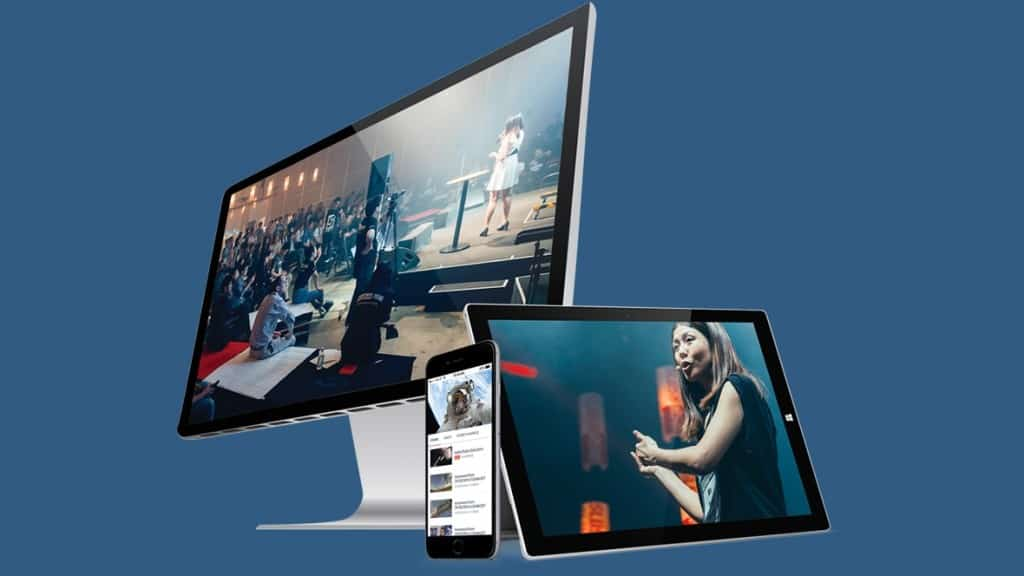
IBM Cloud Video offers live broadcast and on-demand video hosting. Here’s how it compares on our key OTT features:
- API access included on Silver, Gold, and Platinum plans
- Watson Live Captioning available on the Custom plan; caption support on lower tiers isn’t specified on IBM’s current pricing page
- Chapter markers and a detailed analytics breakdown aren’t specified on IBM’s current pricing page
- Support is listed as ticket and chat based; 24/7 availability by plan isn’t specified
Pricing
IBM’s pricing plans (list price):
- Silver: $154/month
- Gold: $843/month
- Platinum: $1,690/month
- Custom: contact IBM sales
FAQ
What features should I look for in an OTT platform?
At minimum, look for a dedicated video hosting system, API access for custom integrations, closed caption support, chapter markers for longer content, real-time analytics, and 24/7 customer support. These six features cover the core functionality most OTT broadcasters need before launching a service.
What’s the difference between an OTT platform and a video hosting platform?
A video hosting platform focuses on uploading, organizing, and delivering video content. An OTT platform builds on that foundation with tools built for running a streaming business, like subscription billing, content monetization, and multi-device app support. Most OTT platforms include video hosting as one piece of a larger toolset.
Who are the top OTT video streaming providers?
Providers vary depending on your use case and budget, from large consumer apps like Netflix and Hulu to business-focused OTT platforms like Dacast, Muvi, and IBM Video Streaming. See our full platform comparison for a detailed breakdown by feature and price.
How much does an OTT platform cost?
Pricing varies widely by platform and scale. Dacast’s plans start at $39/month, with the Scale plan (API access included) at $165/month. Larger subscription-focused platforms like Muvi start around $399/month, while enterprise-grade options like IBM Video Streaming range from $154 to $1,690/month depending on tier. See our guide to OTT pricing and monetization models for a deeper breakdown.
Does an OTT platform need built-in monetization?
Not all OTT platforms include monetization tools by default; it often depends on the plan tier. Confirm which monetization options (subscription, pay-per-view, advertising) are included before choosing a plan, and check whether a higher tier is required to unlock them. Read more in our guide to OTT monetization models.
Can I switch OTT platforms without losing my content?
In most cases, yes, as long as you export your video files and metadata before migrating. The process varies by platform, so check whether your current and new provider support bulk export and import, and confirm you own the encoded files rather than only platform-hosted copies.
Conclusion
We’ve looked at 6 key OTT video streaming platform features, and compared some of the OTT platforms themselves. Hopefully, this article has provided enough information to help you begin to pick the best platform for you.
Need more information to make a final decision? Dacast offers a 14-day free trial (no credit card required). That way, you can test out our platform before making a commitment. Just click the button below to sign up and start broadcasting OTT content!
