


How to Live Stream a Virtual Graduation Ceremony: The Complete Guide

By Dacast Editorial Team | Reviewed by Jon Whitehead, COO at Dacast | Updated October 2026.
Schools use live video broadcasting for many things: remote learning, sporting events, theater productions, and increasingly, graduation ceremonies themselves.
A virtual graduation ceremony, whether run fully online or as a hybrid alongside an in-person event, lets family members, friends, and remote or international students take part even when they can’t be in the room.
Dacast and other professional streaming platforms provide the tools schools need to produce a high-quality virtual graduation ceremony live stream, with the recording available afterward for anyone who couldn’t watch live.
In this guide, we’ll walk through how to live stream a graduation ceremony: the equipment you’ll need, how to set it up for an event this size, how to promote your stream so families actually show up, and what to look for in a streaming platform.
Table of Contents
- What is Graduation Live Streaming?
- How Do Virtual Graduations Work?
- How to Live Stream a Graduation: The Basics
- Recording Your Graduation Ceremony for On-Demand Replay
- Choosing a Streaming Platform for Your Ceremony
- FAQ
- Conclusion
What is Graduation Live Streaming?

Students work hard for several years to earn their degrees, and a graduation ceremony marks that accomplishment.
Not everyone can walk across the stage in person, whether because of travel cost, distance, a disability, or a scheduling conflict. High schools and universities increasingly offer blended or fully virtual graduation ceremonies to make sure no one is left out.
A virtual graduation ceremony is simply a graduation broadcast live over the internet, either as a standalone online event or alongside an in-person ceremony (a hybrid graduation). The real-time element makes it feel more like actually attending than watching a recording after the fact.
The biggest benefit of live streaming a graduation ceremony is straightforward: it lets students, family members, and friends who can’t be there in person watch as it happens, from anywhere in the world. For international students in particular, hosting a virtual or hybrid ceremony means their loved ones can be part of the moment too.
How Do Virtual Graduations Work?

A virtual graduation works by capturing the different parts of the ceremony and streaming them live to students and their loved ones, wherever they’re watching from.
Some schools project graduates’ names like movie credits; others announce each name individually with a photo, or invite students to submit a short video to play after their name is called.
Either way, that moment still matters just as much on a screen as it does in person.
Alongside the roll call of graduates and honor students, most ceremonies include addresses from deans, presidents, trustees, and guest speakers. With the right planning, all of these elements translate directly into a virtual or hybrid ceremony.
A dedicated social media presence helps build anticipation: a landing page with messages from alumni, senior photos, and clips from guest speakers all make good content to promote the event beforehand and after. Many schools now run graduations as blended events by default, giving guests the choice between attending in person or watching remotely.
How to Live Stream a Graduation: The Basics
Planning graduation is a major feat in and of itself, but making it virtual is not overly demanding.
You can easily broadcast your virtual graduation or commencement ceremony as long as you have the right equipment and software for professional live streaming.
You can set the stream to pre-record and view the graduation video at a later date. Or, high school graduates can choose to share clips or group photos on their social media wall or Instagram stories.
Just like an in-person ceremony, there is a lot of preparation involved. You’ll want to plan the sequence of the important event and organize your speakers. For simplicity’s sake, some parts of your video may be pre-recorded, especially if you have speakers or students conferenced in from different locations.
The streaming solution you choose will depend on how you plan to set up your virtual graduation in terms of the number of cameras you will use, whether or not you’ll use pre-recorded content, etc. It will also depend on how many viewers you anticipate.
Filming a Graduation Ceremony: Equipment Considerations
You can’t host a successful graduation ceremony over a Zoom call. But with professional streaming equipment and the right setup, even low-tech users can learn how to stream commencement ceremonies online over the internet.
The ability to stream live video has greatly changed in recent years. That’s partly due to ever-faster internet speeds and the availability of high-definition cameras for mainstream users. Today, live online video streaming is not only feasible but also affordable.
Let’s take a minute to discuss some of the video capture equipment that will help you broadcast a high-quality virtual graduation ceremony or commencement ceremony.
Camera
Video cameras for live streaming are essential, ranging from simple webcams to expensive professional video cameras.
For streaming a graduation ceremony, webcams will get the job done. However, you may want to look into the specifics of what you want to do in the way of multiple viewpoints and zoom focus. A more advanced camera would be necessary if you are looking for a more professional-looking live broadcast.
Audio Recording
The audio streaming component is one of the main challenges when recording events like a commencement ceremony or graduation ceremony.
For live streaming purposes, lapel microphones capture higher-quality audio than a camera’s built-in microphone and are quite affordable.
When planning your audio setup for an in-person ceremony, you may have to experiment with other audio recording options to avoid picking up any crowd noise. The same applies to a virtual event.
Equipment Staging
To successfully stream graduation ceremonies, you’ll also need a location to stage your equipment while you film. That includes video cameras, tripods, a computer or encoding device for live streaming, cables, storage cases, and other gear.
Encoder
An encoder is an important tool for live streaming. It converts the camera captures into a format to broadcast over the internet.
You can choose between a hardware or software encoder. We suggest exploring the different options between the two. Encoding software, such as Wirecast or vMix, also lets you do many things to control your broadcast’s appearance. For example, you can switch from one video feed to another, add lower thirds, and insert other graphic embellishments.
For more information on encoders, please check out our hardware encoder vs. software encoder comparison.
Keep Your Setup Simple
If this is your first venture into graduation streaming, it makes sense not to try to get too fancy.
You need to be able to show wide views of the whole graduation ceremony and close-ups of the speaker and of the graduating students in addition to adding text to the video.
The more complicated the video, the more things can go wrong. So keep it as simple as possible.
Testing the video streaming setup and process lets you identify holes in your arrangement and correct them before the event itself.
How to Promote Your Graduation Live Stream
Since virtual graduation is a special event with a limited audience, you’ll use unique promotion methods.
You’ll want to notify teachers, students, and their families. A great approach to this is to let the graduating students name and provide email addresses for a set number of people they’d like to invite.
The email you send to invite viewers to the virtual graduation ceremony should include a link to the website where the video will stream.
The invitation should be sent out at least a week before the graduation, with a final reminder the day before. A countdown timer on the website itself is also a good idea.
Recording Your Graduation Ceremony for On-Demand Replay

Not every family member or friend can watch a graduation ceremony live, especially across time zones or with a conflicting work schedule. Recording the broadcast and making it available as video-on-demand (VOD) solves that problem, and it’s one of the most requested features for anyone planning to live stream a graduation ceremony.
With Dacast, every live stream can be automatically recorded and converted into a VOD asset as soon as the broadcast ends, with no separate recording step required. Schools can then publish the replay on the same page as the live stream, embed it on the school website, or share a direct link with families.
A recorded graduation ceremony also has a longer shelf life than the live event itself. Students and families often revisit it for years, and some institutions package ceremony replays alongside class photos or yearbooks as part of a broader archive.
Choosing a Streaming Platform for Your Ceremony

While there are many video streaming software solutions on the market, you want one that offers the tools you need to host a virtual graduation event online.
Although graduation is hosted by a school and is related to students’ education, a streaming solution with an emphasis on virtual events is more valuable than one with an emphasis on education. Education-focused streaming solutions are designed to aid in the classroom or for remote learning.
With that in mind, let’s dive into a few top virtual graduation software solutions for live streaming graduations.
1. Dacast

Dacast is a live streaming and video hosting platform with white-label video players, encryption and password-protection security, and customization through video and player APIs.
It’s built for broadcasters who want a straightforward way to produce a virtual graduation ceremony without a steep learning curve.
Basic Functionality:
Dacast offers both live streaming and professional video hosting. You can purchase monthly plans for regular streaming, but we also offer special pricing for one-time events.
Key Features:
- Secure, global content delivery, including industry-best video hosting
- 24/7 tech support with all plans, including email and live chat
- Video security features, including password protection and encryption
- Player API access for 3rd party player integration
- Video API access on premium plans (scale and event)
- Multi-bitrate streaming
- Annual transcoding data included
- Real-time analytics
- Technical support
- Ad-free streaming
New!
- Multi-user access on Scale and Custom plans
- Zoom live streaming integration for meetings and live events in real-time
- Expo 2.0 galleries video portal for immersive video experiences
Pros:
- Live streaming and VOD packages on all pricing plans
- Unlimited viewers and live channels
- White label and branding control
- Embeddable HTML5 video player
- SVOD, AVOD, and Pay-per-view monetization options
- Mobile device support
- Live stream recording
- China Video Hosting
- Special event pricing for every budget
Cons:
- The large range of features can be overwhelming at first
Pricing:
2. JWP Connatix (formerly JW Player

JW Player is a video-on-demand and live streaming hosting solution launched in 2005. This solution is unique as it was part of the open-source code that contributed to the first video player on YouTube.
This video hosting platform offers custom pricing for plans with live streaming features, so you can build the package you need to host your virtual graduation.
Basic Functionality:
JW Player is primarily a VOD hosting solution, but it has begun offering live streaming services in recent years.
Key Features:
- Multi-bitrate streaming
- CSS skinning
- Adaptive video player
- Powerful content delivery
- Video API access
- DRM with Enterprise Plans
Pros:
- HTML5 video player
- Easy-to-use platform
- Advanced customizations for developers
Cons:
- No content delivery to China
- Best for institutions with a larger budget
- Limited privacy and security features
- Support only available with most inclusive plans
Pricing:
Contact JW Player for a quote.
3. Wowza
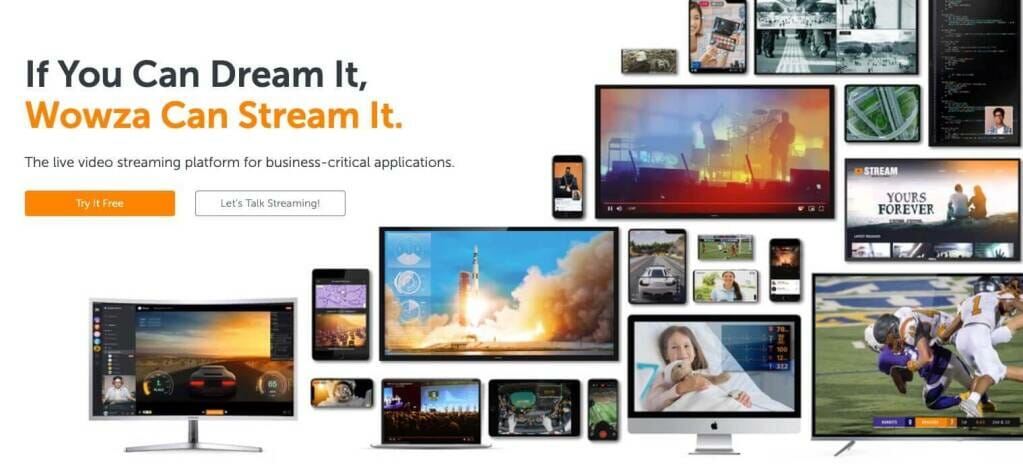
Wowza is a video hosting platform dating back to 2005. This platform offers hosting for both live and on-demand video content.
This solution is great for smaller schools, high schools, and institutions because they have budget-friendly event plans.
Basic Functionality:
Wowza offers solutions for live streaming and VOD hosting.
Key Features:
- High-definition streaming
- Customization with APIs
- Live streaming and video on demand
Pros:
- Top-notch privacy
- Nearly universally supported on different devices
- Event live streaming
Cons:
- No multicasting (unable to stream to multiple places at once)
- Single-camera feeds
- No analytics tools
Pricing:
4. IBM Cloud Video
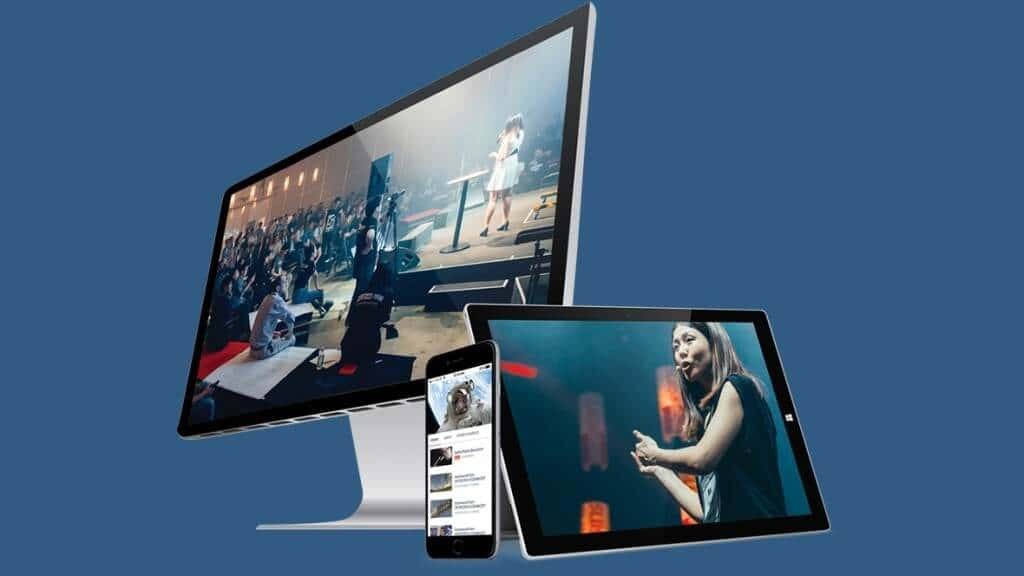
IBM Cloud Video, built upon the technology formerly known as UStream, is a unified streaming solution. The platform offers many powerful features for virtual event streaming.
Native features include webcasting, content management, password protection, worldwide delivery, cloud transcoding, and HD streaming.
Basic Functionality:
IBM Cloud Video provides a wide range of live and on-demand video streaming tools.
Key Features:
- A highly comprehensive streaming platform
- Reliable customer support
- Content delivery via internal server
- Suited for larger organizations and large-scale streaming
- Wide range of powerful features
Pros:
- Reliable platform
- Perfect for large event streaming (like virtual graduations)
- Great customer support
- Fully equipped with the features that broadcasters need
- Hong Kong (China) video hosting
Cons:
- Some important features are only accessible at the top-tier plans
- Additional fees required to stream above 720p resolution
- Poor closed captioning support
- Pricier than other platforms
Pricing:
IBM pricing plans range from $99 to $999 per month.
5. Kaltura

Kaltura is a powerful streaming platform geared toward large educational institutions. Kaltura’s virtual streaming platform powers live and on-demand video streaming through its cloud-based hosting technology.
This platform uses an open-source structure, which means you can integrate several different programs to customize your virtual event hosting experience.
Since Kaltura is an open-source platform, the feature offerings are endless. Kaltura’s security features include DRM, encryption, and access control tools. They also offer a wide variety of monetization tools. The service is also fully white-label, and an API is available for programmatic interactions.
Basic Functionality:
Kaltura is an open-source video streaming solution capable of hosting large-scale virtual graduations and other events.
Key Features:
- API access
- Highly customizable
- Video privacy and security (password protection, encryption, and watermarking)
- Cloud video streaming
- Closed captioning tools
- Video monetization
Pros:
- Access to many features
- Customizable streaming experience
- Scalable streaming
- Robust security
Cons:
- Slow tech support
- Highly complex platform
- Not very easy to use
- Does not support China video delivery
Pricing:
Pricing for Kaltura is not available on their website. Contracts are priced case-by-case through a credit-based system that allows them to pay only for the features and bandwidth they use.
6. Muvi

Muvi is an OTT video hosting platform that supports live streaming and VOD. Muvi includes access to API and white-label video players. These two features are ideal for broadcasting at a highly professional level because they give you more control over the appearance of your stream.
Basic Functionality:
Muvi supports live and on-demand video streaming. The education-focused platform is also well-suited for audio streaming.
Key Features:
- Live and VOD streaming
- White-label streaming
- Branding customization
- HTML5 video player
- Video analytics
- Video CMS
Pros:
- Powerful content delivery
- No coding required
- Powerful video CMS
- Transcoding for high-quality streaming
- DRM and other security options
- Mobile and smart TV streaming
Cons:
- A bit tricky to use
- Hard to integrate or connect
- CMS user interface is complex
- Does not support China video delivery
Pricing:
7. VPlayed
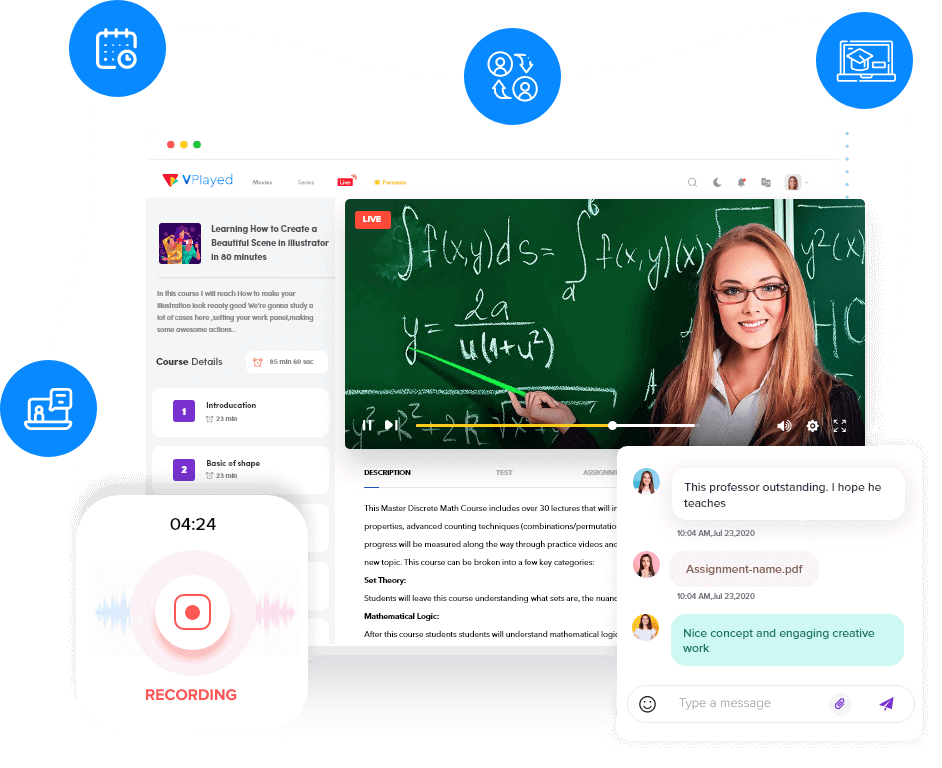
VPlayed is a unified streaming solution that is powered by Contus. The education streaming platform supports live and on-demand content hosting and management. This platform is well-liked because it is easy to use and customize.
Basic Functionality:
VPlayed is a streaming solution that supports live streaming and VOD.
Key Features:
- HTML5 all-device video player
- Live streaming and VOD
- Video monetization
- Video security
- Tools for security
- 100% customizable experience
Pros:
- Safe streaming platform thanks to reliable security
- Tools for engagement and interaction
- Highly customizable
- Easy to use
- Puts power in broadcasters’ hands
Cons:
- Some complaints about lack of pricing transparency
- No demo version
- Limited analytics
Pricing:
VPlayed does not publish pricing on its site. Contact their sales team for more information.
8. Zype
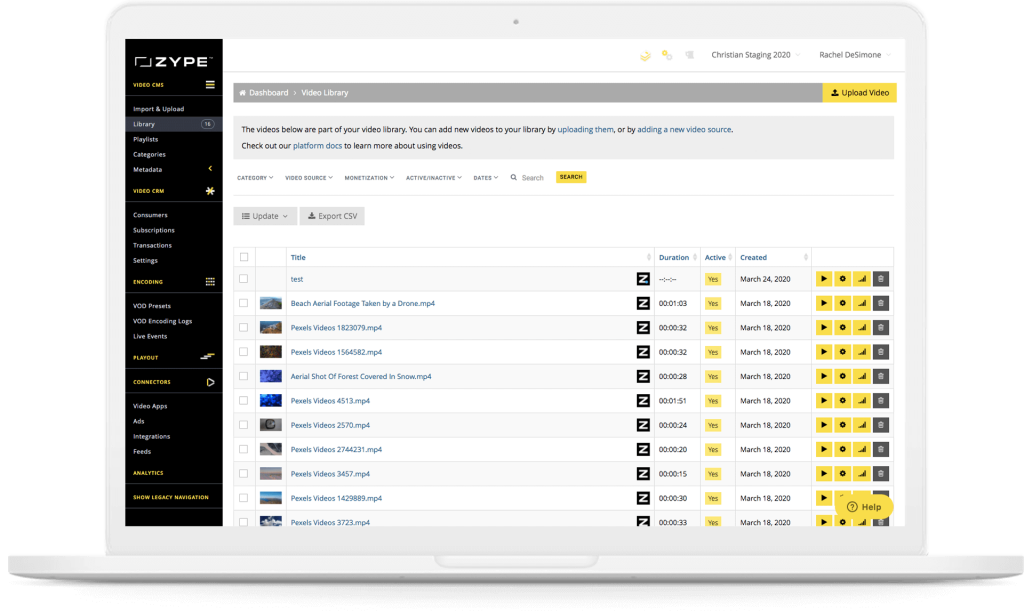
Zype is a high ticket live streaming solution for institutions with massive streaming needs. It is well-equipped to host a virtual graduation ceremony for thousands of participants.
Basic Functionality:
Zype is a platform for managing, hosting, and delivering high-quality live streams.
Key Features:
- Scalable platform
- Live and on
- App building support
- Bulk importing tools
- Powerful CDN
- API access
Pros:
- Comprehensive video organization
- Highly customizable
- No coding required
Cons:
- Mixed reviews about support
- Very expensive
- Limited simulcasting support
- Limited analytics
Pricing:
Zype X offers a free trial. For more information on what sets these plans apart, please refer to the Zype pricing page.
9. Brightcove

Brightcove is one of the oldest online video platforms that offer live streaming and video-on-demand (VOD) hosting. It is a competent solution that supports streaming on a large scale.
Basic Functionality:
Brightcove’s basic functionality includes video cloud hosting, the lift video player, server-side ad insertion, live streaming video, OTT flow for internet TV, an encoder for cloud transcoding, and tools for monetization.
Key Features:
- Live and VOD hosting
- Access to video analytics
- Server-side ad insertion
- High-quality streaming via cloud transcoding and adaptive bitrate streaming
- Video monetization
Pros:
- Insightful analytics
- Customizable video portals
- CRM integration
Cons:
- Very expensive
- Monetization limited to custom-priced plans
- No China video delivery
Pricing:
Brightcove offers three pricing plan levels that target higher-end clients. Brightcove’s pricing is no longer posted, but plans include basic video marketing tools and analytics with SD streaming quality for unlimited viewers.
FAQs
What are the best platforms for live streaming an online graduation ceremony?
Look for a platform built for live events rather than just video hosting: reliable global delivery, automatic VOD recording, password protection, and support for embedding the stream on your own website. Dacast, along with a handful of other dedicated live streaming platforms, is built for exactly this kind of one-time, high-stakes broadcast.
Do online or virtual schools still hold graduation ceremonies?
Yes. Many online and hybrid schools run virtual graduation ceremonies specifically so geographically dispersed students and their families can take part together, often combining pre-recorded segments with a live broadcast.
Can you use multiple camera feeds for a graduation live stream?
Yes. Most schools use at least two camera feeds, typically a wide shot of the stage and a second angle for close-ups or audience reactions, switched live with an encoder or edited together afterward for the replay.
What’s a good encoder for a school live streaming a graduation?
It depends on your setup and budget. A software encoder like OBS Studio or Wirecast runs on a laptop and works well for most school ceremonies, while a hardware encoder is worth considering for larger, multi-camera productions. See our hardware vs. software encoder comparison for a full breakdown.
Can graduates attend the ceremony virtually without traveling in person?
Yes. With a live stream and a recorded VOD replay available afterward, remote or online students and their families can take part fully without needing to travel to campus.
Conclusion
If this is your first time producing a live stream, the best advice is to keep it simple: run through your setup once or twice before the event to catch anything that needs fixing.
A successful graduation ceremony live stream takes some equipment and a bit of know-how, but it’s neither expensive nor difficult. A professional streaming platform handles the technical complexity so your team can focus on the ceremony itself, and recording the broadcast means families who couldn’t watch live can still see it afterward.
Ready to live stream your graduation ceremony? Try Dacast free for 14 days. No credit card required.
