



The 20 Best VOD Platforms in 2026 (Pricing, Features & Use Cases)

In 2026, video-on-demand (VOD) platforms remain indispensable tools for businesses and content creators – profoundly shaping how global audiences consume media. These platforms offer incredible flexibility, enabling users to tap into vast, on-demand video libraries tailored to their interests and schedules.
For businesses, a premium VOD platform provides a channel for engaging customers with high-quality content, whether it be through educational webinars, product demos, or branded entertainment. Creators, too, use these platforms to reach global audiences, monetize their content, and build communities.
The booming demand for VOD is backed by striking data: the global VOD market was valued at USD 113.8 billion in 2024 and is projected to reach USD 133.4 billion in 2025, growing at a CAGR of 16.2% through 2032. Meanwhile, subscription-based VOD (SVOD) continues to dominate the landscape of video-on-demand streaming services, with a forecast that supports both global expansion and diversification into ad-supported and hybrid models.
With advanced video-on-demand players and robust VOD servers, these platforms ensure smooth viewing experiences and make video-on-demand an integral part of modern digital life. As businesses and creators continue to harness the power of these platforms, the demand for innovative and reliable video-on-demand solutions will only continue to grow.
In this article, we review the top 20 VOD hosting platforms. We’ll compare the best players on the market, explore their key features and pricing plans, and help you choose the most suitable platform for your goals – whether you’re building an enterprise-grade service, sharing branded content, or monetizing creative work.
TL;DR
- Best all-in-one (live + VOD + monetization): Dacast
- Best enterprise stacks: Brightcove, Kaltura, IBM Video Streaming
- Best marketing analytics: Wistia, Vidyard
- Best courses / memberships: Uscreen (and if you keep it in the list: Thinkific-style platforms)
- If you need APIs + developer control: prioritize full video/player APIs, webhooks, SSO, and DRM options
- Non-negotiables for paid content: DRM or AES encryption, domain/IP controls, secure paywall, analytics, and reliable CDN
- Quick decision rule: If you monetize → start with platforms that support SVOD/TVOD/AVOD natively; if you train teams → prioritize search, captions, SSO, permissions.
Table of Contents
- What is VOD?
- How Does Video-on-Demand Work?
- Different Uses for VOD Platforms
- Why Professionals Use VOD
- Benefits of VOD Streaming for Businesses
- What is a Video-on-Demand Hosting Platform?
- Live Streaming vs. VOD
- Top VOD Platform Features
- VOD Growth & Optimization Tactics
- Practical Tips and Best Practices
- Tips on Optimizing Videos for SEO and SGE
- New Distribution Channels
- Case Studies
- How Businesses Can Adapt VOD Strategies to Different Industries
- How to Select the Right VOD Platform For You?
- The 20 Best VOD Platforms and Providers in 2026
- Pricing Comparison
- Best VOD Platforms by Use Case
- Comparing Dacast To Other VOD Platforms
- AI-Driven Advances in 2026
- 2026 Trends That Change Your Platform Choice
- FAQ
- Conclusion
What is VOD?
VOD stands for video-on-demand. Video-on-demand providers allow you to access content from an online video library whenever you want to. With VOD streaming services, you don’t have to wait for your favorite show or video content to air at a specific time.
VOD streaming content is generally previously recorded and not broadcast in real-time. VOD content was pre-created and added to the platform. However, you can also turn your live streams into VOD content.
A few common examples of streaming services that use the VOD model include:
- Netflix
- Hulu
- Disney+
- Prime Video
VOD platforms use OTT streaming. OTT streaming means you can access the content over the internet, instead of through a traditional cable television or satellite subscription.
How Does Video-on-Demand Work?

Video-on-demand platforms allow users to watch video content whenever they choose, rather than following a scheduled broadcast. They allow creators to deliver pre-recorded videos over the internet using streaming technology, offering flexibility on all sides.
Online VOD is powered by OTT technology and streaming protocols, which make streaming over the internet possible. They handle video compression, hosting, and delivery, so you don’t need complex infrastructure.
Businesses and content creators upload their videos to a VOD platform, which compresses, stores, and streams the content on demand. They can create a catalog of their full video work.
Audiences can then browse your libraries and watch content at their convenience. Some platforms offer free access, others require a login, subscription, or one-time payment. Some may also include advertisements.
Different Uses for VOD Platforms
Many different streaming services, such as Netflix, Hulu, and Disney+, all use VOD. However, providing access to entertaining content isn’t the only purpose of VOD content. VOD content can be used for:
- Entertainment
- Education
- Training
Businesses can use their online video content library to host internal training content. Schools can use VOD libraries to host presentations, lectures, and other pre-recorded live content. VOD libraries can help enhance the remote learning process.
VOD platforms allow for sharing pre-created and curated content. Live streaming is often less polished, as it doesn’t go through the same editing process since it is shared in real time.
Why Professionals Use VOD
There are many uses for VOD streaming in businesses, schools, and other professional organizations.
It is used to:
- Recap important events
- Share pre-recorded lectures
- Standardize corporate training programs
- Build revenue-generating entertainment platforms
There are endless uses for VOD streaming services.
The use cases listed above are simply the tip of the iceberg when it comes to the benefits of VOD streaming. Here are some industry trends that capture the true value of on-demand video content:
- 28.5% of internet users watch live streams on a weekly basis.
- 86% of businesses incorporate video content in their marketing strategies
- Websites with video content keep users’ attention longer than sites without any video content
- 50% of people look for a video of a product before making a trip to the store to buy it
- 35% of marketers are using live video for promotion, and 28% are increasing their live-video investments
- Viewers retain up to 95% of a brand message when it’s delivered via video (compared to much lower retention for text or static images)
Check out our dedicated streaming statistics post to learn more about what is going on in the online streaming space. VOD media is just one type of video content you can share online.
Benefits of VOD Streaming for Businesses
There are a wide variety of benefits to using VOD streaming for your business content, including:
- Employee Engagement: VOD streaming is a valuable tool for businesses to improve employee engagement. It facilitates internal training, team-building activities, and company-wide communications. By incorporating AI-driven analytics, companies can measure content effectiveness, ensuring employees stay engaged and learn at their own pace. This flexibility leads to better retention and skill development.
- Global Reach and Localization: One of the major advantages of the best VOD platforms for businesses is their ability to reach global audiences. Multilingual subtitles, dubbing, and region-specific content recommendations ensure companies can effectively engage international viewers. This level of localization makes it easier for businesses to expand their reach and connect with diverse audiences.
- Data-Driven Insights: Top video-on-demand platforms 2026 offer businesses powerful data analytics tools. These insights help optimize content strategies and improve viewer engagement. By tracking viewer preferences and behaviors, companies can make informed decisions to improve content quality and maximize viewer retention.
- AR and VR Integration in VOD Platforms: The integration of AR and VR in VOD platforms is revolutionizing the way businesses deliver content. These technologies offer immersive experiences that can enhance training sessions or customer experiences. Companies using the best OTT platforms for VOD streaming can tap into these cutting-edge features to stay ahead of competitors and provide innovative content.
- Connectivity: Modern technology allows your content to always be available to your users whenever they want to watch it and on whatever device they have at hand. This gives you a greater opportunity to have your videos seen, and you can even promote videos that are years old to get new views.
- Polished final product: Pre-recorded content can be edited, re-recorded, and perfected before any of your viewers ever see it. This allows you to put out the best representation of your brand and your content as possible, maintaining your brand’s image in the public eye.
- Widely adaptable: For industries where live streaming isn’t mandatory, VOD can be highly beneficial in providing consumers access to content. You have more control over what your viewers see, and they can view your content on their own schedules.
When it comes to video-on-demand vs streaming, some distinct advantages come with using video-on-demand, such as a more polished final product, wide adaptability, and increased connectivity and access.
What is a Video-on-Demand Hosting Platform?
To create a VOD library, broadcasters use VOD hosting software. This allows you to store and manage your on-demand video content. There are both consumer-grade and professional-grade VOD hosting platforms for businesses.
One of the most popular free video hosting platforms is YouTube. However, YouTube’s features are not the best for professional use. Most free platforms, such as Facebook and DailyMotion, also have the same limitations.
A few limitations of free video hosting platforms include:
- Outside branding
- No brand customization
- Content restrictions
- Limited monetization options
- No API access
Free video hosting platforms work for independent creators, such as vloggers and “YouTubers”. However, if you want to create a secure and stable VOD platform that you have complete control over, you’ll want to look for a professional-grade solution.
A professional video hosting platform includes additional tools that allow you to create a more on-brand experience for your audience.
- Video monetization tools
- Custom video player
- Easy embedding links
- Advanced security
- API access
- Content management system
If you want access to professional-grade tools, you need to work with a professional video-on-demand service.
Live Streaming vs. VOD
While live streaming and VOD are both methods of online video delivery, you cannot have live to VOD streaming without first recording live content.
VOD is, at its core, a method for viewing pre-recorded video content. You can — and should, for maximum video monetization opportunities — record live streaming content for later access on a VOD solution. Recording your content for later use with VOD distribution allows you to maximize your reach and more completely monetize your content. It shouldn’t be about streaming vs VOD, you should use both video methods.
While you can choose to leverage both live streaming and VOD content for your business, you select a streaming platform that can capably handle both distribution methods. Having a unified platform allows you to save time, money, and frustration in dealing with multiple distribution methods, making your job easier in the long run.
Top VOD Platform Features
All individual VOD hosting platforms have their own suite of VOD features and additions, but there are a few things to look for in a quality professional-grade VOD hosting platform:
- Video CMS
- VOD transcoding
- Video monetization
- White-label video player
- Video privacy and security
These features make it easier to store and organize your videos and allow your viewers the most access to your content when they’re ready to sit down and watch.
Let’s dive in and explore exactly what these features are so that you can better compare and find the right VOD platform provider for your business.
1. Video CMS
As your video library grows, you are going to need a system for keeping track of all that content, which is where a video content management system or video CMS comes into play.
With a video CMS, you will be able to tag your videos and use those tags to create categories and subcategories of your content. That will make it easier for both you and your viewers to find content.
Video tagging can also allow you to create smart playlists. Smart playlists are used to recommend content to the viewer based on what they just watched. They are a great way to keep viewers engaged with your content. More engagement helps to increase the impact and value of your content.
2. VOD Transcoding
Different methods of viewing videos require different file sizes. What works great on a desktop computer won’t always work as well for a mobile device, and vice versa.
With VOD transcoding, your professional-grade on-demand content platform allows your users to automatically view videos at the highest quality that will perform best for their internet connection. This enables those videos to perform their best on a variety of devices without you having to create each file type manually. This huge time saver makes working with a VOD streaming service worth it.
Just create one group of encoder settings and the transcoder does the rest, giving your users the most optimized file type for the device they’re using to view your content. That helps deliver the best viewing experience, something you want when you’re paying for VOD hosting.
3. Video Monetization
If you are using video as part of your business’s revenue stream, you need to find a VOD hosting platform that offers a monetization method that fits your business plan.
However, depending on your business model, not all of your content hosted on your VOD platform needs to or should be monetized.
You can host some content internally, such as training videos, and host other content publicly, such as webinars, entertainment content, educational videos, and podcasts, that you may want to monetize.
With video monetization, there are three main models to monetize your content.
SVOD (Subscription Video-on-Demand)
SVOD allows users to pay a recurring fee (monthly or annually) for unlimited access to content. This model gives viewers the flexibility to upgrade, downgrade, or cancel their subscriptions without penalties.
For content creators, SVOD requires consistently delivering value to retain subscribers. Some VOD platforms, like Dacast, offer built-in tools like:
- Integrated paywalls for monthly or event-based access
- Video previews to entice subscribers
- Coupon code support for promotions
TVOD (Transactional Video-on-Demand)
TVOD is a pay-per-view model where users purchase or rent individual content. It includes:
- Electronic Sell-Through (EST): Permanent access after purchase
- Download to Rent (DTR): Temporary access for a limited time or number of views
Platforms like Amazon Prime Video use TVOD for new movie releases or premium content. This model can deliver higher per-view revenues and is great for exclusive or event-based offerings.
AVOD (Advertising-Based Video-on-Demand)
With AVOD, users watch content for free in exchange for viewing ads. YouTube is a popular example of this model. While ad rates are typically low, the scale of free access can attract large audiences.
- Professional VOD platforms offer more control over ad content, letting you:
- Choose your own ad network
- Insert custom ad partners
- Manage ad placement and frequency
AVOD is ideal for reaching broader audiences with minimal access barriers.
4. White-Label Video Player
Many content creators are drawn to platforms such as YouTube because the system is already set up for them. They don’t have to figure out how to create their own VOD hosting platform before they can begin distributing their content. Plus, it’s free! But this system has drawbacks.
Utilizing YouTube or other non-white-label VOD platforms means you’re at the mercy of that platform when it comes to how your content is distributed. Your videos will always carry the VOD platform’s logo, and you may be limited to the ability to embed and share videos on your website or social media platforms.
Finding a VOD hosting platform that has a white-label solution, on the other hand, gives you all the ease of use of a third-party platform, but with more flexibility. White-label hosting allows your content to blend in better on your website as well.
You can remove the third-party branding from the video player, putting your logo and branding on everything. White-label platforms also allow you to easily embed the video player right onto your website, with your branding, and share it on your social platforms such as Twitch or Linkedin Live.
This creates continuity for your brand that you won’t find with many other third-party VOD hosting platforms and shows your customers that you’re serious about the content you provide. This allows you to provide your viewers with the best viewing experience.
5. Video Security
Security is one of the main reasons broadcasters choose VOD platforms for their videos. Video-on-demand platforms protect your video content from the time it’s uploaded to the time a user views it is crucial.
With HTTPS uploading and delivery, you know that your data—and your customer’s data—is secure. Your users can see the lock icon in the address bar, so they know they won’t be hit with malware and hackers when they view your content.
You also want to be able to restrict specific domains or IPs, preventing them from becoming the target of spammers and pirates.
With domain restriction, your content will only play on specific domains, so if someone tries to embed the video content on a restricted domain, the content will not play. With geographical restrictions, you can control the countries and IP addresses where your content is played. If you offer subscriptions to your users, you need to be able to give them exclusive and safe access to the content they’re paying for.
With password protection integration, you can require a password to view your content, protecting your revenues but giving your subscribers access to the videos they want to watch. If you accept payments from viewers’ subscriptions or pay-per-view access, you will want to offer SSL security, keeping their financial information safe.
VOD Growth & Optimization Tactics
Sustaining and scaling a successful VOD platform goes beyond content creation. It requires continuous improvement involving strategic marketing and integration of new tech. Some of the tactics that can help drive a platform’s growth, maintain its long-term competitiveness include:
- Influencer Collaborations for Niche Engagement: Partnering with influencers can significantly increase visibility for OTT video hosting platforms. The key is selecting influencers whose audience matches your target demographic. For example, tech reviewers and niche content creators can demonstrate how your platform’s user-friendly interface or live streaming capabilities stand out. Authentic endorsements that showcase real-time usage help position your solution among the top 10 VOD platforms with advanced VOD monetization options.
- Content Bundling to Add Subscriber Value: Bundling content is a proven way to increase perceived value and retain users. Pair premium titles with exclusive features like early access or live streaming events. Promoting these bundles highlights your platform as one of the best VOD services for live streaming integration, encouraging longer subscriptions and reducing churn. It also provides an opportunity to upsell tiered pricing models.
- Leveraging Social Media for Maximum Reach: Social media remains one of the most effective ways to drive brand awareness and user acquisition. Launch targeted ad campaigns that emphasize your platform’s strengths, such as varied VOD monetization tools, diverse content libraries, or white-label customization. Encourage audience participation through polls, interactive content, or sneak peeks. This creates a feedback loop that boosts visibility and brand loyalty.
- API Integration for Scalable Infrastructure: APIs help build scalable and personalized VOD experiences. They allow seamless integration with CRM tools, enabling better user account management, personalized content delivery, and data-driven marketing campaigns. This is particularly important for platforms offering e-learning, training, or corporate communications, where tailored experiences drive better outcomes. When comparing VOD platforms for enterprise and secure video hosting, API support stands out as a key differentiator, ensuring interoperability with tools like analytics dashboards, CMS platforms, and communication systems.
- Post-Launch Analysis for Continuous Improvement: A successful launch is only the beginning. Continuous analysis of viewer data, content performance, and emerging trends is vital. Use insights to refine your content mix, improve UI/UX, and update monetization strategies. This ongoing feedback loop ensures your VOD service remains relevant and competitive, especially as consumer behavior shifts and new technologies emerge.
- Hybrid Monetization Models to Maximize Revenue: Offering hybrid monetization options, blending AVOD, SVOD, and TVOD, gives users flexibility and boosts platform profitability. Some users may prefer free content with ads, while others are willing to pay for premium, ad-free experiences. Tailoring these options to different audience segments increases engagement and allows for diversified income streams.
- Sustainability in Streaming for Brand Differentiation: Consumers are increasingly conscious of environmental impact, and VOD providers are taking note. Analyze your streaming infrastructure’s energy usage and implement strategies for carbon reduction, such as green hosting solutions or energy-efficient encoding. Promoting sustainability in video streaming reduces your ecological footprint and appeals to a growing base of eco-aware viewers.
- Optimizing for Connected TVs (CTVs): The rise of Connected TVs has changed how audiences consume content. Optimizing your VOD platform for CTVs ensures compatibility with smart TVs, streaming devices, and gaming consoles. This involves focusing on intuitive navigation, responsive design, and smooth content playback. Platforms aiming to reach living-room viewers must prioritize seamless CTV integration to tap into this rapidly growing market segment.
Practical Tips and Best Practices
These best practices help enhance your overall VOD platform performance, viewer engagement, and content longevity:
- Keep intros short and engaging: Capture attention in the first 10 to 15 seconds to reduce bounce rates and improve watch time.
- Encourage viewer interaction: Include calls-to-action such as likes, shares, comments, or subscriptions to boost engagement.
- Group videos into playlists or series: Improve user navigation and session duration by organizing content into thematic playlists.
- Update and republish high-performing videos: Refresh titles, thumbnails, and descriptions of evergreen content to maintain relevance and traffic.
- Use branded, custom thumbnails: Design visually appealing thumbnails that reflect the topic and encourage clicks.
- Embed videos in relevant blog posts or landing pages: Pair videos with supporting content for added value and improved on-page SEO.
- Choose a VOD platform that supports advanced features: Select platforms with robust analytics, customizable video players, captioning tools, and monetization options to optimize your workflow.
Tips on Optimizing Videos for SEO and SGE
Improving SEO and discoverability is essential to expanding your reach, especially as search engines evolve. And with the spread of AI, it’s best to include SGE optimization as well. Here is how to do that:
- Use relevant keywords in video titles, tags, and descriptions: Conduct keyword research and naturally include target terms to help search engines understand your content contextually.
- Write detailed, keyword-rich video descriptions: Include summaries, timestamps, and semantically related terms to improve visibility across traditional and AI-driven search results.
- Include closed captions and subtitles: Improve accessibility and give search engines and AI models more textual data to index and summarize.
- Add full transcriptions: Boost keyword presence and provide generative AI models with additional context for accurate content summarization in SGE results.
- Use descriptive, SEO-friendly file names before uploading: Name your files clearly (e.g., video-on-demand-strategy-2026.mp4) to help algorithms match content with user queries.
- Utilize schema markup for video content: Use structured data to enhance rich results and ensure eligibility for inclusion in SGE summaries.
- Create supporting blog content for each video: Include videos within relevant written content, like how-to guides or FAQs, often prioritized by SGE for surfacing concise answers.
- Answer common user questions in your video: Structure your video to directly address frequently asked questions and include those questions in the description or surrounding page, improving the odds of appearing in SGE panels.
- Optimize for conversational queries: Tailor your metadata and content to reflect how people naturally ask questions via voice search or AI tools (e.g., “What is the best VOD platform for small businesses?”).
- Promote videos on social media and external channels: Share your videos to build authority signals through backlinks and engagement, which can influence traditional and generative search rankings.
- Optimize video length for platform and intent: Align video duration with user goals; shorter content for quick answers, longer for in-depth topics likely to be referenced by SGE systems.
New Distribution Channels
Short-Form Video Platforms
The popularity of short-form video content, similar to what TikTok offers, has opened new doors for VOD businesses. Integrating this type of content into platforms can help attract a younger audience and encourage more engagement.
By providing short, shareable clips alongside long-form videos, platforms can increase user retention and boost overall traffic. As the demand for quick, easily consumable videos rises, incorporating these features can be essential for staying competitive in the landscape of top video-on-demand platforms in 2026.
Social Media Integration
Social media is a powerful tool for driving traffic to VOD platforms. By integrating sharing options and leveraging platforms like Instagram, TikTok, and YouTube Shorts, businesses can create a seamless experience for users to discover and share content. Promoting exclusive content or trailers on social media helps drive interest and subscriptions to the best OTT VOD platforms.
CTV (Connected TV) Apps
Connected TV (CTV) apps are becoming increasingly popular as more users shift from traditional TV to streaming. Businesses should consider developing dedicated apps for platforms like Roku, Apple TV, and Firestick. This expansion into CTV allows for an enhanced viewing experience, making it easier for users to access content on their smart TVs. Offering compatibility with the best VOD hosting providers ensures smooth streaming and maximizes reach across devices.
Mobile-First Strategies
For VOD platforms targeting emerging markets, prioritizing mobile optimization is critical. With high mobile usage in these regions, offering a mobile-first experience ensures users can access content anytime, anywhere. Implementing mobile-friendly interfaces, fast streaming, and offline features will be crucial for delivering the best video hosting services for VOD. As mobile consumption continues to grow, adapting platforms to fit mobile needs will be essential for staying ahead in the competitive video monetization platforms industry.
Case Studies
Case studies offer real-world insights into how VOD platforms are utilized by businesses and creators. Here are a few examples:
- A fitness studio used Vimeo OTT to launch a subscription-based platform, offering on-demand workout videos to clients worldwide.
- An independent filmmaker leveraged YouTube to distribute a feature film, generating revenue through ad monetization and viewer donations.
- A small business utilized Uscreen to create a training library, providing employees with easy access to essential educational resources.
- An online educator adopted Thinkific to build a comprehensive course catalog, enabling seamless video hosting and student engagement.
These examples highlight how VOD platforms can meet diverse needs across industries.
How Businesses Can Adapt VOD Strategies to Different Industries
Adapting VOD Strategies for Education
In the education sector, VOD platforms can be used to deliver flexible and accessible learning experiences. Businesses should focus on creating structured courses, offering interactive features like quizzes, and ensuring compatibility with various devices. By tailoring content to different age groups and subjects, educators can engage learners more effectively and provide value through personalized learning paths.
VOD Strategies for Healthcare
Healthcare organizations can use VOD to share informative videos on patient care, medical procedures, and wellness tips. Businesses can support this by developing secure platforms that protect sensitive information. Incorporating features like multilingual support and accessibility options ensures a broader reach, catering to diverse patient needs.
Entertainment Industry VOD Insights
In entertainment, VOD platforms thrive on providing diverse and engaging content. Businesses should prioritize user-friendly interfaces, curated recommendations, and robust streaming quality. Partnering with content creators and leveraging analytics to understand viewer preferences can help platforms maintain a competitive edge and foster long-term user loyalty.
How to Select the Right VOD Platform For You?
There are so many great VOD hosting platform options on the market today. Each platform provider offers different features and price plans. Before committing yourself to one platform, go through this simple checklist to understand your requirements and see if the platform meets them:
- Understand Your Target Audience
Determine who your viewers are, consider demographics, viewing habits, and preferred devices. Look for platforms that offer features tailored to your audience, such as mobile optimization or support for connected TVs.
- Define Your Content Type
Whether you’re offering entertainment, e-learning, fitness classes, or live events, ensure the platform supports the format (VOD, live streaming, series playlists, etc.) and technical requirements you need.
- Evaluate Privacy and Security Needs
If you’re distributing sensitive or paid content, look for platforms with DRM protection, password controls, geo-blocking, and advanced encryption.
- Compare Monetization Options
Choose a platform that aligns with your revenue strategy—whether it’s AVOD (ads), SVOD (subscriptions), TVOD (pay-per-view), or hybrid models. Some platforms offer built-in payment gateways and ad integrations.
- Check Customization and Branding Features
For brand consistency, opt for white-label platforms that allow you to customize the player, landing pages, and viewer experience without third-party branding.
- Assess Analytics and Reporting Tools
Real-time analytics can help you track engagement, viewer retention, and content performance. Choose a platform with clear, actionable insights.
- Look for Integration Capabilities
If you plan to connect your VOD platform with CRMs, marketing tools, or LMS systems, prioritize platforms with robust API and plugin support.
- Review Pricing Plans and Scalability
Consider both your current budget and future growth. Look for transparent pricing models and the ability to scale as your audience or content library grows.
The 20 Best VOD Platforms and Providers in 2026
We have rounded up our list of VOD platforms to make choosing the correct one easier for you. Here are 15 video-on-demand platforms for VOD demand streaming. This is a comprehensive list of different VOD platforms so you can find the best one for you.
Please keep in mind that not every broadcaster needs every tool or feature. The most important thing to consider when choosing a VOD hosting platform is seeing all of the options side-by-side, which will make it easier for you to review their pricing and features.
With this in mind, let’s dive into the top VOD video-on-demand platform providers, features, and pricing for video hosting.
1. Dacast

Dacast is a powerful video hosting platform for live and on-demand content, which was designed for professionals.
Dacast is a unified streaming solution with both VOD hosting and live streaming setup functions. It offers a variety of advanced online video hosting features. These advanced features include video monetization, top-notch security, video API global video delivery, and top-tier video delivery.
Although this hosting and on-demand video streaming platform provider are loaded with so many powerful features, Dacast manages to keep prices pretty competitive.
It is best suited for enterprise businesses and other professional organizations that aim to host high-quality video broadcasts, both live and on-demand.
Video Encoding
- Support for multiple encoding bitrates
- Adaptive video-on-demand player: delivers the best video quality automatically
- Cloud transcoding: simply and easily encode videos into multiple bitrates
- Supports multi-bitrate live streaming, the HTML5 video player automatically detects varying bitrates of your live stream
Video Hosting and Library Organization
- VOD hosting and live streaming
- Content management with categories, subcategories, and tags for the organization
- Live stream recording for on-demand playback
- Video channel playlists
- Zoom live streaming integration
- Expo galleries video portal
- Includes China video hosting
Uploading / Migration
- Bulk upload tool
- Dropbox upload
- Video library migration
- 24/7 technical support included in all plans
Video Monetization
- Integrated white-label paywall built-in
- Pay-per-view (TVOD) support
- Subscriptions (SVOD) support
- Advertising (AVOD) support
- Coupon codes and packages to sell bundled content
API Access
- Full video and player API access
- SDKs for iOS and Android development
Security Features
- Password-protected live streaming
- AES encryption and/or DRM
- Domain restrictions
- IP restrictions
- HTTPS delivery
Newest Features and Updates
- Simulcast Streaming: Stream to multiple platforms like Facebook, YouTube, and Twitch simultaneously, expanding your audience reach.
- Enhanced Paywall: A revamped paywall with a clearer layout and responsive design, improving accessibility and decision-making across all devices.
- Animated Thumbnails: Use GIFs as thumbnails to make your content more engaging and provide viewers with a preview of your videos.
- Dark Mode: Switch your account theme to dark mode, offering reduced eye strain and improved battery life.
- Onboarding Tutorials: Explore features in greater detail with step-by-step guidance in the “Getting Started” section.
Upload Guidelines and Specs
- Minimum dimension: none (but 240p is the recommended minimum)
- Maximum dimension: 1080p or 4K (depends on the user’s hardware and internet)
- Video aspect ratio: no restrictions (but 16:9 is the default)
- Max file size: none
- Max video length: none
- Total file storage: 10-1000GB (depends on plan)
- Compatible video formats: MP4 (preferred), MOV, M4V, M2V, AVI, MPG, FLV, WMV, MKV, WEBM, OGV, MXF, ASF, VOB, MT
Pricing
Dacast has multiple live-streaming pricing plans for organizations of all sizes and budgets. Here is a quick summary of all plans:
- Starter: $39/month billed annually (includes 2.4 TB bandwidth and 500 GB storage)
- Event: $63/month billed annually (includes 6 TB bandwidth and 250 GB storage)
- Scale: $165/month billed annually (includes 24 TB bandwidth and 2 TB storage)
- Custom: contact sales for custom pricing plans
Dacast is one of the most comprehensive VOD platforms with live-streaming capabilities. To learn more about advanced video hosting, video transcoding, unlimited live channels and other custom options, reach out to Dacast’s support team.
Best Use Cases:
- Live Event Streaming
- Video On Demand Hosting
- Streaming Video for Education
- Enterprise Video Platform
- Marketing Video Hosting
- Video Prospecting For Sales
2. VPlayed

VPlayed is a VOD platform from Contus that offers solutions for broadcasters in every industry. This platform sells plans that are custom-priced to suit each user’s needs.
Video Encoding:
- Cloud transcoding
- Automatic transcoding upon upload
- Scalable streaming
- Multi-platform support
Video Hosting and Library Organization:
- Professional management tools
- Video categorization
- User management
- Video scheduling
Uploading / Migration:
- Smart uploading (automatic transcoding)
- “Clutter-free” upload
Video Monetization:
- Ad-based monetization
- Subscription-based monetization
- Pay-per-view monetization.
API Access:
VPlayed doesn’t provide API access.
Security Features:
- End-to-end content protection
- DRM
- SSO
- SSL
- Dynamic watermarks
- Password protection
Limitations:
- No API access
- Limited analytics and reporting
- Limited engagement tools
Upload Guidelines and Specs:
- Minimum dimension: Not available
- Maximum dimension: Not available
- Aspect ratio: Not available
- Max file size: Unlimited
- Max video length: Not available
- Total file storage: Unlimited
- Compatible video formats: MP4, 3GP, MOV, MPEG-TS, MPEG-2 PS, MPEG1, and more
Pricing:
VPlayed offers entirely customized plans, so interested contact their sales team directly for additional information. VPlayed is a VOD streaming service that offers you the monetization options you need.
3. Muvi
Muvi is a feature-rich, flexible video platform. If you need high-end features and have a large budget, Muvi could be right for you.
Muvi’s most popular feature is its wide range of monetization tools. This is appealing to organizations that set out to make money on their video content with ads, subscriptions, or pay-per-view models.
Video Encoding
- Support for multi-bitrate streaming
- Adaptive video player
- Cloud encoding
- Automatic transcoding with support up to 4K resolution
Video Hosting and Library Organization
- VOD hosting and live streaming
- Categories and subcategories for organization
- Tags for further sub-organization
- Playlists
- 24/7 support available for high-end customers
Uploading / Migration
- Bulk upload tool
- Dropbox upload
- Video library migration
- Support for audio and image files in addition to video
Video Monetization
- SSL secure paywall built-in
- Pay-per-view (TVOD) support
- Subscriptions (SVOD) support
- Advertising (AVOD) support
- Customer loyalty program (allow your viewers to redeem points for free content)
API Access
- Full video API included
- SDKs for iOS and Android development
Security Features
- AES encryption and/or DRM
- Domain restrictions
- IP restrictions
- HTTPS delivery
Muvi Limitations
- No password protection for videos
- High price point
Upload Guidelines and Specs:
- Minimum dimension: 144p (256 x 144)
- Maximum dimension: 4K (3840 x2160)
- Aspect ratio: 16:9, 4:3
- Max file size: not available
- Max video length: not available
- Total file storage: 1TB, 2TB, 5TB (depending on plan)
- Compatible video formats: MP4, MOV, MKV, FLV, VOB, M4V, AVI, 3GP, MPG
Pricing
Muvi has four different pricing plans:
- Starter Plan: $399/month – Basic features and support
- Professional Plan: $1499/month – Advanced features and customization
- Enterprise Plan: $3900/month – Professional + dedicated server and enterprise support
- Ultimate – Full suite of features, dedicated support, and custom integrations
Muvi’s offers the ability to effectively monetize your content through their VOD services.
4. Uscreen

Uscreen is a VOD platform that is powered by OTT technology. This platform is equipped with all of the tools that broadcasters need to host and deliver professional-grade video content.
Uscreen is primarily used for educational content, whether it be training videos for enterprises or online courses for schools.
Video Encoding:
- Native transcoding support
Video Hosting and Library Organization:
- Access to professional hosting tools
- Advanced organization support
- Video scheduling
Uploading / Migration:
- Dropbox upload
- Uploading more than 13 GB of video footage at one time is not recommended
- Only supports upload via Chrome, Firefox, Edge, and Safari
Video Monetization:
- Pay-per-view monetization
- Subscription-based monetization
API Access:
Uscreen supports API access but requires users to reach out for more information.
Security Features:
- SSL
- Full data ownership
- 24/7 monitoring
- Secure payment data
Limitations:
- Complaints about hidden fees
- Unreliable customers service
- Some limits on the user interface
- Some features require tech support that is not provided by Uscreen
Upload Guidelines and Specs:
- Recommended dimensions: 1080p/2k or smaller
- Supported aspect ratios:
- Maximum file size: 13 GB
- Maximum video length:
- Total file storage: 3000, 7500, 7500+ minutes
- Accepted video formats: MP4 (Recommended)
Pricing:
Uscreen has three different pricing plans for broadcasting. The pricing above reflects rates when billed monthly and include:
- Growth: $149/month + $1.99/subscriber
- Pro: $399/month + $1.49/subscriber
- Plus custom pricing: Customizable plans for enterprise users with greater needs
Uscreen provides you with a secure and safe VOD player.
5. IBM Video Streaming

IBM Video Streaming is loaded with features that you need to create a professional VOD platform.
As a massive corporation, IBM provides a sprawling video service. Their VOD solution, IBM Video Streaming, is packed with features.
However, the expansive nature of the platform is a double-edged sword since it can be hard to navigate.
IBM Video Streaming is an excellent platform for large organizations with expert broadcasters.
Video Encoding
- Support for multi-bitrate streaming
- Adaptive video player
- Cloud encoding
- Live transcoding
Video Hosting and Library Organization
- VOD hosting and live streaming
- Categories and subcategories for organization
- Tags for further sub-organization
- Hong Kong (China) video hosting
- Custom metadata fields
- Playlists
Uploading / Migration
- Video library migration: available for an additional fee via professional services
- Phone technical support is available
Video Monetization
- Subscriptions (SVOD)
- Ad-integration available
- Subscriber management tools
API and Security Features
- Full video API included
- SDKs for iOS and Android development
Security Features
- Password-protected videos
- AES encryption and/or DRM
- Domain restrictions
- IP restrictions
- HTTPS delivery
IBM Limitations
- No SSL secure paywall built-in (integration only)
- Bulk upload tool and Dropbox upload are NOT included
Upload Guidelines and Specs
- Minimum dimension: 480p (480 x 270)
- Maximum dimension: 4K (3840 x 2160)
- Aspect ratio: No published aspect ratio
- Max file size: 4 GB
- Max video length: No published limits
- Total file storage: 1TB – 5TB (depends on plan)
- Compatible video formats: MKV, MP4, MOV, FLV, AVI, WMV, MPEG2, H264, H263, MPEG4, VP6, VP8, THEORA, WMV, MP3, AAC-LC, NELLYMOSER, PCM, SPEEX, VORBIS, WMA
Pricing
The pricing plans for the IBM Video Streaming include:
- Silver – $137/month
- Gold – $688/month
- Platinum – $1,380/month
- Custom – Please contact IBM Video Streaming for custom plan pricing.
If you are looking for one of the best VOD platforms, add IBM Video Streaming to your VOD platforms list to consider. They offer all the professional tools a business needs to control one’s content.
6. Kaltura
Another large VOD hosting platform comes from Kaltura. Kaltura takes an entirely customized approach to video. Since it is customizable, the platform offers a lot of flexibility.
Kaltura is best for enterprise businesses and other large organizations. Their prices are not published on their website, but users have reported that Kaltura’s software comes with a hefty price tag.
Video Encoding
- Support for multiple bitrates
- Adaptive video player: delivers best video quality automatically
- Cloud encoding: simply and easily transcode videos into multiple bitrates.
- Support for transcoding from unusual and proprietary codecs(e.g. GoToMeeting).
Video Hosting and Library Organization
- VOD hosting and live streaming
- Categories and subcategories for organization
- Tags for further sub-organization
- Playlists
Uploading / Migration
- Bulk upload tool
- Custom XML/CSV upload tool supports offline metadata editing
Video Monetization
Kaltura only allows monetization with external integrations.
API Access
- Full video API access
- SDKs for iOS and Android development
Security Features
- Password-protected videos
- AES encryption and/or DRM
- Domain restrictions
- IP restrictions
- HTTPS delivery
Kaltura Limitations
- No SSL secure paywall built-in
- No pay-per-view (TVOD), subscriptions (SVOD), or advertising (AVOD) support
- Do Dropbox upload or video library migration
Upload Guidelines and Specs
- Minimum dimension: 180p (320 x 180)
- Maximum dimension: 1080p (1920x 1080)
- Aspect ratio: 16:9, 4:3
- Max file size: 2GB
- Max video length: Not available
- Total file storage: 10GB to Unlimited (depends on the plan)
- Compatible video formats: MOV, MP4
Pricing
- All plans: no pricing information available. As a result, users must negotiate all plans on a custom basis with Kaltura.
Kaltura is made for businesses with education as their main focus.
7. Wistia

Wistia is a VOD-only platform that has a main focus on marketing. It includes some excellent and unique features, such as “heat maps” analytics.
Since Wistia is a more specialized platform, it does not include all of the great features that are included with the other VOD platforms we’ve covered. It has quite a few limitations, and it may not be ideal for all users.
Video Encoding
- Support for multiple bitrates
- Adaptive video player
- Cloud encoding
Video Hosting and Library Organization
- VOD hosting, but no live streaming
- Categories and subcategories for organization
- Tags for further sub-organization
- Playlists
- Powerful analytics tool with heat maps
- Unique “project” organizational structure
Uploading / Migration
- Bulk upload tool
- Dropbox upload
Video Monetization
Wistia does not offer any native monetization features, but you can integrate external paywalls.
API Access
- Full video API included
Security Features
- Password-protected videos
- Domain restrictions
- HTTPS delivery
Wistia Limitations
- No video library migration
- No SSL secure paywall built-in
- No monetization support
- No SDKs for iOS and Android development
- No AES encryption and/or DRM
- No IP restrictions
Upload Guidelines and Specs
- Minimum dimensions: None
- Maximum dimensions: Maximum of 4K (3840 x 2160)
- Supported aspect ratios: Any
- Maximum file size: 8 GB
- Maximum video length: 2 hours
- Total file storage: Up to 10 videos with the pro plan ($99 per month), $0.25 per month for every extra video
- Accepted video formats: MP4 (recommended format), .MOV, .AVI, .WMV, .FLV, .MKV, 3GPP
Pricing
Wistia has five pricing plan tiers.
- Free Plan: Free forever
- Plus plan: $19/month
- Pro Plan: $79/month
- Advanced Plan: $319/month
If marketing is your focus with your video content, Wistia is a great VOD streaming service.
8. Brightcove
Boston-based Brightcove was founded in 2004. It is one of the oldest online video platforms offering cloud encoding, live streaming, and VOD (video-on-demand) hosting.
Brightcove is another major player in the VOD platform-building game. It offers powerful solutions in custom-priced packages.
Users report the Brightcove platform as “robust” and “easy to use”. The platform includes essential features such as batch uploading and simplified management of large content libraries. The company also supports all revenue generation models for online video.
Video Encoding
- Multi-bitrate video player
- Adaptive streaming
Video Hosting and Library Organization
- Global video content delivery
- Tech support, but only at a basic level with slow ticket-based responses
- Includes custom video portals
- CRM integration available
Uploading / Migration
- API-based upload and migration tools
Video Monetization
Video monetization is only available with custom-priced plans.
API Access
- Video API access with custom-priced plans
Security Features
- Role-based access control
- DRM and AES encryption
- Geo and IP restrictions
- Tokenized security
- Domain restrictions
- SSO
Brightcove Limitations
- High pricing
- No China video delivery
- Slow tech support
Upload Guidelines and Specs
- Minimum dimension: Determined by user
- Maximum dimension: Determined by user
- Aspect ratio: No restrictions (since Brightcove uses a responsive player)
- Max file size: No limits on files size
- Max video length: No published limits
- Total file storage: Varies by plan
- Compatible video formats: MP4, MOV, FLV, AVI, WMV, MKV, 3GPP
Pricing
Since Brightcove mainly targets enterprise-level clients, they offer several custom-priced streaming plans at high price points.
The three Brightcove pricing tiers include:
- Starter: includes 50 to 200 videos, up to 100,000 plays, and 2-5 users
- Professional: unlimited videos, 100,000+ plays, and no overages play, with +10 users
- Enterprise: unlimited videos, 100,000+ plays, and no overages play, with 10+ users, unlimited upload, and analytics-only users
Interested broadcasters can contact their sales department to receive a quote or sign up for a 30-day free trial. When you need something simple with complex tools, Brightcove is a good choice.
9. Vidyard
This platform is known for its lead generation and engagement-centered features. Its most notable marketing tools are SEO, email capture, and advanced video analytics.
Video Encoding
Vidyard does not offer any special encoding or transcoding tools.
Video Hosting and Library Organization
- Marketing tools for SEO, email, and analytics
- Interactive viewing and lead capture tools
- Video organization and channels
- Reliable technical support
Uploading / Migration
- Fast video upload
- Upload widget for easy upload
Video Monetization
Vidyard does not offer video monetization.
API Access
- Video API
- Player API
Security Features
- Password protection
- SSO login
Vidyard Limitations
- Mixed user reviews and consistency issues
- Complicated backend editing portal
- No monetization tools
- No China video delivery
Upload Guidelines and Specs
- Minimum dimension: 360p (480 x 360)
- Maximum dimension: 4k (3840 x 2160)
- Aspect ratio: 16:9, 4:3
- Max file size:5GB to 16GB (depends on the plan)
- Max video length: 1 hour (live stream)
- Total file storage: Not available
- Compatible video formats: WEBM, MP4, MKV, MOV
Pricing
Vidyard prices its platform based on the use case, and includes the following packages:
Packages for Individuals and Teams:
- Free
- Pro Package: $19/month (when billed annually or $29 when billed monthly)
- Plus Package: $59/month (when billed annually or $89 when billed monthly)
- Business Package: those looking for Business pricing solutions, are encouraged to contact Vidyard’s sales team
Custom Video Solutions:
All enterprise pricing packages are custom-priced.
Vidyard is a great platform to capture customers’ emails and build up your email marketing list. If you want your videos to do more for you, Vidyard is a good option.
10. JW Player

JW Player’s video player was part of YouTube’s original video player technology. This platform has evolved to become one of the most well-established players in the VOD hosting game.
Video Encoding
- Multi-bitrate streaming
- Adaptive video player
Video Hosting and Library Organization
- Global content delivery, except for China
- Tech support (limited to email support for cheaper plans)
Uploading / Migration
- Multiple options for uploading content
Video Monetization
- Supports ad-based monetization (AVOD)
API Access
- Video API available with all plans
Security Features
- Security features are basic but functional
- Only custom-priced Enterprise plans offer DRM
Limitations
- Only supports AVOD
- Limited tech support
- No China video delivery
Upload Guidelines and Specs
- Minimum dimension: 360p (640 x 360)
- Maximum dimension: 1080p (1920 x 1080)
- Aspect ratio: 16:9, 4:3, 2.39:1
- Max file size: 25GB
- Max video length: Not available
- Total file storage: 25GB to 500GB (depends on the plan)
- Compatible video formats: MP4, WMV, AVI, MOV, 3GP, FLV
Pricing
With JW Player, you will need to contact sales to discuss your needs and get custom pricing or start with a free trial.
Publishers and broadcasters should contact JW Player directly for pricing and features.
For broadcasters wanting to work with a classic VOD hosting platform, JW Player is a good choice.
11. Wowza
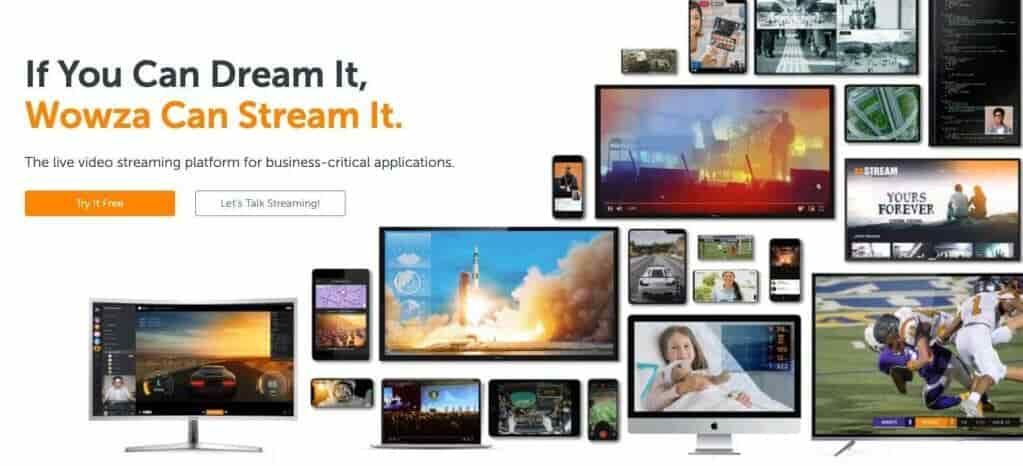
Wowza is a multi-faceted VOD streaming platform that is rich in tools and features. This platform’s most notable feature is its customizable video player. This fosters an on-brand viewer experience.
Video Encoding
- Built-in cloud transcoding
- Adaptive bitrate streaming
Video Hosting and Library Organization
- White-label video player for an on-brand viewer experience
- Mobile video streaming with an HTML5 video player
- Customer support
- Cloud management portal
Uploading / Migration
The Wowza site does not present information on uploading and migration.
Video Monetization
Wowza does not support video monetization.
API Access
- API access is available on all plans
- SDKs for mobile streaming
Security Features
- SSL
- Tokenized-security
- DRM
- Source authentication
Limitations
- Lack of video monetization
- No video analytics tools
Upload Guidelines and Specs
- Minimum dimension: 240p (320 x 240)
- Maximum dimension: 4K (3840 x 2160)
- Aspect ratio: 16:9, 4:3
- Max file size: Not available
- Max video length: Not available
- Total file storage: 250 GB (depends on the plan)
- Compatible video formats: MP4, FLV, MP3, SMIL, AMLST, ID3, NGRP
Pricing:
Wowza recently overhauled its pricing plans and added several options. These are split into 2 main tiers: Streaming Video Cloud Streaming and Streaming Engine.
The Wowza Video Streaming Cloud offers four distinct pricing plans and services. Live Event Pricing, monthly plans include:
- One Month Event: $149 one-time purchase; includes 15 hours of live streaming and 500 viewing hours
- Pay as you go: $0/month; $2.50/hour of streaming, all usage billed separately
- Enterprise: Plans built for your needs; contact sales for custom pricing
All the Live Event plans reflect rates when paid monthly and include full brand control, multi-bitrate streaming, and HD and UHD streaming.
The Wowza Streaming Engine has its own pricing plan packages. These professional-grade streaming plans are billed annually and include:
- Pay As You Go: only pay for usage + $2.50 per streaming hour, $0.10 per viewer hour
- One Month of Streaming: $149/month one-time purchase
- Enterprise: Please contact Wowza directly for access to their custom-tailored high-volume enterprise solutions
Check out Wowza’s pricing page for alternative plans and packages.
If making money with your content isn’t your focus, then Wowza is a great on demand video hosting service to work with. Great for businesses that want to maximize exposure and organic reach.
12. Vimeo
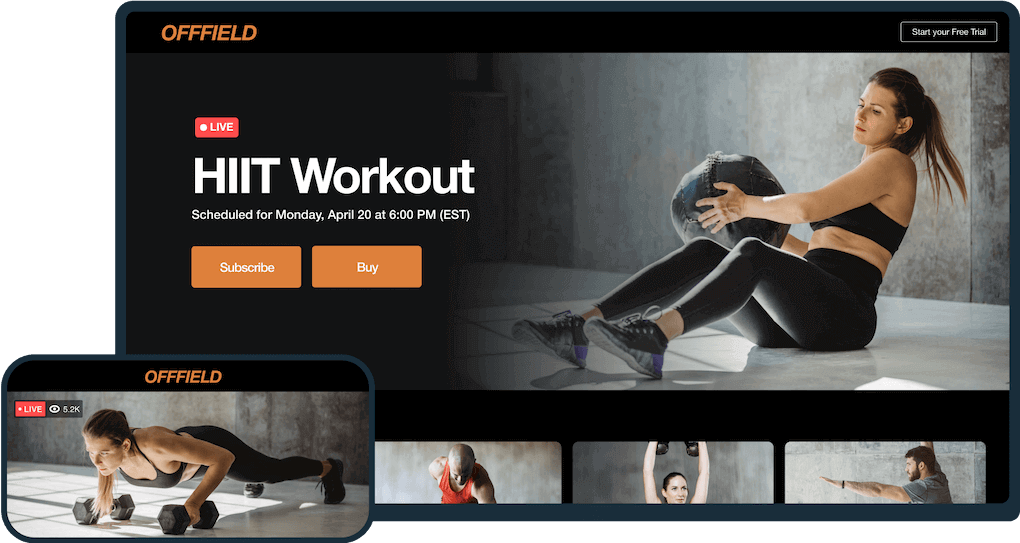
Vimeo originated as a consumer-grade video platform like YouTube, but it has since shifted to serve professional broadcasters. Vimeo OTT is one of their premium solutions that is equipped with the tools that businesses need to build an online streaming platform.
This solution is specifically geared towards creating a site like Netflix that sells streaming as a service. Check out Vimeo On-Demand, a pay-per-view streaming service Vimeo powered by Vimeo’s OTT technology. This will give you a good idea of how the tool works in action.
Video Encoding
Vimeo OTT’s webpage does not provide any information on encoding or transcoding features.
Video Hosting and Library Organization
- Built for scalability
- Advanced video analytics
- Auto-archiving of live streams
- Reliable customer support
Uploading / Migration
- “No-downtime” migration
Video Monetization
- Subscriptions
- Advertising
- Pay-per-view
API Access
- Tools for app development
- Access to easy API
Security Features
Vimeo OTT’s webpage does not provide any information on privacy or security features.
Limitations
- Video security is not listed as a feature
Upload Guidelines and Specs
- Recommended dimension: 720p (1280 x 720)
- Aspect ratio: 16:9, 4:3
- Max file size: 3GB
- Max video length: Information not available
- Total file storage: Information not available
- Compatible video formats: MP4 (recommended)
Pricing:
Vimeo offers basic video hosting plans that are suitable for content creators and startups. These include:
- Free: Try Vimeo for free
- Starter: $12/month billed annually; 1+ seats; 100 GB storage; privacy controls, custom video player, custom URLs
- Standard: $20/month billed annually; 2+ seats; 1 TB storage; brand kit, teleprompter, text-based video editing
- Advanced: $65/month billed annually; 2+ seats, 5 TB storage; AI-generated chapters and text summaries, host live broadcasts and webinars
Vimeo is great if you want to maximize the usage of your content by turning your live streams into VOD content.
13. YouTube

YouTube is a consumer-grade/social VOD platform that was one of the first sites to popularize online video streaming. It has grown exponentially since it was launched in 2005 and has since been acquired by Google.
While this platform is mainly used by consumers, some startups and small businesses opt to use it if they work with a lower budget. Since it is free, it provides a great way to get into online streaming without taking on much financial risk.
It is worth noting that YouTube’s limitations on monetization and other professional tools can be a bit of an inconvenience for businesses. Additionally, the YouTube platform requires that broadcasters give up partial ownership of their content when they upload it to the platform, which may make it less than ideal for some organizations.
Video Encoding:
YouTube does not have any native encoding tools.
Video Hosting and Library Organization:
- Very basic video hosting tools
- “YouTube Studio” for basic content organization and management
Uploading / Migration:
- Simple upload
- Can upload multiple videos at once
Video Monetization:
- Ad-based monetization
- Strict limits on who can and cannot monetize their content
API Access:
YouTube offers Data API access
Security Features:
- No real security features
- “Unlisted” videos are as close as it gets to privacy features
Limitations:
- No white-label streaming
- Cannot remove ads
- Content and copyright restrictions
- Google owns partial rights to your content
Upload Guidelines and Specs:
- Minimum dimension: 240p (426 x 240)
- Maximum dimension: 4K (3840 x 2160)
- Aspect ratio: 16:9 (adds padding to videos with other aspect ratios)
- Max file size: 128 GB
- Max video length: 12 hours
- Total file storage: No storage limit
- Compatible video formats: MP4, MOV, MPEG4, FLV, AVI, Web M, WMV, MPEG-PS, 3GPP
Pricing:
YouTube is great if you want a free solution that has the potential to reach a big audience; however, it doesn’t offer the control over your content that many businesses want.
14. Dailymotion

Dailymotion is another consumer-grade VOD streaming platform that is similar to YouTube. The main advantage of streaming with Dailymotion over YouTube is that Dailymotion doesn’t really enforce any content restrictions.
That said, the purpose of Dailymotion is essentially the same as YouTube. It is a basic platform for amateur broadcasters to upload and host on-demand video content.
Since this site is free, it doesn’t have much to offer in terms of professional hosting tools.
Video Encoding:
- No built-in encoding tools
- Works with any encoder
Video Hosting and Library Organization:
Dailymotion doesn’t offer any notable video hosting or library organization tools.
Uploading / Migration:
- Easy video upload
- Some upload restrictions on “Users & Starters”
- Fewer upload restrictions on Dailymotion partners
Video Monetization:
- Monetization is available for Dailymotion partners
- Must have 10,000 views to start monetizing content
- Cannot cashout under $100
API Access:
Reporting API is available for Dailymotion Partners.
Security Features:
https://faq.dailymotion.com/hc/en-us/articles/360014366179-Content-Security-Privacy
Limitations:
- Less popular than YouTube
- Monetization tools are limited
- Limited video analytics
Upload Guidelines and Specs:
- Minimum dimension: 240p (426 x 240)
- Maximum dimension: 4K (3840 x 2160)
- Aspect ratio: 16:9 (adds padding to videos with other aspect ratios)
- Max file size: 128GB
- Max video length: 12 hours
- Total file storage: Unlimited
- Compatible video formats: MOV, MPEG4, MP4, AVI, WMV, MPEG-PS, FLV, 3GPP, WebM
Pricing:
Dailymotion is free to use.
If you want a quick way to host VOD content online, Dailymotion has you covered.
15. Facebook Watch

Facebook Live supports VOD streaming through a feature called “Facebook Watch.” Users must create a free Facebook Page (not a personal profile) to access this capability.
Since this platform is free, it is most popular among small businesses and organizations that are just getting into online video streaming. Facebook poses some streaming limitation challenges related to video ownership, limits on video length, monetization, and more.
Aside from those limitations, hosting and sharing VOD content through Facebook helps users connect with existing audiences.
Video Encoding:
Facebook does not support any sort of video encoding, and you can stream to Facebook through their app without encoding support. However, many encoders and simulcasting tools work seamlessly with Facebook if you have advanced streaming needs.
Video Hosting and Library Organization:
- Automatic organization by date
- Drag and drop for reorganization
Uploading / Migration:
Facebook supports easy video upload.
Video Monetization:
Facebook offers limited ad-based monetization.
API Access:
Facebook does not provide API access for customization.
Security Features:
Facebook doesn’t offer much in the way of privacy or security on public Pages.
Limitations:
- Limited monetization options
- Time constraints on live videos
- No white-label streaming
Upload Guidelines and Specs:
- Minimum dimension: 720p (1280×720)
- Maximum dimension: 1080p (1920×1080)
- Aspect ratio: 16:9, 9:16, 2:3, 4:5, 1:1
- Max file size: 4 GB
- Max video length: 90 minutes
- Total file storage: No storage limit
- Compatible video formats: MP4, MOV, MPEG4, AVI, 3GPP, WMV, FLV, MKV
Pricing:
Facebook is free to use.
Facebook allows access to a vast audience but doesn’t offer professional VOD platform features.
Here are some lesser-known yet high potential VOD platforms for you to consider:
16. Zype
Video Encoding:
- Supports various formats including MP4, MOV, and AVI.
- Offers automatic transcoding to different resolutions (HD, 4K).
Video Hosting and Library Organization:
- Provides cloud-based hosting with reliable video delivery.
- Customizable library for categorizing content by genre, series, or tags.
Uploading / Migration:
- Allows bulk upload through FTP or APIs.
- Offers an easy migration process from other VOD platforms.
Video Monetization:
- Offers multiple monetization options: subscription, pay-per-view, and ads.
- Provides a built-in ad server to manage and display ads.
API Access:
- Robust APIs to integrate with your own website or app.
- Allows developers to access video player, metadata, and monetization data.
Security Features:
- Supports SSL encryption for secure video delivery.
- Offers token-based authentication for protected content access.
Limitations:
- Limited support for live streaming.
- No built-in analytics dashboard.
Upload Guidelines and Specs:
- Maximum file size: 10 GB per video.
- Recommended formats: MP4, MOV, AVI with H.264 codec.
Pricing:
- Starter: $500/month.
- Premium: Custom pricing based on scale.
- Enterprise: Custom pricing based on scale.
17. StreamShark
Video Encoding:
- Supports various formats and offers automatic encoding for adaptive bitrate streaming.
- It handles high-quality content, including 1080p and 4K.
Video Hosting and Library Organization:
- Provides cloud-based hosting for on-demand videos and live stream archives.
- Users can organize content and create brandable channels and playlists.
Uploading/Migration:
- Offers tools for uploading videos, focusing on managing and archiving live streams.
Video Monetization:
- Supports monetization options, including subscriptions and pay-per-view.
- Has an ad insertion feature for pre-roll and mid-roll placements.
API Access:
- Offers a REST-based API for integrating video features into custom websites and applications.
- Allows for customization of the player, metadata, and more.
Security Features:
- Emphasizes security with features like SSL encryption, geo-blocking, and password protection.
- Includes single sign-on (SSO) integration for enterprise-level access control.
Limitations:
- Heavily focused on live events and enterprise-level use cases, which may make it less flexible or cost-effective for individual creators.
- It may not have as many built-in marketing tools as other platforms.
Upload Guidelines and Specs:
- Supports standard video formats like MP4.
- Maximum file size and other specs are often determined by the specific plan.
Pricing:
Pricing is structured in four different tiers:
- Standard: $199/month
- Team: $499/month
- Business: $999/month
- Enterprise: Custom plans
18. SproutVideo
Video Encoding:
- Supports MP4, MOV, and AVI formats, automatically converted to streamable formats.
- Provides adaptive bitrate streaming for a smooth experience.
Video Hosting and Library Organization:
- Secure cloud hosting with video management tools.
- Customizable video library with options for categorizing content and sorting by metadata.
Uploading / Migration:
- Drag-and-drop interface for easy video uploads.
- Supports bulk uploading and migration from other platforms.
Video Monetization:
- Multiple monetization options including subscription, rental, and pay-per-view.
- Integration with Stripe for simple payment processing.
API Access:
- Customizable API to integrate video features into other services.
- Supports API access for video player and monetization features.
Security Features:
- Includes SSL encryption, password protection, and private sharing links.
- Offers geographic and IP-based content restriction.
Limitations:
- Live streaming is not supported.
- Analytics tools are basic compared to larger platforms.
Upload Guidelines and Specs:
- Recommended format: MP4, MOV.
- Max file size: 8 GB.
Pricing:
- Seed: $10/month
- Sprout: $35/month
- Tree: $75/month
- Forest: $295/month
19. Cincopa
Video Encoding:
- Supports various video, audio, and image formats.
- Automatically converts videos into streamable formats for different devices.
Video Hosting and Library Organization:
- Provides a cloud-based platform for hosting and managing multimedia assets.
- Allows users to create customized galleries and channels to organize content.
Uploading/Migration:
- Offers a straightforward process for uploading multiple assets.
Video Monetization:
- Includes features for on-video lead generation, such as forms, CTAs, and annotations.
- Supports monetization through ads with VAST support.
API Access:
- Provides a robust API to integrate its media hosting and management features with other services.
Security Features:
- Offers password protection, domain lock, and video encryption (available on higher-tier plans).
- Provides secure content delivery through a CDN.
Limitations:
- The platform is a general-purpose multimedia host, so its video-specific features may not be as deep as some dedicated video platforms.
- The interface and feature set can be overwhelming for some users.
- The most advanced features, like live streaming and detailed analytics, are limited to more expensive plans.
Upload Guidelines and Specs:
- Supports various formats for video, audio, and images.
- Maximum file sizes and monthly traffic limits vary significantly by plan.
Pricing
Offers three plans:
- Plus: $25/month
- Corporate: $99/month
- Enterprise: $350/month
20. Ventuno
Video Encoding:
- Supports a wide variety of video formats and automatically transcodes them.
- Uses HLS for adaptive bitrate streaming, for compatibility and a smooth viewing experience on all devices.
Video Hosting and Library Organization:
- Provides a comprehensive Video CMS for hosting and managing on-demand and live video content.
- Users can organize their content with categories, playlists, and custom metadata.
Uploading/Migration:
- Offers a simple web uploader and supports bulk uploads via FTP.
- Includes a migration service to assist with moving existing video libraries and user data from other platforms.
Video Monetization:
- Supports all three primary monetization models.
- Allows businesses to keep 100% of their revenue from their content.
API Access:
- Comprehensive API available for developers.
- Allows for deep integration with other services, such as payment gateways and analytics tools.
Security Features:
- Content can be protected with geo-fencing and access controls.
- All payment checkouts are secured with SSL.
Limitations:
- A B2B solution for launching streaming services, which may be too complex and expensive for individual creators or small businesses.
- Its primary focus is on building a complete OTT platform rather than simply hosting a few videos.
Upload Guidelines and Specs:
- The system automatically handles the encoding of high-quality source files into multiple renditions for adaptive streaming.
Pricing:
- Basic: $250/month
- Professional: $999/month
- Enterprise: Custom pricing
Pricing Comparison
Let’s see what using each of these leading platforms will cost you at a glance.
| Platform | Pricing |
| Dacast |
|
| VPlayed |
|
| Muvi |
|
| Uscreen |
|
| IBM Video |
|
| Kaltura |
|
| Wistia |
|
| Brightcove |
|
| Vidyard |
|
| JW Player |
|
| Wowza (Cloud) |
|
| Wowza (Engine) |
|
| Vimeo |
|
| YouTube |
|
| Dailymotion |
|
| Facebook Watch |
|
Best VOD Platforms by Use Case
| Use Case | VOD Platforms |
| Enterprise | Dacast, Kaltura, Brightcove, IBM Video Streaming, Muvi |
| Education | Uscreen, Kaltura |
| Fitness & Coaching | Vimeo OTT, Uscreen |
| Marketing & Lead Gen | Dacast, Wistia, Vidyard, Brightcove |
| Live Event Monetization | Dacast, Wowza |
| Professional VOD Hosting & Streaming | Dacast, VPlayed, Muvi, IBM Video Streaming, Kaltura, Brightcove |
| Small Business/Startups | Dacast, Wistia, Uscreen, Vidyard |
| Customizable/Enterprise-Grade | Dacast, Muvi, Kaltura, Brightcove, IBM Video Streaming |
| Ad-based Monetization | VPlayed, Muvi |
| Subscription Monetization | Dacast, VPlayed, Muvi, Uscreen |
| Pay-per-view Monetization | Dacast, VPlayed, Muvi, Uscreen |
| Live Streaming + VOD | Dacast, Muvi, Uscreen, IBM Video Streaming, Kaltura, Brightcove |
| Marketing Analytics & Engagement | Wistia, Vidyard |
Comparing Dacast To Other VOD Platforms
Even with such fierce and numerous competition, Dacast is still the number one VOD streaming platform of choice for content creators, professionals, entrepreneurs, and businesses across the globe. Here is how it compares to its closest competitors:
| Feature | Dacast | Vimeo | Brightcove | IBM Video Streaming | Kaltura |
| Monetization | Comprehensive AVOD, SVOD, TVOD, Pay-per-view with integrated paywall and global currency support | SVOD, TVOD, AVOD, Pay-per-view | AVOD, SVOD, TVOD, Hybrid (custom plans, strong ad focus) | SVOD, Ad-integration (no native paywall) | External integrations only (can be complex to set up) |
| Live Streaming | Dedicated live streaming capabilities on all plans | Yes (primarily on higher tiers) | Yes (primarily on higher tiers) | Yes (included on all plans) | Yes (extensive features) |
| API Access | Full API for advanced customization and integration | Yes | Yes (custom plans, more advanced for large-scale) | Yes | Yes (custom plans, more advanced for large-scale) |
| White-Label | Complete white-labeling across player and platform for consistent branding | Yes (customizable player, OTT apps) | Yes (customizable player/portals) | Yes (customizable player/channel page) | Yes (customizable player/platform) |
| Security | AES encryption/DRM, password protection, domain/IP restrictions, 24/7 monitoring | Password protection, granular access, SSL, AES-256, SSO | DRM, AES encryption, Geo/IP restrictions, SSO | Password protection, AES/DRM, Geo/IP restrictions | Password protection, AES/DRM, Geo/IP restrictions |
| Key Strengths | User-friendly interface, excellent 24/7 customer support, strong focus on professional broadcasting, reliable CDN partnerships (Akamai/Cloudflare) | High video quality (up to 8K), strong creative tools, good for collaboration, tax management | Enterprise-grade scalability, advanced ad monetization, dedicated event support | AI-driven features (captioning, search), strong enterprise focus, customizable portals | Highly customizable (open-source), extensive integrations, AI-enhanced video processing |
| Key Limitations | No built-in video editing | Monetization fees can add up, some advanced features on higher tiers | High entry cost, complex for smaller businesses, limited basic support | Monetization not natively supported, API access often custom | High price, complex setup, usage-based billing can be unpredictable |
Why Dacast is a Top VOD Platform in 2026
- Unified Streaming Solution: Supports both live streaming and VOD hosting in one platform.
- Advanced Video Monetization: Includes integrated white-label paywall, pay-per-view, subscriptions, advertising, and coupon code support.
- Top-tier Video Delivery: Adaptive multi-bitrate streaming with cloud transcoding ensures optimal playback quality.
- Robust Security Features: Password protection, AES encryption, DRM, domain/IP restrictions, and HTTPS delivery.
- Comprehensive API Access: Full video and player APIs, plus iOS and Android SDKs for custom app development.
- Powerful Content Management: Organize videos with categories, subcategories, tags, playlists, and live stream recording.
- Bulk Upload & Migration Tools: Simplifies large-scale content uploads and library migration.
- Simulcast Streaming: Stream simultaneously to platforms like Facebook, YouTube, and Twitch.
- User-friendly Enhancements: Features like animated GIF thumbnails, dark mode, enhanced paywall, and onboarding tutorials improve user experience.
- Global Reach: Includes support for China video hosting and global video delivery.
- Flexible Pricing Plans: Options for startups to enterprises, with scalable bandwidth and storage.
- 24/7 Technical Support: Dedicated customer support is available with all plans.
AI-Driven Advances in 2026
Generative AI
Generative AI is revolutionizing how content is created on VOD platforms. It can produce synthetic media, such as virtual actors or backgrounds, to enhance video production without the need for traditional filming. AI-driven tools are also automating dubbing, making it easier to adapt content for different languages. This helps create more localized content, allowing viewers worldwide to enjoy shows and movies in their native language with accurate translations and voiceovers.
AI-Based Content Summarization
AI tools are now capable of summarizing long-form videos by extracting key moments and takeaways. This technology helps viewers quickly understand the main points of a video, saving time and improving their overall experience. It can also make it easier for users to find relevant content based on specific interests.
Predictive Analytics
VOD platforms are increasingly using predictive analytics powered by AI to forecast demand for content, optimize pricing models, and improve viewer retention. By analyzing user behavior, AI can predict which shows or movies will be popular, allowing platforms to better cater to audience preferences. This leads to more personalized experiences and smarter business decisions.
Partnerships and Collaborations
Emerging trends in the VOD landscape include collaborations between traditional VOD platforms and live-streaming services. These hybrid content strategies allow users to access both on-demand movies and live broadcasts. Platforms are increasingly teaming up to offer more diverse content, including sports, events, and exclusive releases. This partnership model enhances the overall user experience by broadening the variety of available media and appealing to a larger audience.
Gamification
Gamification is becoming a key feature in engaging users on VOD platforms. By integrating badges, rewards, and achievements, platforms encourage viewers to interact more actively with content. These elements increase user retention, turning passive watching into a more interactive and rewarding experience. Gamification strategies keep users engaged for longer periods while fostering a sense of achievement and community.
Niche Content Strategies
There is a growing demand for niche content across VOD platforms, with services catering to specific interests like indie films, wellness, or educational material. These platforms offer curated experiences tailored to unique audiences, appealing to viewers who seek specialized content. As this trend grows, niche platforms are thriving by providing content.
2026 Trends That Change Your Platform Choice
Video-on-demand platforms continue. In 2026, several transformative trends are actively reshaping how content is delivered, experienced, and monetized. From advanced technologies to innovative user engagement strategies, here are the top VOD trends defining the future of streaming.
AI-Powered Recommendations
Artificial Intelligence is no longer a futuristic tool; it’s a present-day powerhouse in VOD services. Platforms like Netflix are doubling down on AI-driven algorithms to refine user experiences.
- Offer Personalized Content Suggestions: AI analyzes watch history, browsing habits, and even pause/rewatch behavior to deliver customized recommendations. This minimizes content overload and helps users quickly find what they’re likely to enjoy.
- Increase Viewer Retention: Tailored recommendations keep users engaged longer by continuously presenting content that aligns with their tastes and mood.
- Increase Engagement and Satisfaction: When users feel understood, their satisfaction increases. AI curates content journeys that feel intuitive and relevant, leading to a stickier platform experience.
AI-Powered Auto-Captioning and Multilingual Support
VOD platforms are increasingly using AI to make content more accessible and globally relevant.
- Auto-captioning For Accessibility: AI tools automatically generate captions, helping platforms meet accessibility standards and serve viewers with hearing impairments.
- Real-time Multilingual Translation: AI enables fast, accurate translation of captions and audio into multiple languages, expanding global reach without high localization costs.
- Improved Discoverability: Translated metadata and captions enhance SEO and make content easier to find across languages.
- Localized User Experiences: Subtitles and dubbed audio provide a more personalized experience for international audiences.
Interactive Video Experiences
Interactive video is emerging as a powerful format, blurring the lines between traditional content and gamified media.
- Clickable Overlays and Hotspots: These features allow viewers to explore behind-the-scenes content, shop for products seen in videos, or access supplementary information, all within the video stream.
- Quizzes and Real-time Interactions: Especially useful in education and training, these tools make content participatory, enhancing learning and information retention.
- Enhanced Viewer Immersion: Whether through alternate storylines, choose-your-path adventures, or live feedback mechanisms, interactive elements turn viewers into active participants.
5G Integration
The global rollout of 5G is revolutionizing how video content is streamed, particularly on mobile devices.
- Ultra-fast Load Times: With significantly lower latency, users experience near-instant buffering and load speeds, drastically reducing wait time.
- Smooth Playback Of 4K and 8K Video: High-resolution streaming is more accessible on the go, meeting the rising demand for premium visual quality.
- Better Mobile Streaming Experiences: 5G enables consistent performance even in densely populated or rural areas, expanding access to reliable VOD services.
Edge Computing
Edge computing is becoming essential for scaling VOD platforms efficiently and responsively.
- Reduced Latency: By processing data closer to the user, edge computing minimizes the lag between data request and delivery, especially useful for live or time-sensitive content.
- Minimal Buffering: A smoother, uninterrupted experience becomes the norm, even during peak traffic times.
- More Reliable High-quality Streaming: Localized data delivery reduces the strain on central servers, ensuring stable performance across geographic regions.
Blockchain for Content Security
As content piracy and copyright disputes grow, blockchain provides a tamper-proof solution.
- Enhanced Copyright Protection: Immutable ledgers ensure that content ownership is verifiable and protected.
- Tamper-proof Content Delivery: Ensures that videos are not modified or duplicated without authorization.
- Fair Monetization for Creators: Smart contracts can automatically allocate payments, making revenue sharing transparent and equitable.
AI and Automation
Automation is optimizing operations on both the backend and user-facing sides of VOD platforms.
- Auto-tagging and Metadata Generation: AI scans videos for objects, speech, and themes, automatically generating metadata that improves search and categorization.
- AI-assisted Editing and Thumbnail Creation: These tools save significant time in post-production while maintaining consistency and quality.
- Improved Content Organization and Viewer Experience: A well-organized library makes it easier for users to discover relevant content, reducing churn and improving satisfaction.
Monetization Innovations
New revenue models are helping platforms diversify income sources beyond subscriptions alone.
- Dynamic Ad Insertion (DAI): Allows ads to be personalized and inserted in real time based on user behavior, geography, and context.
- AI-driven Targeted Advertising: Increases ad relevancy and click-through rates by matching the right message to the right audience.
- Customizable Options for White-label Video Platforms: Businesses using branded VOD services can fine-tune how they monetize, from freemium models to premium paywalls.
Support for Accessibility Features
As inclusivity becomes a core expectation, top VOD platforms are prioritizing accessibility across devices and user types.
- Screen Reader Compatibility: Modern VOD interfaces are increasingly optimized for screen readers, ensuring visually impaired users can easily navigate content libraries and playback controls.
- WCAG Compliance: Leading platforms are aligning with the Web Content Accessibility Guidelines (WCAG) to ensure content, buttons, text, and media players are usable by individuals with varying abilities.
- Keyboard Navigation and High-Contrast Modes: Accessibility-first design now includes easy tab navigation and display settings that aid users with motor or visual impairments.
- Accessible Player Design: Features like adjustable text size, customizable captions, and audio descriptions are becoming standard in 2026-ready VOD solutions.
Security Features
As cyber threats grow, securing content and user data is critical for platform integrity.
- Biometric Authentication: Adds a personal and secure layer of access control, especially on mobile apps.
- AI-based Fraud Detection: Continuously scans for anomalies such as account sharing, unusual login patterns, or suspicious content uploads.
- Encrypted VOD Transcoding and Secure Streaming: Ensures that videos remain protected throughout processing and delivery, maintaining data integrity end-to-end.
Personalized Viewer Experiences
Tailored content is the future of viewer satisfaction and long-term retention.
- Personalized Recommendations: Refined by real-time feedback and data analytics, these help users discover content that feels handpicked for them.
- Adaptive Content Feeds Based on User Behavior: Dynamic homepages adjust based on time of day, previous interactions, and trending topics.
- Improved Engagement and Platform Loyalty: The more personal the experience, the more likely users are to remain active subscribers.
Hybrid Monetization Models
Blending multiple payment models allows platforms to cater to varied consumer preferences.
- AVOD (Ad-supported): Free for users, funded by advertisements—ideal for reaching wider, cost-sensitive audiences.
- SVOD (Subscription-based): A predictable monthly income stream in exchange for ad-free content.
- TVOD (Transactional video on demand): Viewers pay for specific titles, suitable for premium or exclusive releases.
Immersive Formats
AR and VR are enhancing the depth and realism of digital content.
- Enable Interactive Storytelling: Viewers can engage with 3D environments or influence plot developments, creating a deeper narrative connection.
- Improve E-learning and Training Scenarios: Virtual simulations allow for hands-on practice in fields like medicine, aviation, and education.
- Offer Lifelike, Immersive Viewing Experiences: These formats elevate content beyond flat screens, making entertainment and learning more impactful.
Sustainability Initiatives
Environmental responsibility is no longer optional—it’s expected.
- Green Hosting Solutions: Data centers powered by renewable energy reduce emissions.
- Carbon-neutral Streaming Practices: Platforms offset their environmental impact through verified carbon credits or eco-partnerships.
- Reduced Energy Consumption in Content Delivery: Efficient video codecs and edge servers minimize the energy required to stream each video.
Community Building
VOD platforms are becoming more social, fostering loyalty through shared experiences.
- Forums and Live Chat Features: Encourage discussions around episodes, genres, or niche interests in real time.
- Support for User-generated Content: Empowers viewers to contribute and engage, creating a creator-consumer loop.
- Stronger Viewer Loyalty and Platform Engagement: Interactive communities increase time spent on the platform and promote organic growth through word-of-mouth.
FAQ
What is the best video-on-demand platform for businesses?
The best VOD platform depends on your specific needs. For professional-grade streaming, platforms like Dacast, Brightcove, and Muvi are strong contenders. These offer extensive monetization, security, and customization tools. For marketing-focused businesses, Wistia and Vidyard are excellent choices due to their analytics and lead generation features. Businesses should evaluate their budget, required features, and target audience to make the right choice.
What’s the difference between SVOD, TVOD, and AVOD?
These are the three main video monetization models. SVOD involves a recurring fee for unlimited access to a content library, like Netflix. TVOD is pay-per-view, where users purchase or rent individual titles, similar to iTunes. AVOD provides free content supported by commercials, as seen on YouTube.
What’s the difference between an OVP, an OTT platform, and a VOD platform?
OVP is the broader “video platform” category. VOD platforms focus on on-demand libraries. OTT usually implies apps/TV distribution (Roku/Apple TV/CTV) and a “service” experience.
Which VOD platforms are secure and support password protection?
Many professional VOD platforms offer a high level of security. Platforms like Dacast have advanced security features like password protection, AES encryption, and domain restrictions. Wistia and Vidyard also provide password-protected sharing. For enterprise-level needs, platforms like Vplayed and Muvi offer comprehensive security, including DRM and dynamic watermarks to protect content.
Can I monetize live and on-demand content with the same platform?
Yes, many professional platforms offer integrated solutions for both live and on-demand content monetization. Dacast, for example, provides tools for pay-per-view, subscriptions, and advertising across both live streams and VOD assets. This allows broadcasters to maximize revenue from their content with a single, unified platform.
What VOD platform is best for educational content?
For educational content, platforms with course management and interactive features are ideal. Uscreen and Thinkific are popular choices for creating and monetizing online courses. Kaltura is also well-regarded for its flexibility and collaborative features, making it suitable for educational institutions. Additionally, platforms like Dacast and IBM Video Streaming offer affordable secure video-on-demand hosting for educational videos and training libraries.
How do I create a branded VOD library?
To create a branded VOD library, choose an “all-in-one” platform like Dacast. It provides tools to build a custom-branded website or app, allowing you to upload and organize content into categories, playlists, and tags. This gives you complete control over the user experience and helps you establish a professional, recognizable brand.
Can I migrate an existing video library without breaking embeds?
Yes, look for bulk upload, migration support, and redirect/asset mapping guidance. Plan a phased migration to avoid downtime.
What platform supports streaming to China?
Streaming to China is complex due to regulatory hurdles. Dacast offers solutions for content delivery in China. For businesses specifically targeting the Chinese market, it is often more effective to use local platforms like iQiyi, Youku, and Tencent Video, which are more popular and have the necessary infrastructure to operate within the country.
How do I turn a live stream into a VOD asset?
Many VOD platforms, such as Dacast, have an auto-archiving feature that automatically records a live stream and saves it as a VOD asset. This process is seamless and allows you to make your live content available for on-demand viewing immediately after the broadcast concludes, helping you maximize its longevity and reach.
Conclusion
To summarize, having a top VOD platform is crucial for businesses and creators who want to thrive in today’s digital landscape. VOD streaming platforms enable seamless delivery of videos on demand, ensuring content is accessible anytime, anywhere, enhancing engagement and customer satisfaction. By taking advantage of video on demand services, businesses can reach wider audiences, offer personalized experience, and generate revenue through VOD subscriptions.
For creators, a robust VOD website or VOD streaming app offers the perfect method to showcase their work, build a dedicated audience, and monetize content. VOD providers offer the technology and support necessary to deliver high-quality, on-demand videos, ensuring a reliable and premium user experience. By partnering with the right VOD service provider, you’ll have access to advanced VOD streaming servers that deliver content quickly and securely, meeting the needs of today’s on-demand viewers.
Whether you’re a business or an individual creator, choosing a professional-grade VOD streaming service is essential to stay competitive and relevant. With the right VOD companies, you can ensure that your content is not only seen but valued. This’ll drive growth and success through the power of on demand videos.
No matter where you are in your broadcasting journey, we recommend taking advantage of Dacast’s 14-day free trial to get a better feel for all of the amazing features.
You can try Dacast and all its features with our 14-day free trial.
Finally, are you considering using pro hosting solutions for the first time? Alternatively, have you been using the technology already? Let us know in the chat below! We love to hear from our readers. And we’ll do our best to respond to every response. And for exclusive offers and live streaming tips, you can join our LinkedIn group.
